


- Ahead of the 22 October 2026 CBRT interest rate decision, the USD/TRY continues to trade within the managed depreciation environment.
Current setup
USD/TRY is currently trading at 49.57 as of writing on 21 October 2026, thereby continuing on the path of a managed depreciation of the Liranear record highses to endure structural depreciation pressurich has sent the USD/TRY to, record highs. The continued upside move is a reflection of the market response to persistently high inflation, pressure from rising oil prices and foreign currency demands by the local populace looking to hedge the value of their holdings that are gradually being eroded with each passng day. The continued decline of the Lira is also calling into question the effectiveness of the CBRT’s monetary tightening policies.
The pair is also underpinned by USD fundamentals, and any conditions which weaken the USD across the board tend to produce short relief rallies in the Lira that so far, have only served to create dip-buying opportunities.
The next CBRT decision comes up on Thursday 22 October 2026. Goldman Sachs does not expect any policy change, even as majority of analysts including Bank of America are projecting a 100 bps rate cut as headline inflation moderates.
USD/TRY: Key Market Drivers
1. CBRT Policy
The CBRT’s official rate, which is the benchmark interest rate in Turkey, stands at 37.00%. The overnight lending rate is at 40.00% while the overnight borrowing rate stands at 35.50%. The current inflation rate in Turkey stands at 29.78% according to the latest data released in September 2026. This represents a cooling of the headline print from the August numbers which came in at 31.51%. However, these levels remain high as Brent crude continues to trade above the $100 mark. Turkey is a net energy importer and its economy has been negatively impacted by the geopolitical situation in the Middle East. Regional tensions have kept inflation rates elevated, which has led the CBRT to keep interest rates in very restrictive territory.
High interest rates are supposed to have an impact in supporting local currency savings and generate investor interest in lira-denominated government bonds. The effectiveness of this policy also depends on whether there is a decline in inflation expectations and whether local investors regain confidence in the lira. If this investor confidence is absent in the face of unattractive interest rates or in an environment of doubtful policy credibility, lira pressure is likely to persist.Notwithstanding, the CBRT’s interest rate decision remains the major catalyst determining the valuation of the USD/TRY pair.

2. Inflation and Domestic Dollar Demand
Turkey’s inflation woes and the gradual weakening of the lira have led to an erosion of the economic value of the holdings of citizens. This has encouraged businesses and individuals to seek protection in foreign currencies like the US dollar. Persistent local price increases have weakened the purchasing power of the lira and have added a layer of complication to the central bank’s drive toward disinflation. The policy outlook will only show improvement if there is a sustained decline in inflation. Currently this is not the case and renewed inflationary pressures will just lead to the prolongation of the restrictive policy. The lira will continue to face persistent pressure as long as there is a surge in demand for foreign currencies like the dollar.
3. Global Risk Sentiment
The USD/TRY is also impacted by global risk sentiment. The current risk environment is largely risk-off as investors are seeking the safety of the US dollar in a bid to protect their investments as long as the US-Iran war continues. The sentiment shift towards the US dollar and away from emerging market currencies is not only a produce of risk sentiment, but also comes from the recent increase in interest rates by the US Federal Reserve and the recent surge in US bond yields. Higher US bond yields have made the US Dollar much more attractive versus the weaker lira.
If the dollar weakens and this improves investor appetite for the lira and emerging market assets, this could slow the pace of advance but is not likely to cause a full-scale reversal. A full-scale reversal in the current uptrend would only occur if Turkey’s inflation is driven down and the policy risks or further restriction disappear.
USD/TRY Forecast Scenarios
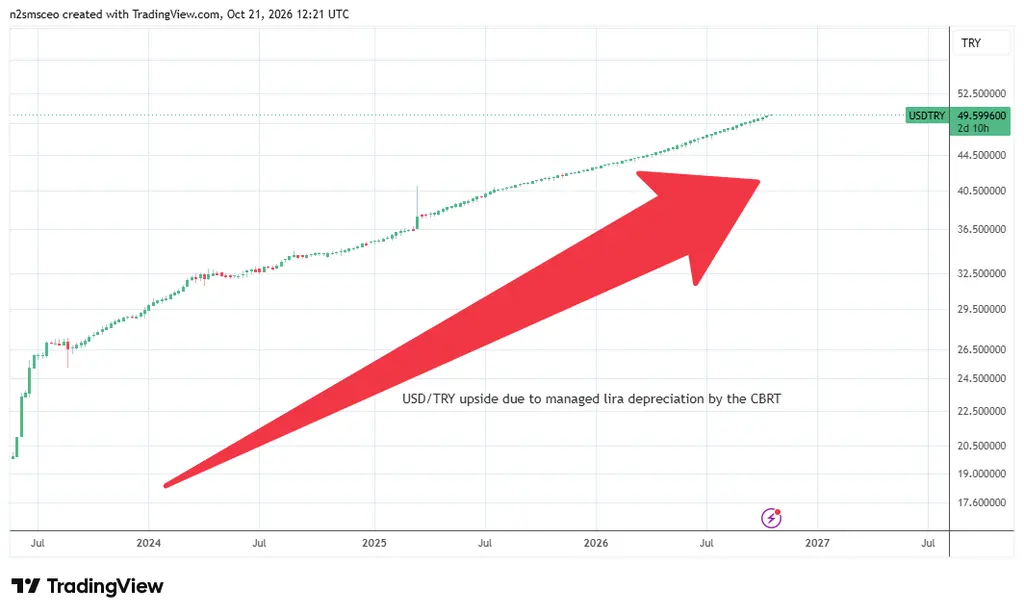
Base case: Consolidation around 49.30–49.80 with a bias for a gradual upward shift will follow a CBRT rate hike in the next policy meeting. Restrictive policy only helps to maintain a structured gradual depreciation while preventing volatility.
Bull case — USD/TRY rises: A sharp breakout move above 49.65 opens the pathway to new record highs, with the psychological 50.00 level also up for grabs. This outlook follows sharp dollar strengthening, especially if the Fed hikes rates in the October meeting and domestic inflationary pressures intensify.
Bear case — Lira strengthens: Lira strengthening only follows improvement in local inflationary conditions along with a restrictive CBRT stance with improved policy credibility. This favours a breakdown of 49.30, targeting downside targets at 49.00 and lower.