




- Ahead of Wednesday's FOMC minutes, gold prices are sharply lower and US bond yields are trading at some of the highest levels in years.
Current Setup and Live Chart
Two opposing macroeconomic forces are currently dictating gold prices. On one side, the geopolitical situation, which features the recent deterioration in the U.S.-Iran negotiations, is increasing the safe-haven demand for assets such as the yellow metal due to the rise in inflationary expectations. Meanwhile, oil prices are also being driven by the same conflict, which is pushing up inflation expectations and has triggered a sharp sell-off in global bonds, even in bond yields. For instance, the U.S. 30-year Treasury bond is now trading at 19-year highs, even as the 10-year Treasury note’s yield has risen to 4.74%.
This setup leaves room for a classic two-way consolidation. This is how gold prices traded in the first phase of the conflict from March to mid-April. In the context of the oil shock risk premium, gold prices tend to fall as oil prices rise while remaining supported by safe-haven demand.
The bias for gold remains cautiously bullish, though it remains highly yield-sensitive. Safe-haven demand driven by inflationary expectations remains the fundamental support for gold prices. However, the market is showing that rising U.S. Treasury yields can weigh on gold if they overwhelm safe-haven demand. For gold, the critical question this week is whether safe-haven demand can continue to support the limited upside currently in the market, or whether elevated U.S. bond yields will keep prices constrained below the 4400 mark.
Stabilization of the bond markets will provide a clear catalyst for growth to resume and advance above 4400. But if this doesn’t happen, the metal will remain in a volatile two-way consolidation, with prices capped just above the 4420 price mark even as resistance points are found low.
Gold Price: Macro Drivers
1) Worsening Geopolitical Risks
The latest U.S.-Iran diplomatic efforts are at a dead end, and the threat of new military tensions now looms. This development could extend the geopolitical risk premium, which may keep oil prices elevated and leave gold prices trading amid two-way volatility.
2) US Bond Yields
At 5.34%, the 30-year Treasury yield is now at a 19-year high. The U.S. 10-year Treasury note is at 4.74% as of writing. The rise in U.S. bond yields increases the opportunity cost of holding non-yielding metal assets such as gold. They also increase the appeal of U.S. dollar-denominated assets. Therefore, investment flows tend to flow away from metal assets into U.S. Treasuries, which is a bearish factor for the yellow metal.

3) Fed Expectations
The FOMC Minutes will be released tomorrow, the 19th of August, and will provide insight into the thinking of the Fed’s policymakers at its last monthly policy meeting. The upcoming Jackson-Hole summit will also feature a host of central bank chiefs, including Fed Chair Kevin Walsh, who will provide important communication relevant to price action in the U.S. Dollar and precious metals. Fed policymaker commentary, as well as any communication from the summit, is likely to shape Fed monetary policy expectations heading into the end of the year.
Gold Price Catalysts
1) US Treasury yields: this remains the single most important near-term price catalyst for gold. Higher yields will put pressure on gold prices. However, safe-haven demand will return if the bond market sell-off stabilizes. Currently, US bond yields are trading sharply higher, which explains why gold prices have fallen sharply below the 4400 mark.
2) Geopolitics: US-Iran diplomacy is currently at odds. Any military escalation raises the geopolitical risk premium, which raises oil prices but caps gold upside due to higher inflation pressures and rising US bond yields.
3) FOMC Minutes and Jackson-Hole: The annual Jackson-Hole symposium, which brings together the central bank chiefs of the world’s major economies, will offer commentary on the future of interest rates in the US and other global economies. Gold prices will benefit from dovish commentary out of that symposium. However, the FOMC minutes precede Jackson-Hole and show Fed policymakers’ thinking at the last monetary policy meeting. Any nuggets from that meeting, as reflected in the minutes, that markets haven’t yet priced in will become market-moving events.
Gold Price: Technical Outlook
The double top pattern on the 4-hour chart remains in development, with price action heading toward a test of the neckline support at 4314. A breakdown of this support unlocks a measured move expected to complete at the 4213 support level, the site of the prior high of 22 June 2026 and low of 6 August 2026.
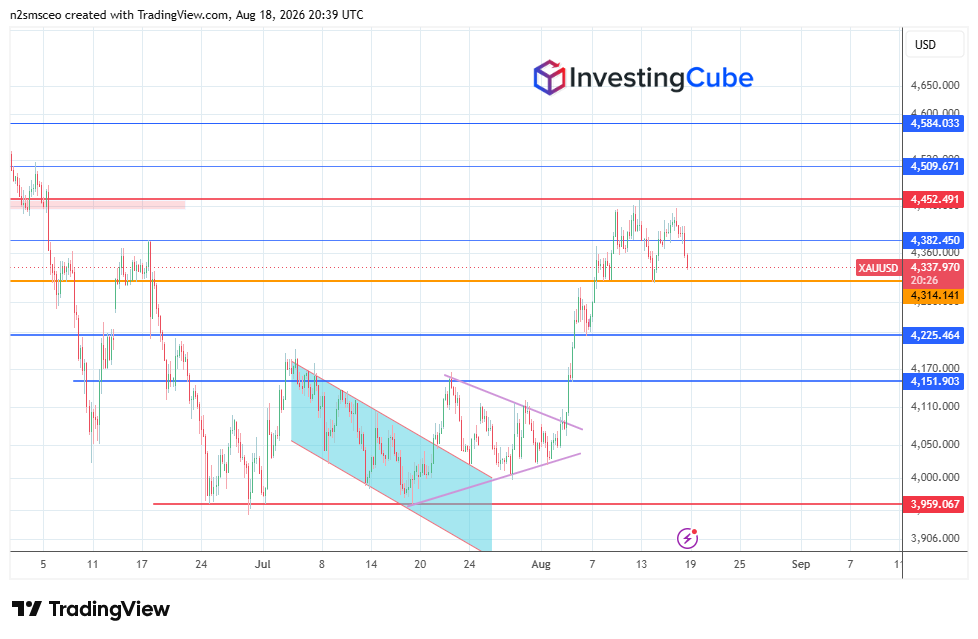
On the flip side, upside continuation of the trend follows only the uncapping of the 4452 resistance, which then brings new resistance targets at 4509 initially and 4584 subsequently, with the latter being the cluster of highs seen in May 2026.