


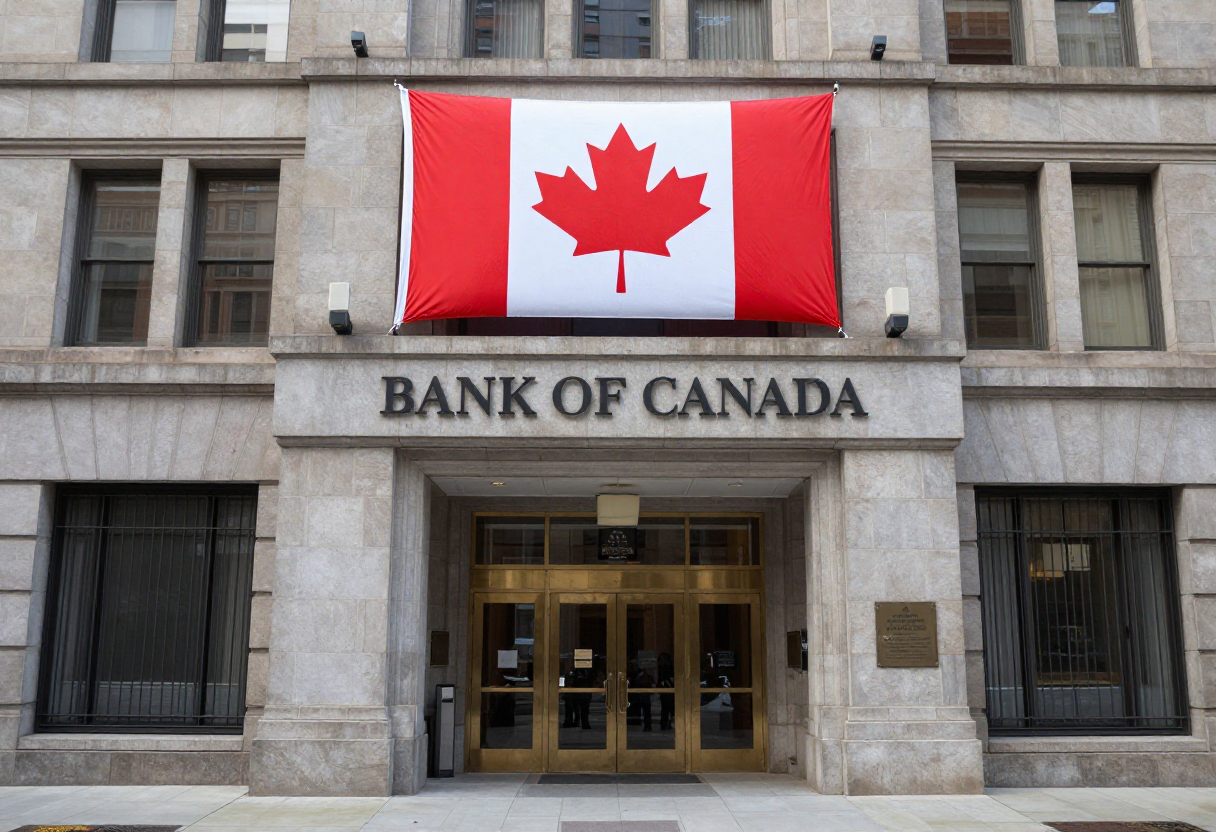
- The USD/CAD is currently in a cautious bullish move ahead of the Bank of Canada's interest rates decision on 2 September 2026.
Current setup
Bias: cautiously bullish USD/CAD.
USD/CAD is currently trading with a cautiously bullish sentiment ahead of the Bank of Canada’s interest rate decision. The pair’s latest quoted price is around 1.3931. The cautious bullish bias stems from defensive positioning into the US dollar due to renewed US-Iran geopolitical tensions and Tuesday’s rise in US Treasury yields. US bond yields are rising amid growing expectations of a September Fed rate hike, following the Fed Chair’s Jackson Hole comments.
Canada is a major oil exporter, and the commodity-linked Canadian dollar is receiving a boost from the sharp rise in oil prices that trails the geopolitical standoff. However, this has proved insufficient in offsetting the greenback’s broad strength.
USD/CAD: Macro Drivers
1) Fed expectations
Bets for a September Fed rate hike have risen sharply and are approaching 70%. The Fedwatch CME tool currently shows a 67.9% probability of rates going up to 3.75%-4.00%. The rise in US Treasury yields has strengthened the dollar’s interest-rate advantage over the Bank of Canada. The yield advantage could widen if the BoC holds rates amid hawkish Fed expectations.
2) Higher oil prices support the CAD
Brent crude has climbed above $95 amid the renewed US-Iran geopolitical conflict. The Canadian economy benefits from this environment whenever crude prices soar, boosting the CAD. This factor currently constrains any USD/CAD upside moves.
3) Bank of Canada Decision
Market consensus is that the Bank of Canada will keep interest rates unchanged. Current trade tensions with the US increase uncertainty about the Canadian economy. This is likely the overriding driver encouraging BoC policymakers to remain cautious.
Price Catalysts that Matter This Week
The key catalysts for the week are:
1. Bank of Canada decision: The BoC is expected to leave the Overnight Rate unchanged at 2.25%. Watch out for the tone of the statement. However, leaving rates at this level maintains a yield differential of at least 150 bps between the Fed and BoC.

2.US jobs data: A stellar Non-Farm Payrolls report doubles down on the Fed’s hawkish rhetoric and keeps US bond yields elevated and the US Dollar supported.
3. Fed expectations: As long as US bond yields remain elevated and the odds for a September Fed rate hike keep rising, hawkish Fed expectations will continue to be a primary catalyst of price action on the USD/CAD.
4. Oil prices: The CAD is expected to benefit from oil prices better than its southern neighbour. The question is whether this benefit offsets the USD’s defensive demand from geopolitically-driven safe-haven plays, or the hawkish Fed expectations which keep the greenback on bid.
USD/CAD: Weekly Forecast Scenarios
Base case: The base case scenario sees the pair maintaining its cautiously bullish move. This keeps the pair in a modest uptrend, supported above the 1.3800 psychological pivot.
Bull case: A strong US jobs report on Friday + hawkish Fed expectations → allows USD/CAD to break above 1.3920, with targets set initially at the 1.4000 psychological barrier.
Bear case: oil extends its rally (CAD supportive) + BoC hawkish statement (even if rates stay unchanged) + disappointing US jobs data → USD/CAD falls back toward 1.3800.
USD/CAD Technical Outlook
The current bullish move will be sustained if the ongoing breakout above the 1.3919 resistance completes. This will set bulls on the path toward the 1.4013 resistance (19 July low). Above this barrier, the 27th July high at 1.4129 forms the next upside target.
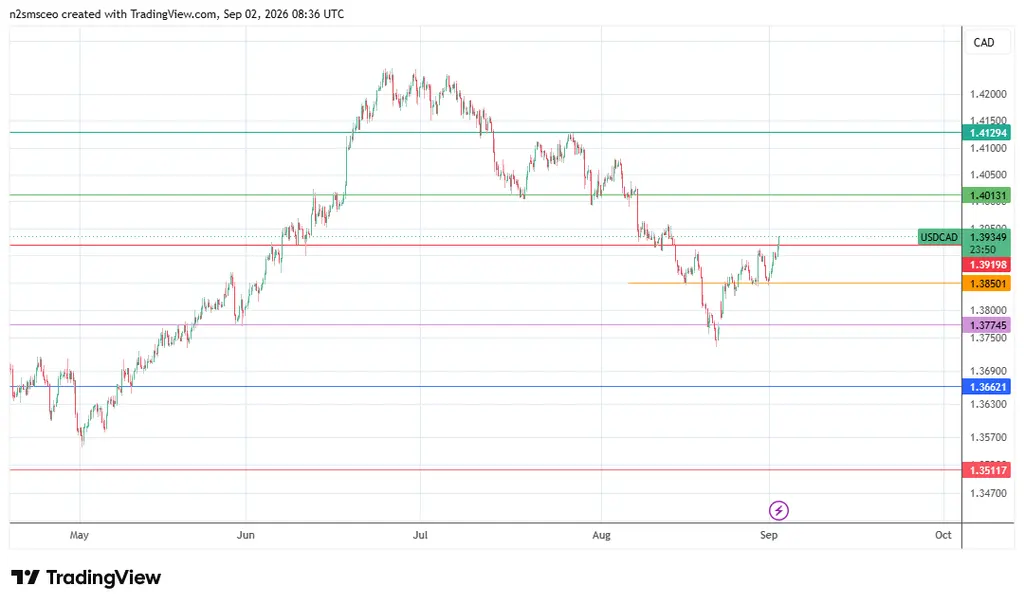
On the flip side, the 28 May low at 1.3774 forms the next downside target if the breakout move above 1.3919 fails. The 17 August/1 September lows at 1.3850 form the intermediate pivot which must be degraded to expose 1.3774.
Bottom line
The immediate bias for the pair remains cautiously bullish. This reflects US monetary-policy expectations and safe-haven demand for the greenback from the geopolitical escalation outweighing whatever support the CAD gets from higher oil prices.