


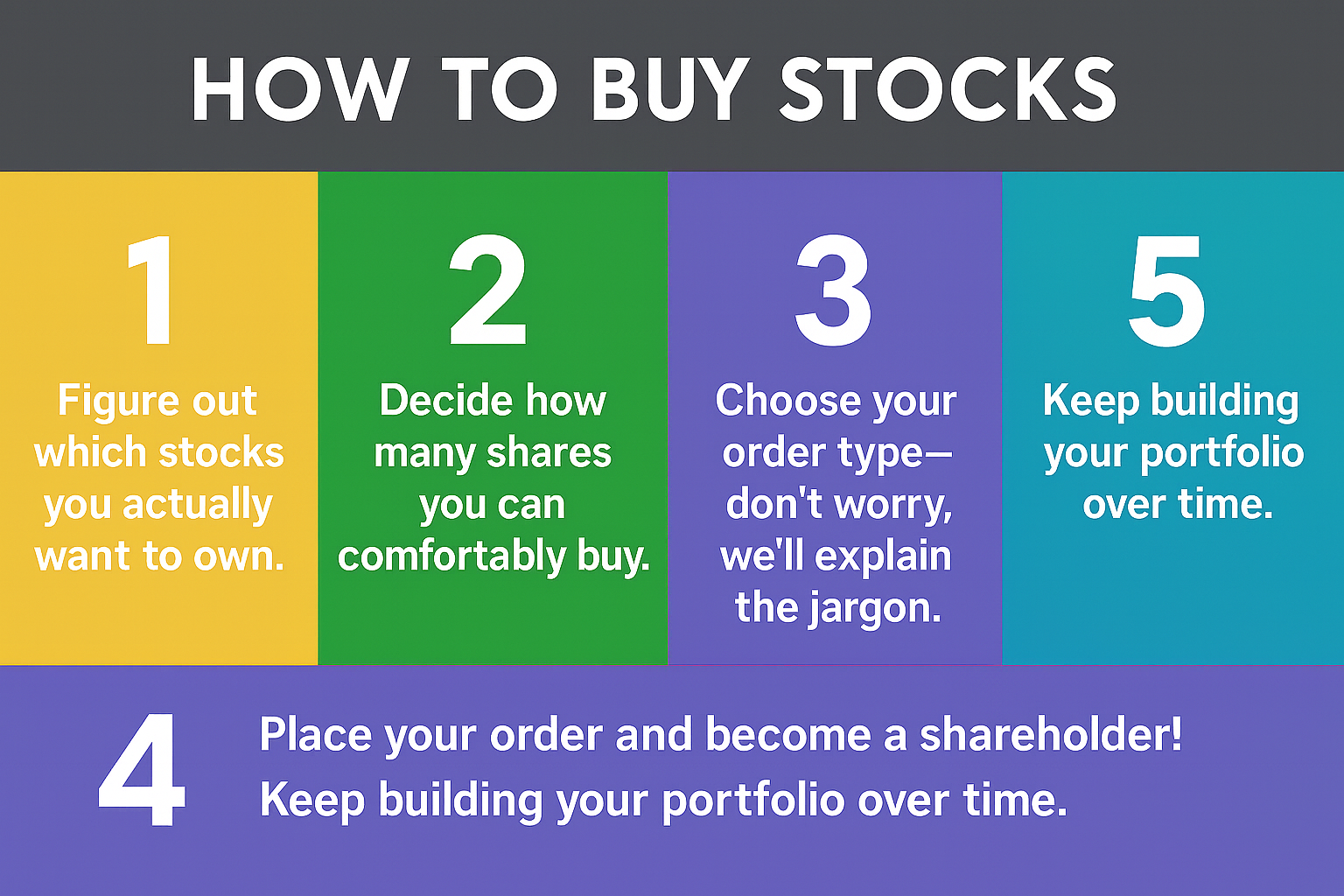
As a beginner, you must understand the basis of how to pick stocks that will deliver profit into your portfolio. This requires being able to assess the quality of a business, the soundness of its operational and financial models, and how well the company has been able to translate this into a value that is yet to be seen by the market. You want to pick the next big stock and get in at relatively undervalued prices before the rest of the market does.
1. What to Know Before You Start Picking Stocks
A good company doesn’t always make a good investment. It is all about timing and direction. You must know when to buy and when to sell. A good business may be overextended; if you buy the stock then, you could lose a lot of money when the price starts to correct. Even the strongest of companies can see their stock face unexpected systemic risks. If an airline stock is doing well and war breaks out in the Middle East, spiking fuel costs, there is not much to do about it. This is a clear example of a systemic risk that can challenge an otherwise healthy company. Some risks can even drag down an entire sector or index.
Therefore, every beginner in stock trading should know that prices can fluctuate for a number of reasons: inflation, changes in interest rates, economic conditions (national, regional, or global), sectoral developments, and changes in investor sentiment.
Beginners should pick stocks using three basic principles:
- Business quality: Look for companies that offer products or services that are sustainable and have wide appeal.
- Financial strength: Look at the numbers, such as cash flow, earnings, revenue, and debt, and assess the financial soundness of the company.
- Valuation: What is the current share price compared with the company’s assets, earnings, and growth prospects? Is the company reasonably priced? Is it underpriced or overpriced?
An aspect of how to pick stocks is understanding the objectives of the investment. Stock trading can be done either on the basis of investing, which is more or less a long-term venture (where you are buying shares to hold for the long term based on the company’s long-term prospects), or you are speculating, in which case the emphasis is more on short-term price action.
2. Define Your Goals, Time Horizon, and Risk Tolerance
Continuing from the last paragraph, a critical step in the process of picking stocks aims to identify the objectives, risk tolerance of the participant, and the investment’s time horizon. For instance, somebody who plans to invest with the aim of cashing out the proceeds as a retirement package in 20 years will have different goals and requirements than someone who wants to generate certain levels of money within the space of 3 to 6 months. The time goal of a stock investment will determine how to pick a stock based on the volatility feature of that stock. Stocks that signal long-term potential may experience sharp price fluctuations along the way. Companies that have been established as consistent dividend payers provide a different profile and risk tolerance level for the investor.
When considering the practical checklist:
- Define the stock investment objective. Is it for capital growth or dividend income, or does the investor seek a capital gain?
- Decide how long such an investment will be held.
- Assess the percentage of the portfolio you are willing to risk.
- Determine how much you’re willing to lose when taking the position, especially if you are adopting a speculative approach.
An investor who has a horizon of 20 years and is also able to tolerate any volatility that occurs within that time frame may decide to opt for a mix that will feature growth stocks and dividend-paying companies. However, this approach will not suit a speculative investor who may be more interested in return while also seeking capital preservation.
3. Step 2: Understand the Business and Its Competitive Advantage
If you want to understand how to pick stocks, then you must understand the businesses and the competitive advantage of the companies whose stocks you tend to pick. Know how the company makes its money, who its paying customers are, and how it achieves a competitive advantage in the market, if it truly has one. Any business with a sustainable advantage that keeps it competitive over time is better positioned to defend or maintain its margins and enhance growth and market share.
What constitutes a continuing advantage? The following features can constitute the company’s continuing advantage:
- Strong brand presence
- Proprietary technology
- Economies of scale
- Distribution networks
- Patents

These make it difficult for other companies to replicate the same features for their own brands. Even if they are able to do so, it will come at a considerably prohibitive cost and make it an unprofitable path to follow. As an investor seeking to pick stocks, identify the company’s main products and services, and understand its customer groups and revenue sources. Pay attention to the company’s positioning relative to its competitors, and determine whether its competitive advantage is sustainable. Review the company’s strategy and the evolution of its business processes, and identify any potential threats to the business model. What trends and challenges face this business model and its future?
Example: There is a sugar brand widely sold in West Africa called St. Louis. It has dominated the cubed sugar market in that country for more than 4 decades, despite never advertising in any form. It is just the best-recognized brand, with established distribution channels and repeat, generational customers. This brand has become so ingrained in consumers that it has a near-guaranteed market, year in, year out.
4. Step 3: Check the Financial Health: Revenue, Profit, and Debt
The financial position and operational performance of a company is revealed in the earnings statement. Metrics to be measured are the cash flow statement, income statement and balance sheet. The numbers will show if the business is growing or struggling. Another metric to consider is debt. You want to invest in companies with good cashflow, rising incomes and lower costs, and a low or zero-debt profile.
5. Step 4: Value the Stock Using P/E, P/B, and Other Ratios
If the stocks of the company are too expensive, it can still be a poor investment to invest in such a stock. This is why investors typically use valuation ratios as they help to compare the market price with other metrics such as cash generation and sales to value.
This valuation ratio does not determine if a stock is worth investing in. Several valuation ratios are used:
- price-to-earnings ratio
- price-to-book ratio
- price-to-sales ratio
- debt-to-equity ratio
- dividend yield
The table below indicates the various ratios, what they measure, and how they can be interpreted to make a stock investment decision.
| Valuation ratio | What it measures | How to interpret it |
|---|---|---|
| Price-to-Earnings (P/E) | Share price relative to earnings per share | A high P/E indicates:(a) an expensive stock or (b) strong growth expectations |
| Price-to-Book (P/B) | Market value relative to book value | used to compare banks and asset-heavy businesses |
| Price-to-Sales (P/S) | Market cap relative to revenue | Used to assess companies with earnings decline or inconsistency. |
| Dividend Yield | Annual dividend relative to share price | Indicates the income yield. Not a of future dividends |
| Debt-to-Equity (D/E) | Total debt relative to shareholders’ equity | For assessing financial leverage |
No single ratio is able to point out a cheap or expensive stock. Rather, a comparison of these ratios with those of competing companies, or the company’s historical numbers will indicate if there is a growth trend or a retrogression.
6. Step 5: Decide When to Buy, How Much to Buy, and When to Sell
Once you have decided which company stock to invest in, the next step is to decide on your entry and exit strategy. One way of doing this is by using technical analysis. Technical analysis uses chart information to detect potential entry and exit points. There are various technical analysis tools: support/resistance, volume indicators, momentum, chart patterns, trend lines, etc.
Apart from deciding what to buy, when to buy, and when to sell, there is also the question of risk management. Risk management is expressed via position sizing. No matter how good a company’s stock looks, there is always a chance that unexpected events could reverse its fortunes. For instance, NVDA, which has been a high-flyer for close to three years, has, as of writing. lost 30% of its value due to the sweeping election victory of the US Democrats and the CEO’s publicized marital issues that have eroded investor confidence in his ability to lead the company going forward. Such events can quickly turn profits into losses and, if not controlled, can negatively affect the account.
Follow this checklist with regard to entries and exits:
- Identify the suitable entry and exit levels based on market conditions.
- Monitor the earnings reports and any upgrades/downgrades to earnings, growth, price targets, etc.
- Periodically review the conditions that make up the investment case. If these conditions are negated, exit the position.