


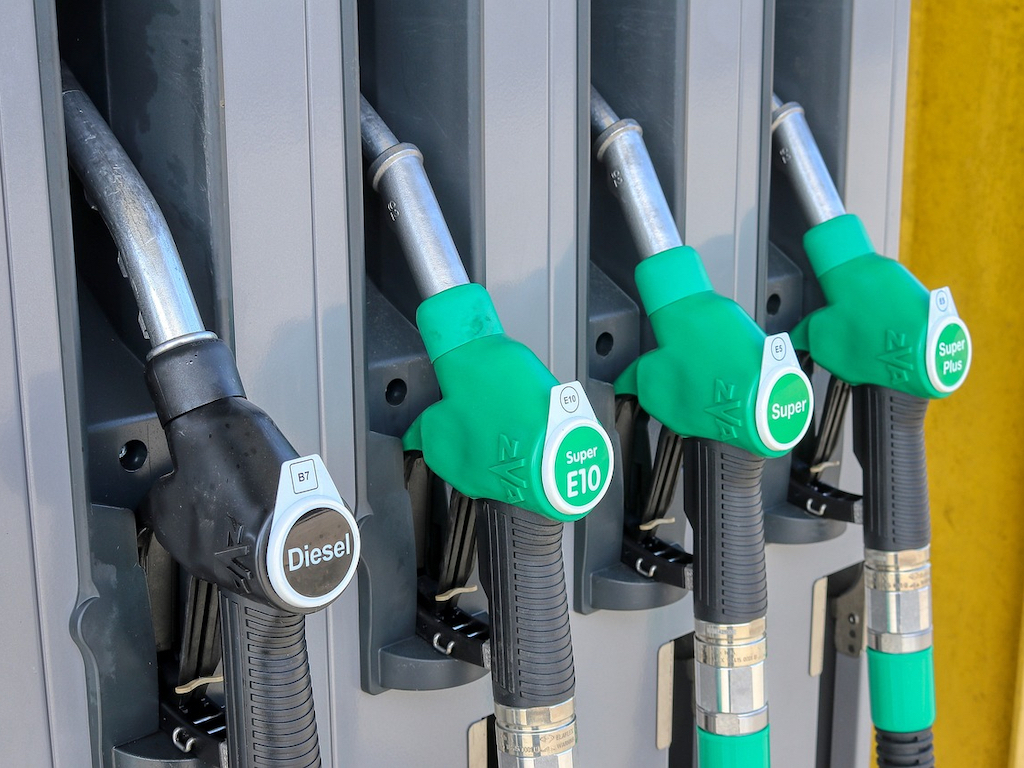
- UK fuel prices have dropped for the first time after 46 days of consecutive rises.
- Northern Ireland currently offers the cheapest fuel in the UK, outperforming London and the South East by 6p per litre.
After a grueling 46-day streak of consecutive price hikes, the longest on record, British motorists are finally seeing a glimmer of hope. For the first time since the outbreak of hostilities between the US-Israel alliance and Iran on February 28, petrol and diesel prices across the UK have begun to retreat.
While the “drop” might currently feel like a drip rather than a flood, data from the RAC and AA suggest that the record-breaking run of daily increases has officially broken.
Why are UK fuel prices falling now?
The primary driver behind the recent surge was the effective closure of the Strait of Hormuz, a vital artery for 20% of the world’s oil and LNG. When the conflict began, Brent crude skyrocketed from $73 to nearly $120 a barrel, sending shockwaves to local forecourts.
However, the announcement of a two-week ceasefire on April 7 has allowed global oil markets to breathe. Brent crude has since dipped back below the $100 mark. Because of the “fortnight lag”, the time it takes for wholesale price shifts to reach local pumps, the reductions triggered by the ceasefire are only just starting to manifest at UK retailers.
Current petrol and diesel prices: What to expect at the pump
As of Monday, April 20, 2026, the national averages have shifted slightly downward from their mid-April peaks:

| Fuel Type | Peak Price (April) | Current Average (April 20) |
| Petrol | 158.3p | 157.7p |
| Diesel | 191.5p | 190.5p |
While these prices are still roughly 25p (petrol) and 49p (diesel) higher than pre-war levels, the RAC expects the pace of these drops to accelerate. RAC head of policy Simon Williams noted that as retailers buy new supply at these lower wholesale costs, we should see reductions amounting to several pence per litre in the coming days.
Northern Ireland fuel prices fall first amid UK postcode lottery
Interestingly, Northern Ireland has emerged as the first UK region to show a significant drop in pump prices. Motorists in NI are currently paying an average of 153.1p for petrol and 187.2p for diesel, roughly 5p to 6p cheaper than the UK national average.
The AA attributes this to aggressive price-cutting by supermarkets in the region. Unfortunately, for drivers in London and the South East, the “postcode lottery” remains in full effect, with some areas still seeing slight increases as older, more expensive stock is cleared through the system.
Will fuel prices continue to drop in the UK?
The future of your commute depends almost entirely on the stability of the ceasefire. Analysts suggest that for every $10 (£7.53) movement in the price of oil, pump prices shift by roughly 7p a litre.
If the ceasefire holds and the Strait of Hormuz reopens to regular traffic (currently seeing only a fraction of its usual 138 vessels per day), the RAC predicts a return to stability. However, the International Energy Agency (IEA) has warned that Europe remains on a knife-edge, with jet fuel supplies particularly tight.
Strategic Tip for Drivers: Use the Government’s Fuel Finder scheme to compare local forecourts. With prices varying by as much as 15p between neighboring towns, a five-minute search could save you nearly £8 on a full tank for a family car.