


Archived Article This article was published more than 5 months ago. The market data, prices, forecasts, and analysis were accurate at the time of publication but may have changed since then. Please use this article for historical reference only and refer to our latest content for current market information.
- Gold and silver soften as safe-haven demand eases slightly.
- A stronger US dollar is weighing on both metals.
- Gold remains supported by geopolitical and macro uncertainty.
- Silver still has a constructive medium-term supply story.
- Near-term, gold looks cautious while silver remains more volatile.
Safe-Haven Premium Softens, but the Bigger Story Is Not Over
Gold and silver kicked off this session on the back foot, with traders deciding to take some profits from the geopolitical premium that had built in as of late. The first reason is that there is now some attention in markets to a hypothetical thaw in US-Iran relations, and whether talks could progress, which has lessened demand for safe haven (Source: Reuters). Spot gold slipped 0.7% to $4,784.37 an ounce in the session, clearly illustrating bullion sensitivity to any hint of easing Middle East tensions (Source: Reuters).
Its pullback does not mean the bullish story in precious metals is done. What it actually means is some of the fear bid is being readjusted. Markets also lose some of that urgency when gold is sought as a defensive asset, even for minor weakness and tensions (Source: Reuters). Since silver is both a monetary metal and an industrial metal, it usually has even greater price swings in the same direction.
Dollar Strength Is Pressuring Both Metals
The other reason for a softer tone today is the US dollar. Gold and silver are exceptionally responsive to shifts in the greenback, so a firmer dollar today looks like it will make life tougher for both metals if they were going to extend higher (Source: Reuters). Gold will also look weak on the third because Reuters also made an explicit link to a firmer dollar, and that follows general, if not traditional, market logic. When the dollar rises, metals priced in dollars become more expensive for overseas buyers, and that tends to reduce short-term demand (Source: Reuters).
This puts gold in a tightrope-walking position:
- Geopolitical uncertainty is still supportive on one side.
- A stiffer dollar and heightened rate expectations are countered on the other side.
This is why gold is not collapsing, but nor is it quite able to push higher in a clean manner. The moving market finds itself stuck between defensive demand and macro pressure.
Silver is under the same currency pressure, but its response can indeed be more extreme. Arguably, this makes for a lower short-term risk reduction correlation than seems justified by current presentations. After all, silver tends to fall more quickly than gold, and even if the latter has no fundamental problems and a broadly constructive medium-term backdrop, that is why traders should not interpret the weakness in silver today as a straightforward bear signal. That might simply be a reflection of silver being more reactive to changing macro sentiment.
Fed Expectations Still Matter for Precious Metal
For instance, markets are eyeing the US policy outlook through Kevin Warsh being nominated for a hearing. According to Reuters, Warsh was also expected to emphasize the importance of central bank independence, and investors continue to track what his policy leanings may signal for future rate expectations (Source: Reuters). While Reuters characterized his stance as a pledge to Fed independence with limits, it has naturally kept the market on its toes (Source: Reuters).
This is important for gold and silver since precious metals do not only respond to current interest rates. These respond to expectations for prospective real yields and policy. If markets decide the slower stance of the Fed may survive due to risks linked with inflation, energy, and geopolitics, then it may take the dollar higher and cap upside in metals (Source: Reuters). However, with traders all of a sudden believing that the stance and policy could turn more dovish or more accommodative in favor of lower rates, gold, especially in this scenario, could bounce back quickly.
The softness in gold and silver today is not purely a geopolitics issue. It is also part of a wider repricing centered on inflation, rates, and policy credibility.
Gold Still Has Underlying Support Beneath the Pullback
Although gold may be softer today, the bigger macro case is not dead. Gold continues to be one of the market’s favorite hedges against geopolitical instability, policy uncertainty, and inflation risk, as this avoids a major spike, but at the same time does nothing to wipe doubt off ever striking a deal if US-Iran talks turn out unfruitful or tensions in Syria flare up again. Gold could snap back into safe haven premium faster than you can say “demand supply” (Source: Reuters).
This is why today’s action appears more like a tactical pullback than a significant trend change. The market is taking out some near-term fear premium but has not given up the metal’s defensive character. Indeed, gold is a precious metal that could take it out on investors if optimism about de-escalation wanes too fast.
We believe that there is going to be a story that gold gets trapped in the middle of from a pure market psychology standpoint. The initial story says tensions could ease up, which gives less incentive for protection. This still feels like a very unstable world, with the consequence of continuing some defensive exposure for investors. Unless the two narratives can live together, then gold should continue to be choppy rather than trending in one direction.

Silver’s Structural Story Remains Stronger Than It Looks
Silver gets a little weaker with gold today, but its medium-term backdrop is still more constructive than many traders give it credit for. According to Reuters on April 15th, the silver market could be looking at a structural deficit for its sixth consecutive year, with a shortfall specifically for 2026 now estimated at 46.3 million ounces (Source: Reuters). Anyone who is willing to look beyond just today will see that the move is significant, as Reuters said silver faces its sixth year of deficit (Source: Reuters).
This is important because gaps on the supply side can act as a supportive base to build upon over time. Silver shall still drift lower on days when the dollar climbs or safe haven demand fades, but an ongoing shortfall means the important marketplace is probably more tightly produced than it looks to be (Source: Reuters). More simply put, silver’s bearishness does not negate its bullish story in the longer term.
There is one more angle to watch. According to a report from Reuters, Indian banks had suspended the import of gold and silver amid government clearance delays (Source: Reuters). Goldman has been a major supporter of the inflation narrative, which is an important driver for what happens with metals, but one which arguably pales in significance compared to geopolitics or the dollar. Both metals appear to be responding not solely to pure macro flows, but also operability and supply chain considerations in key markets (Source: Reuters).
Gold Price Prediction
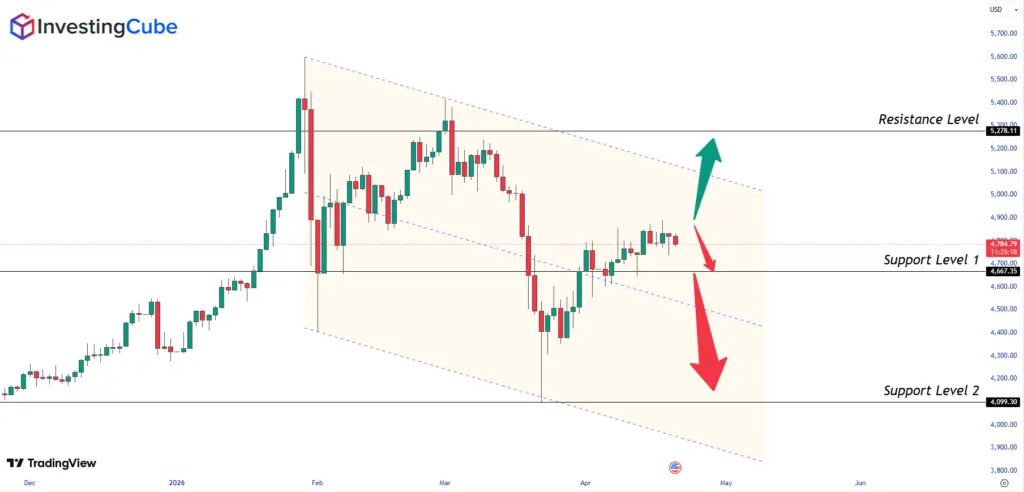
For today, the overall near-term outlook on gold is negative neutral. We do not see the data fully supporting a strong bullish view. Gold may remain under a soft tone as long as the dollar continues firm and hopes of progress in a diplomatic solution live on (Reuters). The recent pullback indicates that some traders are not aggressively piling into new long positions but also scaling back defensive exposure.
However, downside, at least for now, was probably going to be limited. Geopolitical uncertainty and the fading threat of inflation and policy uncertainty are still providing solid macro support for the yellow metal. Gold may reverse higher very quickly, should the market get some headlines that this diplomacy fails, or we are back into step-back style tensions again (Source: Reuters).
As for today, the most probable route is going to be a choppy consolidation with a slight downside bias. It does not seem like gold is a clean trend market at this point. This appears to be a market waiting for the next geopolitical or macro catalyst.
Silver Price Prediction
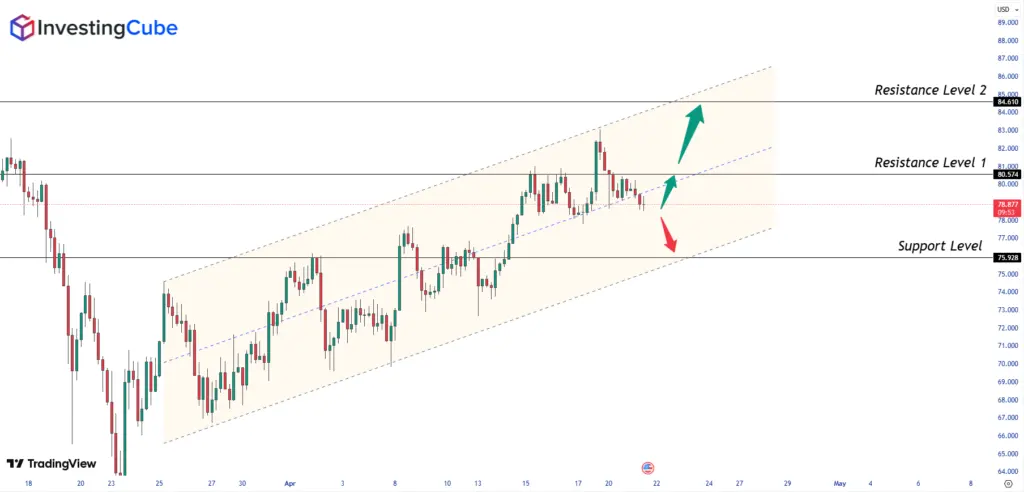
In the short term, silver also appears weak, but its move may be more vigorous. Silver can decline more rapidly when the tide turns bearish as it tends to exaggerate wider precious metal sentiment (Source: Reuters). The conservative bet should like this upside but loses more of its momentum once bets start pushing silver up again.
The main differentiator is silver still has the more robust structural supply-demand story working beneath. This means that irrespective of how soft today is, the metal still has much better upside potential, at least once the dollar cools off, or macro sentiment turns supportive again (Source: Reuters).
The base case is that silver remains volatile, and flows remain slightly pressured for the immediate future, but it has a stronger recovery potential than gold if the market returns to expectations of a weaker dollar or renewed geopolitical concern.
Final View
Only price action in gold and silver today indicates a market that is nowhere near peak fear, yet far from comfortable either. Traders are also testing the notion that tensions may ease, so some of gold’s safe haven premium is being lost, and silver is making bigger swings in line with gold’s (Source: Reuters). A stronger dollar has been putting more pressure on top of that, while uncertainty about the Federal Reserve debate stays an essential element backdrop (via Reuters).
In summary, gold is looking biased for some cautionary consolidation with an added downside lean today, while silver looks more volatile and reactive. In the event of further geopolitical stress, expect gold to lead a resurgence in support. Provided that the dollar softens and broader market sentiment steadies, silver might produce a stronger bounce than so wishful gains.
Frequently Asked Questions
Gold and silver are facing pressure mainly because the US dollar has strengthened and some safe-haven demand has eased as markets watch whether US-Iran tensions could cool.
Silver usually moves more sharply because it behaves both as a precious metal and as an industrial metal, making it more sensitive to changes in macro sentiment.
The article suggests gold may stay in choppy consolidation with a slight downside bias, while silver could remain volatile but may have stronger rebound potential if the dollar weakens or geopolitical risks rise again.