



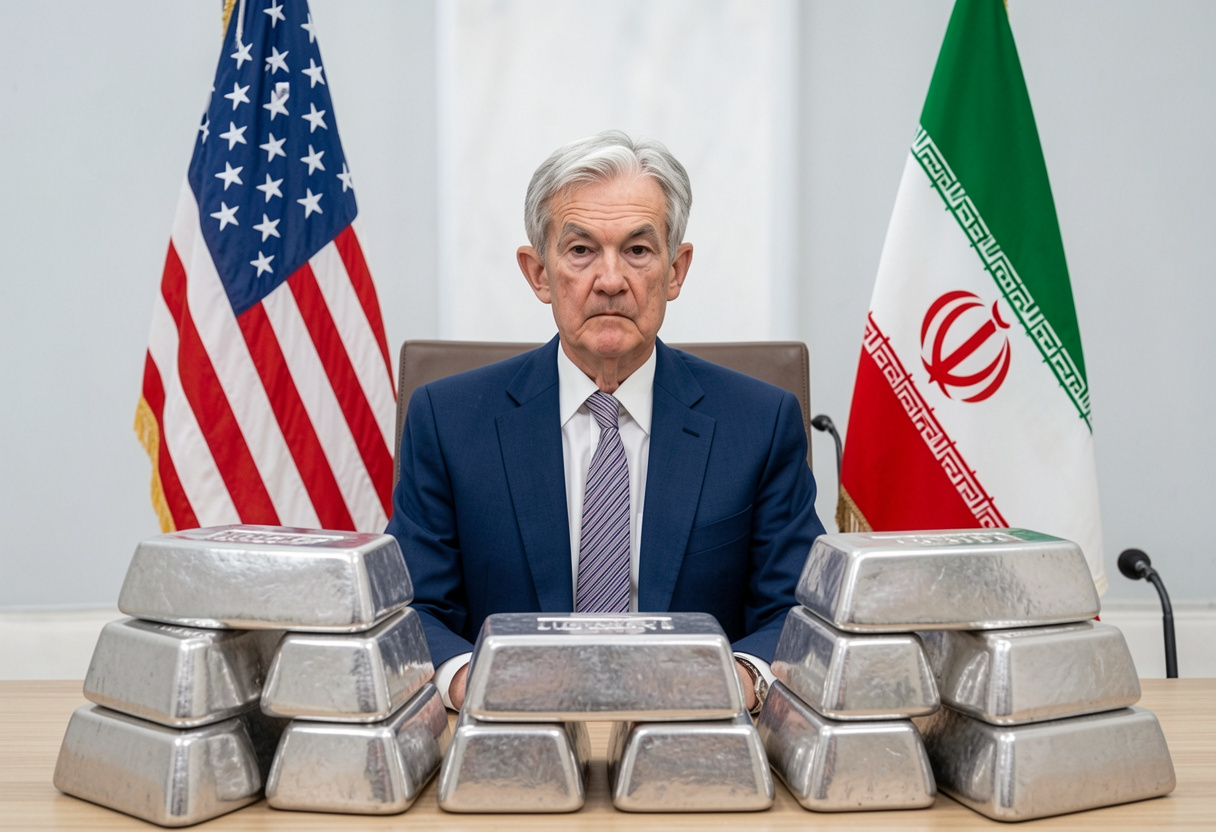
- Despite easing geopolitical tensions in the Middle East, silver remains supported by a sixth consecutive annual supply deficit and a structural "bullish cross" in its moving averages, suggesting the long-term upward trend remains intact.
The Silver Institute’s annual silver survey indicates that the silver market is likely to experience further volatility and potential liquidity issues. The white metal is expected to see a supply deficit for the rest of the year. The survey shows that the market is expected to face a deficit of 46.3 million ounces. This deficit will be the sixth consecutive annual deficit. Ongoing supply shortages are draining inventories and increasing market volatility.
The silver market is now mainly driven by investment flows, uncertainty, and tighter liquidity. According to market insiders, silver’s industrial demand is set to drop 3% this year to 639.6 million ounces. But it remains strong and above pre-pandemic levels, reflecting its importance in modern technology.
Silver Drivers Beyond Geopolitical Factors:
- Investment demand is becoming a key driver, helping offset weaker industrial demand.
- Retail investors are playing a bigger role, with strong buying in coins, bars, and ETFs.
- ETF demand is expected to grow again, even though flows may remain volatile throughout the year.
- ETF flows can tighten supply by removing silver from the market, while outflows can increase volatility.
- Physical demand (coins and bars) is set to rise sharply, reaching its highest level in recent years.
- Strong physical buying continues to support the market, especially during periods of price swings.
- India remains a major source of demand, with steady retail buying and limited selling.
- Indian investors tend to hold their silver, keeping supply tight and supporting prices.
- Higher prices are not expected to reduce demand, with retail investors’ spending likely to increase.
- Overall, demand remains strong, with no clear signs of saturation, especially in key markets like India.
The above points are derived from analysis and commentary featured in Kitco News.
Silver Price Technical Outlook:
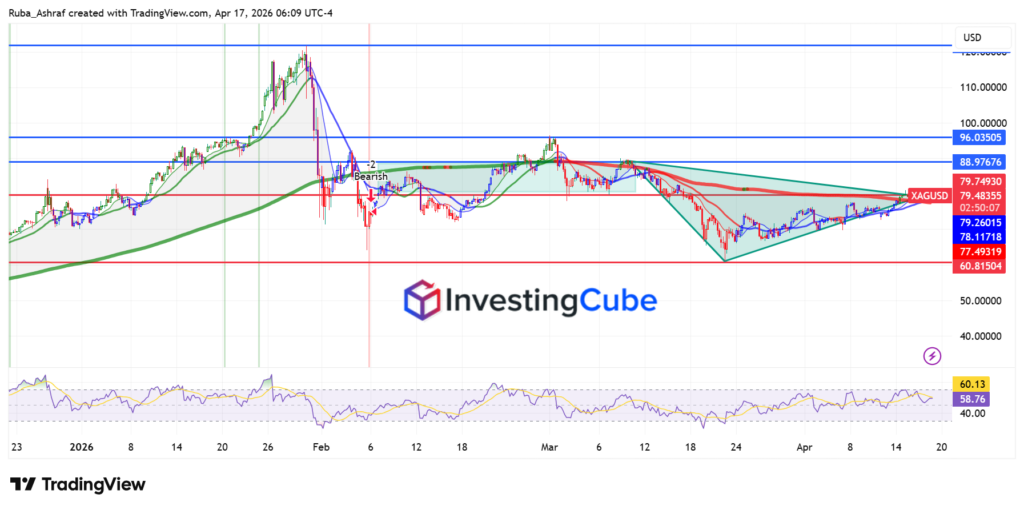
This chart for XAG/USD (silver) shows the market moving in a tight range after a period of strong volatility. On the right side, price is forming a triangle pattern, where it is getting squeezed between rising support and falling resistance.
At the same time, the moving average ribbon has shifted from a wide bearish setup into a tight and neutral range near the 79.50 level. This tightening, along with the price sitting near the tip of the triangle, suggests that a strong breakout move is likely to happen soon.

The horizontal levels provide a clear roadmap for the next major move. Support is firmly established at the 77.49 red line, which has caught several recent dips, while immediate resistance sits at the blue horizontal line near 88.97.
The RSI is currently neutral around the 58-60 mark. It isn’t showing overbought conditions yet, which leaves plenty of “fuel” in the tank for a move in either direction.
Potential Scenarios: two primary paths for XAG/USD
Bullish Breakout (Upside): If the price manages a daily close above the upper descending trendline of the triangle (roughly above 80.00), it would signal a trend reversal. The first major target would be the resistance at 88.97, with a secondary target at the psychological 96.00 level.
Bearish Continuation (Downside): If the price fails to break the upper trendline and slips below the immediate support at 77.49, the triangle would be considered a bearish continuation pattern. In this case, silver could rapidly descend toward the major support floor at 60.81.
While industrial consumption, particularly in the solar sector, is projected to drop by 3% this year due to high prices and “thrifting” by manufacturers, total global supply is falling even faster, down 2% in 2026.
This creates a structural deficit of approximately 46.3 million ounces. The gap is being further tightened by an 18% surge in retail investment for coins and bars as investors seek a “safe haven” amid Middle East instability.
Silver is currently caught in a “tug-of-war.” A weaker US dollar and falling Treasury yields (driven by optimism over potential peace talks in the Middle East) have recently provided a price floor. This makes silver cheaper for international buyers. However, if inflation remains sticky and the Federal Reserve maintains high interest rates, the opportunity cost of holding non-yielding silver increases, which could trigger a retreat toward the $60.00 support level.