


Archived Article This article was published more than 5 months ago. The market data, prices, forecasts, and analysis were accurate at the time of publication but may have changed since then. Please use this article for historical reference only and refer to our latest content for current market information.
- After 25 years at Apple, John Ternus will officially succeed Tim Cook as CEO on September 1, 2026, marking a significant shift toward engineering-led leadership.
- The primary challenge for John Ternus will be closing the artificial intelligence gap with Silicon Valley rivals while maintaining the $4 trillion market cap built during the Cook era.
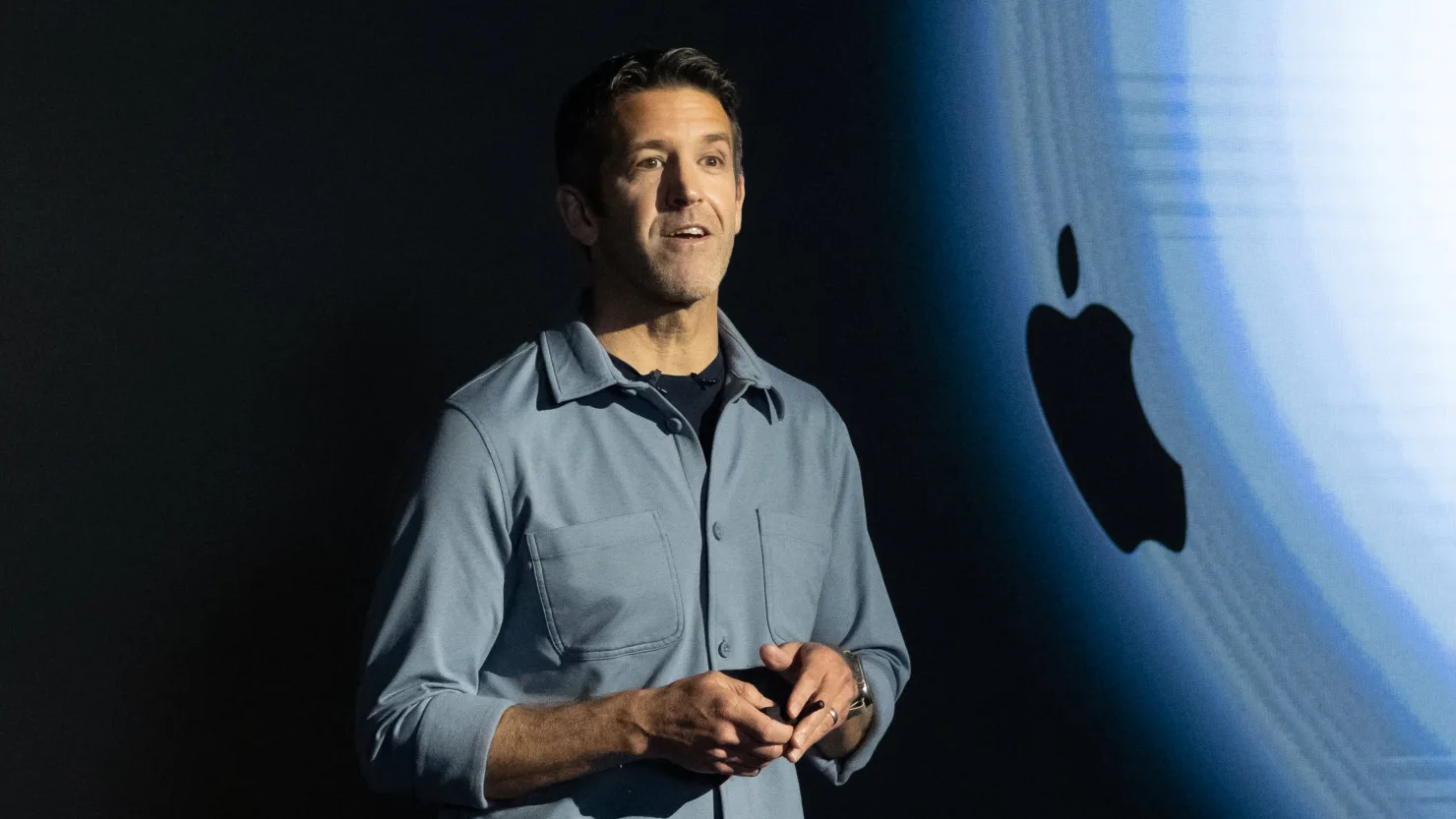
On Monday, April 20, 2026, Apple officially announced a generational shift in its leadership. John Ternus, the company’s Senior Vice President of Hardware Engineering, will succeed Tim Cook as Chief Executive Officer on September 1. Cook, who has led the tech giant since 2011, will transition to Executive Chairman, marking the end of an era that saw Apple’s market capitalization soar to a staggering $4 trillion.
The appointment of Ternus, 50, signals a strategic bet on institutional continuity. Unlike Cook, who was recruited from Compaq as an operations and supply-chain guru, Ternus is an engineer’s engineer. His elevation suggests that as Apple faces an increasingly complex geopolitical landscape and a high-stakes AI race, it is returning to its roots by putting a product designer at the helm.
Who is John Ternus? A hardware veteran who has spent nearly his entire career at Apple
Ternus, 50, is very much an Apple insider. He has spent nearly half his life at the company’s Cupertino headquarters. A California native, he graduated from the University of Pennsylvania in 1997 with a degree in mechanical engineering. After a four-year stint at Virtual Research Systems, a VR startup, he joined Apple’s product design team in 2001, the same year the first iPod was released.
His ascent through the executive ranks was defined by steady execution:
- 2001: Joined the Product Design team.
- 2013: Promoted to Vice President of Hardware Engineering.
- 2021: Appointed Senior Vice President of Hardware Engineering, reporting directly to Tim Cook.
- 2026: Named the eighth CEO in Apple’s history.
Colleagues and analysts describe Ternus as “affable” and “calm,” possessing a management style that mirrors Cook’s steady hand rather than the volatile brilliance of Steve Jobs.
The mind of an engineer, the soul of an innovator, and the heart to lead with integrity.”
Tim Cook himself praised his successor
What products did John Ternus develop at Apple?
As the head of hardware engineering, Ternus has held one of the most consequential portfolios in global tech. He was responsible for the physical components and engineering teams behind the iPhone, iPad, and Mac.

His most significant achievement was overseeing the transition of the Mac line from Intel processors to Apple Silicon in 2020. This proprietary chip move caused Mac sales to soar and redefined the performance standards of the laptop industry. Additionally, his division launched the Apple Watch and AirPods, two product lines that now generate more revenue than many Fortune 500 companies. While he also oversaw the Vision Pro, its struggled adoption since 2024 remains one of the few hurdles in an otherwise stellar hardware track record.
How will John Ternus address Apple’s AI gap?
The most pressing question for the new CEO is whether a hardware expert can pivot fast enough to compete in the artificial intelligence sector. While Apple leads in consumer electronics, it has arguably lagged behind peers like Microsoft, Google, and OpenAI in generative AI offerings.
Ternus inherits a complex AI roadmap:
- Siri Revamp: Apple is currently working on a massive upgrade to Siri, rumored to be powered by Google’s Gemini AI model, slated for release later this year.
- Hardware-Level AI: Ternus’s primary mandate will be integrating “Agentic AI” directly into the iPhone and Mac hardware to reduce reliance on the cloud and protect user privacy.
- Competitor Pressure: With former design icon Jony Ive now working with OpenAI, Ternus must prove that Apple can still win on both aesthetics and cutting-edge intelligence.
The $4 trillion legacy and the Johny Srouji promotion
Ternus takes over at a time of record-breaking financial success. Under Tim Cook, Apple’s yearly profit has topped $100 billion, and the stock has appreciated over 1,700%. To support Ternus in this transition, Apple has promoted Johny Srouji to the role of Chief Hardware Officer. Srouji, the architect of Apple’s silicon success, will now lead both hardware technologies and hardware engineering, ensuring that the company’s “operational muscle” remains intact.
As Cook transitions to Executive Chairman to focus on global policy and the “memory crunch” caused by AI chip demand, the spotlight falls entirely on Ternus. He must prove that an engineer can navigate the same geopolitical tensions and supply-chain hurdles that the operations-focused Cook mastered for over a decade.
Final thoughts: A low-risk bet on continuity at a high-risk moment
This is not a radical shakeup. Apple is promoting from within, choosing a known quantity who has helped build every major product of the last decade. The risk is not about competence. It is about timing.
Apple needs an AI strategy, and it needs one fast. Ternus has never had to lead a company through a technological shift this significant. Cook navigated the transition from iPod to iPhone. Now Ternus must navigate from iPhone to AI.
If he succeeds, Apple remains the gold standard of consumer technology. If he fails to close the AI gap, he may oversee the slow erosion of the very ecosystem Cook built so masterfully.
For now, the smart money is on continuity. But the clock is ticking.