



Archived Article This article was published more than 5 months ago. The market data, prices, forecasts, and analysis were accurate at the time of publication but may have changed since then. Please use this article for historical reference only and refer to our latest content for current market information.
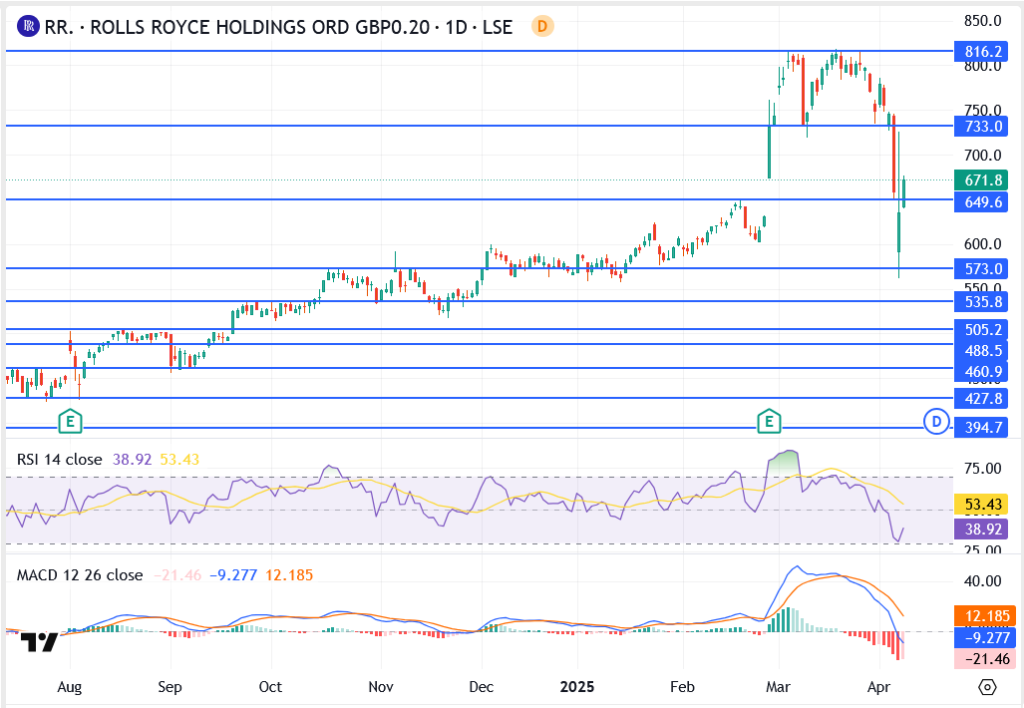
Rolls-Royce Holdings plc (LSE: RR.) is clawing back some gains today after suffering a steep selloff that rattled investors and erased weeks of bullish momentum. The stock rebounded sharply from the £573 support zone, reclaiming the key £649.60 level, but questions linger over whether this is a dead cat bounce or a real recovery.
The dramatic price drop comes amid broader market turmoil, with risk-off sentiment hammering industrials, aerospace, and defense stocks globally.
What Triggered the Selloff in Rolls-Royce?
The sudden plunge in Rolls-Royce shares followed a wave of profit-taking and a shift in investor focus away from cyclical and defense-heavy stocks. Rising concerns over global macro instability, tariff fallout, and a slowing UK growth outlook triggered panic selling across the FTSE 100.
Rolls-Royce, which had surged earlier this year on strong earnings and restructuring optimism, suddenly found itself on the chopping block.

RR. Chart Analysis – Support Holds for Now
After plunging from above £800, the stock bounced off the critical £573 support and has reclaimed ground above £649.60, now trading around £671.80.
- Trend: Bearish short-term, but oversold rebound in play
- RSI: 38.92 – recovering from oversold territory
- MACD: Still bearish, but histogram shows slowing downside momentum
- Immediate Resistance: £733.00 · £816.20
- Support Levels: £649.60 · £573.00 · £535.80
Final Outlook for Rolls-Royce Share Price: Bounce or Breakdown?
Rolls-Royce has survived a major technical test, but confidence remains fragile. The bounce off £573 is encouraging, yet the broader downtrend is still intact unless bulls push price back above £733 with conviction.
For now, short-term traders may ride the rebound, but long-term investors will want to see stabilization and confirmation before calling a bottom.