


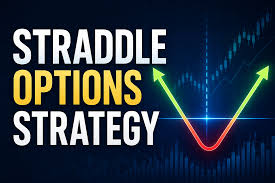
- A straddle option strategy allows traders to profit from significant price movements regardless of direction.
- The strategy involves buying or selling a call option and a put option with the same strike price and expiration date.
- Long straddles are commonly used before earnings reports, Federal Reserve meetings, and other market-moving events.
- Short straddles can generate income in stable markets but carry substantially higher risk.
What Is a Straddle Option Strategy?
A straddle option strategy involves buying both a call option and a put option on the same asset, with the same strike price and expiration date. Traders use a straddle when they expect a significant price move but are unsure whether the market will move up or down. The strategy can benefit from volatility, but it requires a large enough price movement to offset the cost of both options.
Key Takeaways
- A straddle combines a call option and a put option with the same strike price and expiry date.
- The strategy is designed to benefit from large price movements in either direction.
- Traders often use straddles around earnings reports, economic data releases, or major market events.
- The maximum loss is limited to the total premium paid for both options.
- A straddle may lose value if the market remains relatively stable.
What Is a Straddle Option Strategy?
One of the biggest challenges traders face is knowing when a major market move is coming but not knowing which direction the move will take.
A straddle option strategy is designed for exactly that situation.
Instead of predicting whether an asset will rise or fall, the trader focuses on the likelihood of increased volatility. To create a long straddle, the trader buys a call option and a put option at the same strike price and with the same expiration date.
Because one option benefits from rising prices and the other benefits from falling prices, the strategy allows the trader to potentially profit from a large move in either direction. The key requirement is that the move must be significant enough to overcome the combined cost of both options.
How a Long Straddle Works
Imagine a stock is trading at $100.
A trader believes an upcoming earnings announcement could trigger a sharp move but is unsure whether the results will be positive or negative.
The trader purchases:
- One $100 call option
- One $100 put option
Both options have the same expiration date.
If the stock rises sharply, the call option may increase in value while the put option loses value. If the stock falls sharply, the put option may increase in value while the call option loses value.
In either case, a sufficiently large move could generate gains that exceed the cost of entering the position. However, if the stock remains close to $100, both options may lose value as expiration approaches.
When Traders Use a Straddle
A straddle is most commonly used when volatility is expected to increase.
Common examples include:
- Corporate earnings announcements
- Central bank decisions
- Inflation reports
- Employment data releases
- Product launches
- Regulatory announcements

These events can create uncertainty. While traders may anticipate a significant move, accurately predicting the direction can be difficult.
Rather than choosing a bullish or bearish position, a straddle allows traders to focus on the size of the move instead.
Advantages of a Straddle Strategy
- Potential Profit in Either Direction- One of the main attractions of a straddle is its flexibility. The trader does not need to correctly predict whether the market will move higher or lower.
- Limited Risk – The maximum possible loss is generally limited to the total premium paid for both options. Unlike some options strategies, losses cannot continue indefinitely.
- Useful During High – Uncertainty Events- A straddle can be effective during periods when major news or economic events are expected to create volatility.
Risks of a Straddle Strategy
- High Entry Cost- Buying two options simultaneously can be expensive. The combined premiums create a higher break-even point than many other options strategies.
- Time Decay – Options lose value as expiration approaches. If the expected move takes too long to occur, the position may lose value even if the market eventually moves.
- Volatility Expectations – Sometimes volatility is already priced into the options market. If the actual move is smaller than expected, both options can decline in value despite the event occurring.
Straddle vs Strangle
A straddle is often compared with a strangle strategy.
The main difference is the strike price.
| Feature | Straddle | Strangle |
|---|---|---|
| Strike Price | Same strike price | Different strike prices |
| Cost | Higher | Lower |
| Required Market Move | Smaller | Larger |
| Risk | Limited to premium paid | Limited to premium paid |
A straddle generally costs more because both options are purchased at or near the current market price. A strangle is cheaper but usually requires a larger move before becoming profitable.
Conclusion
A straddle option strategy is designed for traders who expect a significant market move but are uncertain about the direction. By combining a call option and a put option with the same strike price and expiration date, the strategy allows traders to potentially benefit from volatility rather than relying on a bullish or bearish forecast.
However, a straddle is not a guaranteed way to profit from market events. The cost of purchasing both options can be substantial, and the market must move enough to overcome those costs. Before using a straddle strategy, traders should understand option pricing, time decay, and the risks associated with volatile markets.
A straddle becomes profitable when the price of the underlying asset moves significantly above or below the strike price. The move must be large enough to cover the combined cost of the call and put options, known as the total premium.
A long straddle has two break-even points. These are calculated by adding and subtracting the total premium paid from the strike price. The asset must move beyond one of these levels before the strategy can generate a profit at expiration.
Suppose a stock is trading at $100 before an earnings announcement. A trader buys a call option and a put option with a $100 strike price and the same expiration date. If the stock rises sharply above the upper break-even point or falls below the lower break-even point, the strategy may become profitable.
Yes. If the underlying asset fails to make a sufficiently large move before expiration, both options can lose value. In this scenario, the trader may lose part or all of the premiums paid to enter the position.
A straddle is often used ahead of events that may increase market volatility, such as earnings reports, central bank decisions, economic data releases, or major company announcements. The strategy is designed to benefit from large price swings rather than a specific market direction.
The maximum loss is generally limited to the total premium paid for the call and put options. This occurs when the underlying asset remains close to the strike price at expiration and both options expire worthless.
Neither. A straddle is considered a market-neutral options strategy because it can potentially benefit from a substantial move in either direction. The trader is forecasting volatility rather than predicting whether prices will rise or fall.
Traders use a straddle when they expect a major price movement but are uncertain about the direction. By holding both a call and a put option, they can participate in a strong move up or down, provided the movement is large enough to exceed the cost of the strategy.