


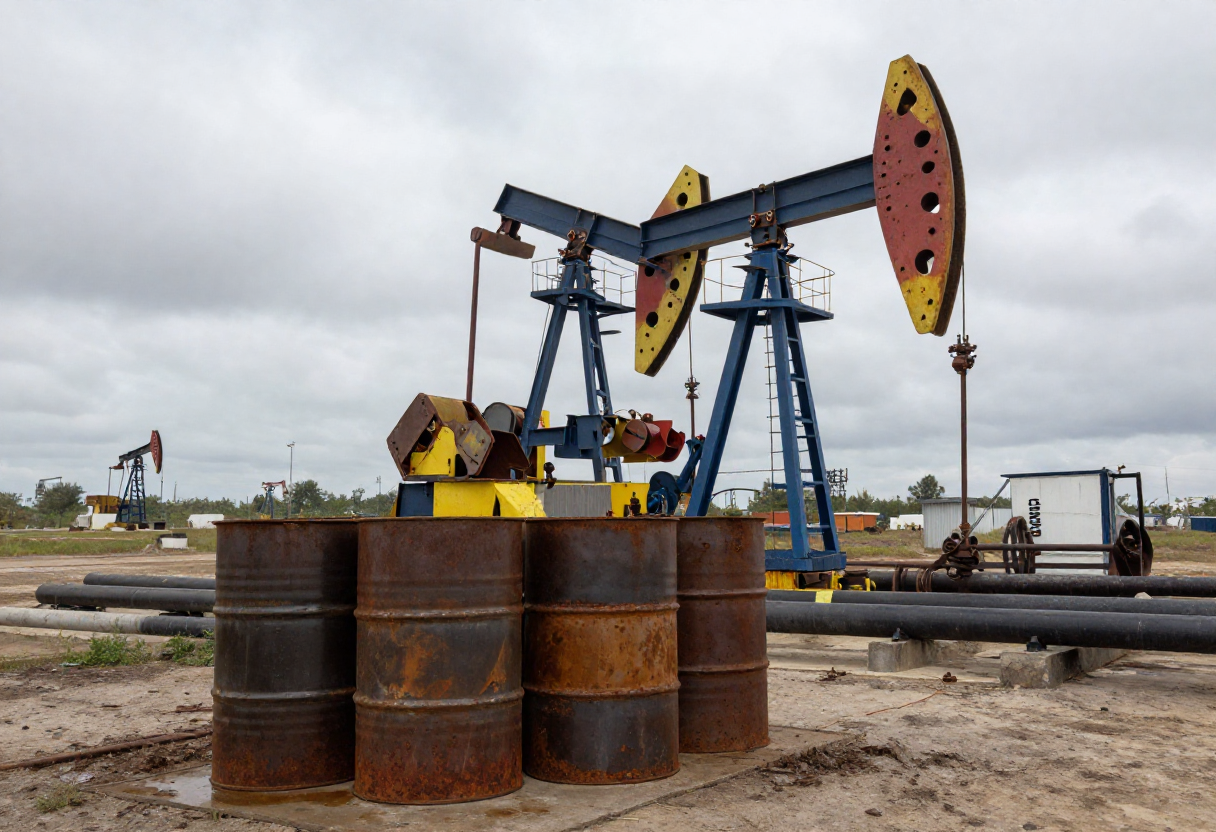
- Brent crude prices dropped as the US and Iran paused attacks, erasing geopolitical risk premiums that previously drove prices near $100
- Expanding non-OPEC production and slowing global demand growth signal an underlying supply surplus that could keep oil prices subdued in 2026
- Investors should stay cautiously bearish on oil fundamentals while bracing for sharp volatility from any renewed Iran-related geopolitical flare-ups
Oil markets just saw one of their sharpest moves this year. The news that the US and Iran had paused hostilities sent Brent crude tumbling about 13% intraday, erasing weeks of war-driven gains in just hours. It’s a dramatic reaction, but is this drop just the geopolitical dust settling, or does it hint at something more structural?
Deeper Fundamentals Reveal an Emerging Surplus
When geopolitical tensions ease, crude prices typically revert to their core supply and demand fundamentals. And for 2026, those fundamentals point to significant challenges. Without military conflict disrupting vital shipping lanes like the Strait of Hormuz, the global market will see expanding supply and sluggish demand growth.
Output from non-OPEC countries, particularly the United States, Guyana, and Brazil, has been consistently rising, according to data from the U.S. Energy Information Administration (EIA). Concurrently, global economic pressures, a slowdown in refining operations, and ongoing energy transition efforts are limiting the growth in oil consumption.
Leading forecasters confirm this outlook. For instance, the EIA’s July Short-Term Energy Outlook anticipates markets returning to pre-conflict oversupply. The EIA projects Brent will drop from an average of $103 a barrel in Q2 2026, falling to $70 by Q4, and then averaging just $65 in 2027.
J.P. Morgan’s analysis similarly projects Brent prices to be $86 in Q3, $80 in Q4, and $78 by the end of 2026, citing reduced demand as a contributing factor to this market rebalancing. Therefore, the recent price drop appears to reflect deeper market issues beyond a single news event.

How Should Investors Position?
Considering this market outlook, adopting a cautious approach with a structurally bearish view on oil seems more prudent than anticipating a price recovery. Companies focused solely on upstream exploration and production are particularly vulnerable to falling crude prices.
Energy investors might consider investments with hedged exposure or explore diversification into non-oil energy sectors. Conversely, buyers of crude, such as Indian refiners and airlines, could benefit from securing favorable input costs while prices are low.
Traders should approach each geopolitical development as a potential source of oil price volatility rather than a definitive market direction. Investors might consider reallocating capital towards integrated oil companies that demonstrate strong refining margins, diverse income sources, and resilient balance sheets capable of sustaining dividend payments during market downturns.
Prices fell after the US and Iran paused strikes, easing fears over shipping disruptions in the Strait of Hormuz.
No. OPEC+ output increases and forecasts from EIA and J.P. Morgan point to a genuine oversupply.
Investors should rotate from vulnerable upstream producers into integrated energy majors boasting strong balance sheets and diversified operations.