



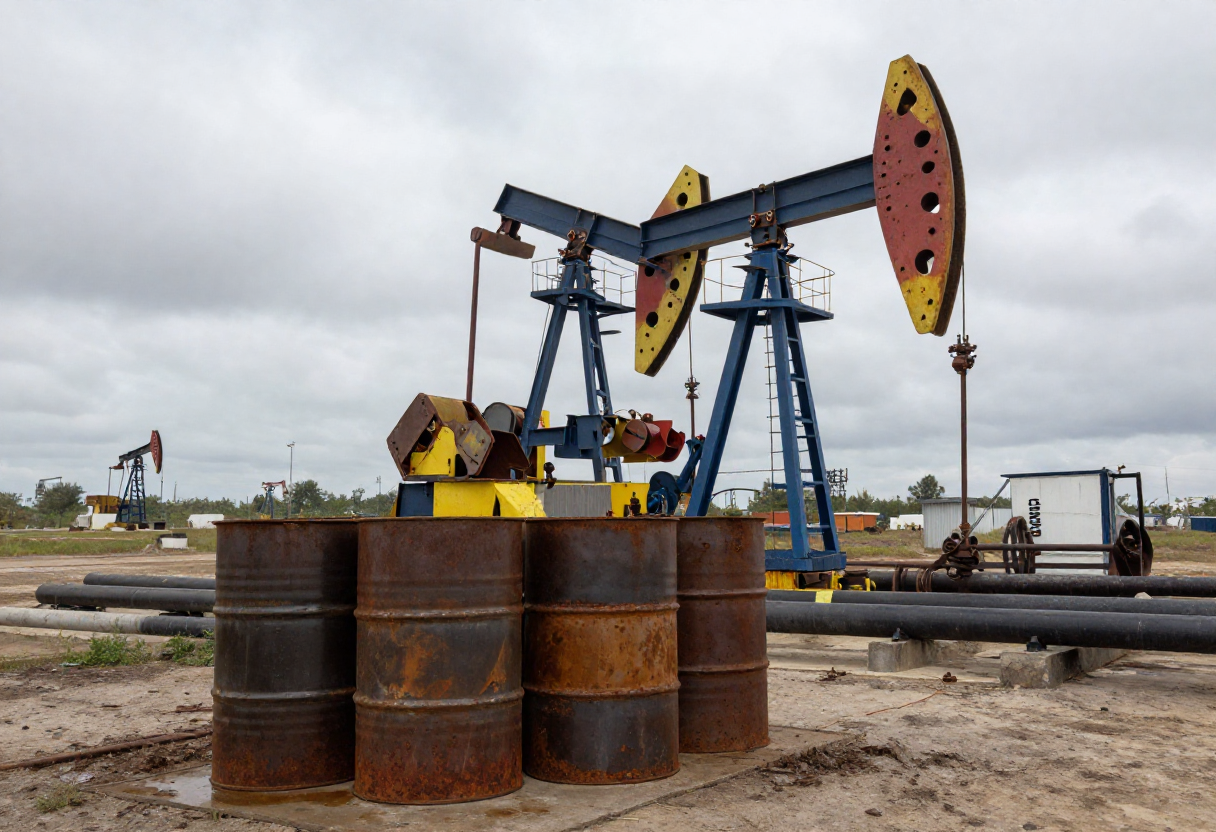
- Crude oil prices on the Brent benchmark surge to $93 per barrel as the US prepares sweeping new sanctions on Iran.
Current Setup and Live Chart
Brent crude is trading above $93 after a decisive push above $90. This surge comes as the previous US-Iran ceasefire framework expired without a conclusive peace deal that was meant to include an agreement on the status of the Strait of Hormuz.
October 2026 Brent futures hit $93.17 per barrel in the New York session, marking the highest it has been in three weeks. Today’s uptick is the 5th straight day of gains, as the markets increasingly price in the possibility of a more prolonged disruption to oil flows.
The key factor in the sentiment shift is the change in perception from a temporary disruption to a potentially prolonged supply constraint.
Current Macro Drivers for Brent Crude Oil Price
1) Supply Risk from the Strait of Hormuz
Several conflicting narratives from both sides of the divide currently describe the status of the Strait of Hormuz. Some reports say the US has carved a pathway through the Strait for shipping to flow unhindered, while others indicate the shipping conduit remains closed. In reality, shipping flows remain well below pre-war levels, and investors now use this as the preferred index for measuring supply shortfalls that affect sentiment around oil prices. The Strait of Hormuz was responsible for 80% of the world’s oil shipping traffic. If oil shipping across this point remains restricted for extended periods, shippers will have to seek alternative routes. These routes are longer and will result in longer shipping times, higher freight and insurance costs, and reduced tanker availability as some shipping lines will not want to incur these charges. These factors constitute a supply risk premium, which is currently playing out as oil prices hit $93 per barrel.
2) Market Repricing of Conflict Duration
The US-Iran ceasefire memorandum has expired without a lasting agreement. Rather, the US is set to implement sweeping sanctions on Iran in what could be a new escalatory dimension to the conflict. This has shifted sentiment significantly, and the markets are now repricing the conflict’s impact on oil shipping from a temporary disruption to a prolonged supply shock. This has pushed Brent crude higher and is gradually inching toward the $100 mark that triggered the initial oil shock risk premium. As long as the conflict lasts, the risk of supply restrictions from a Hormuz blockade rises, sustaining an oil risk premium. This keeps oil prices elevated.
3) Refined Products Feeling the Heat
US distillate inventories have fallen for three weeks straight. This is making the refined-product market more vulnerable to continued disruption from Middle Eastern supply. Eventually, this crude supply gap will have to be filled from existing inventories. A drop in US crude inventories could start to exert upward pressure on Brent crude if the situation persists.
4) Potential Demand Destruction If Oil Prices Are Too High
Crude oil prices can only rise as much as there is demand for the product. Eventually, demand starts to drop off if prices become unsustainably elevated, especially if global economic and manufacturing activity slows under the weight of high energy costs. Therefore, the bullish impact of the supply disruption on oil prices does not last forever. At some point, a drop in demand will equilibrate with the reduced supply, capping the upside.
Crude Oil Price Catalysts (Near-Term)
1) Hormuz shipping flows: this is the most important factor catalyzing oil price movements. The data comes from sites that monitor ships’ physical movement across the Strait, not political propaganda from either side. Traffic restrictions will raise oil prices. Normalizing shipping will stabilize the market and cool Brent crude prices.

2) US-Iran negotiations: The ceasefire memorandum’s expiration has made the market more sensitive to headlines around diplomatic efforts. If a credible agreement ends the war with a clear definition of Hormuz’s status and a ramp-up in shipping, crude oil prices could decline sharply as the risk premium unwinds. Conversely, a significant military escalation could easily send Brent crude above $100, triggering a full oil shock to the markets.
3) Global inventories and demand
At some point, the market will start to look for evidence of demand dampening if oil prices keep rising. Such data comes from US crude inventory numbers, refinery utilization, and refined-product stock counts. If supply restrictions still outpace demand destruction, oil prices will keep rising. Only when demand destruction keeps pace with the supply shock, or even drops below it, can we see oil prices decline, even if the geopolitical impasse remains.
Brent Crude Oil Forecast Scenarios
Base case: bullish within a highly volatile regime, as long as shipping along Hormuz remains impaired and diplomatic efforts remain deadlocked. This scenario sees Brent crude trading at $90-$97 a barrel.
Bull case: Brent crude flirts with $100 per barrel on continued Hormuz disruption that deepens the supply shock and military escalation. Tanker traffic is heavily impaired, along with physical crude supply tightening and a steep rise in refined products. An expanding risk premium triggers this scenario.
Bear case: a US-Iran agreement that restores pre-war Hormuz tanker traffic unwinds the geopolitical risk premium. Brent crude could decline sharply toward $75 per barrel or lower, depending on how fast events shift toward a complete unwinding of risk.
Brent Crude Oil Price: Technical Analyst
A break above the 91.37 resistance unlocks upside access to the 97.72 resistance, where the highs of 1 June and 8 June 2026 form a minor barrier. This barrier could be the pit stop before the bulls aim for the major 102.00 psychological barrier and the 23 July high.
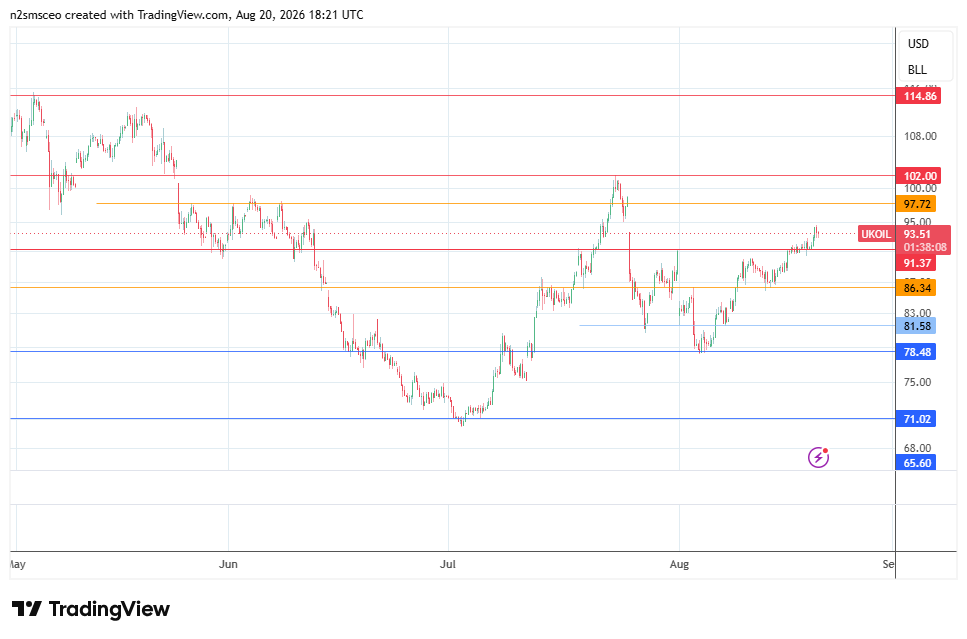
On the flip side, a decline below the 91.37 support makes a case for a retracement towards the 86.34 support (13 August low). 78.48 is the next downside target if the bears break the 86.34 support, but there is potential for a pit stop at 81.58.