



- The 10-year UK gilt yields have surged to 2-year highs on a global bond selloff, which is piling pressure on the FTSE 100 index.
Current Setup
Bias: cautiously bearish in the near term.
UK government bond yields surged to 18-year highs on Tuesday. 10-year gilt yields rose to 5.29% as the global bond sell-off triggered by renewed geopolitical escalation took hold in markets. This has left the FTSE 100 index under pressure, as rising oil prices weighed on stock markets amid concerns about higher energy costs and the impact on listed companies’ margins.
The FTSE 100 index live chart showed the index at 10760, just above a major support level at 10,695.
FTSE 100 Macro Drivers
1) Mixed Fortunes from Higher Oil Prices
Rising oil prices support the FTSE 100 index, which includes heavyweight energy companies such as Shell and BP. Energy companies benefit from rising oil prices, and the energy stocks have helped cushion the index. On the flip side, higher energy prices pose an inflation risk to the UK economy, which puts pressure on the Bank of England to keep rates higher for longer.
2) Surging UK bond yields
The sharp rise in UK government bond yields will raise borrowing costs for individuals and companies. Higher borrowing costs compress valuations and margins for vulnerable companies (manufacturers, transporters), reducing the relative appeal of equities.
3) Geopolitical risk
The latest escalation in the US-Iran conflict is driving investors away from risk-associated assets. UK and European equities are among the hardest hit as bond yields rise along with oil prices.
FTSE 100 Weekly Forecast Scenarios
Base case: the FTSE to witness volatile trading with a mildly bearish tilt as long as gilt yields and Brent crude stay elevated.

Bull case: FTSE 100 recovery to follow geopolitical de-escalation, with a drop in oil prices and easing of UK bond yields. FTSE 100 expected to rebound above the 31 July 2026 high at 10,990.
Bear case: A push by oil prices above $100 will push UK gilt yields even higher. In this case, the FTSE could break below 10,700, confirming the double top.
FTSE 100 Price Catalysts
The key price catalysts this week are:
1. Geopolitical Developments: further escalations worsen the outlook, as this will drive oil prices above $100 and send UK gilt yields soaring. In this situation, the FTSE 100 could break below the 10,700 support, completing the double top and leading to a further leg lower.
2. Brent crude prices: oil prices are trending upwards and have pushed above $95. The higher they go, the higher the risk of margin compression for UK companies on the FTSE 100 index.
3. UK gilt yields: Higher bond yields attract capital away from the stock markets. If UK gilt yields pull back from the current multi-year highs, the FTSE 100 will recover.
4. US jobs data: a strong NFP report reinforces the recent hawkish Fed tilt. This will send global bond yields higher and drag UK gilts along; a FTSE 100-negative scenario.
FTSE 100 Technical Outlook
The progressively lower tops on 31 July and 26 August 2026 are an ominous sign for bulls on the FTSE 100. A breakdown of the neckline support at 10,690 and the trendline confirms the double top, raising the potential for a decline first to 10,400 (9 July low) and potentially to the 10,260 support formed by the 27% Fibonacci extension of the 25 June 2025 – 11 November 2025 upswing.
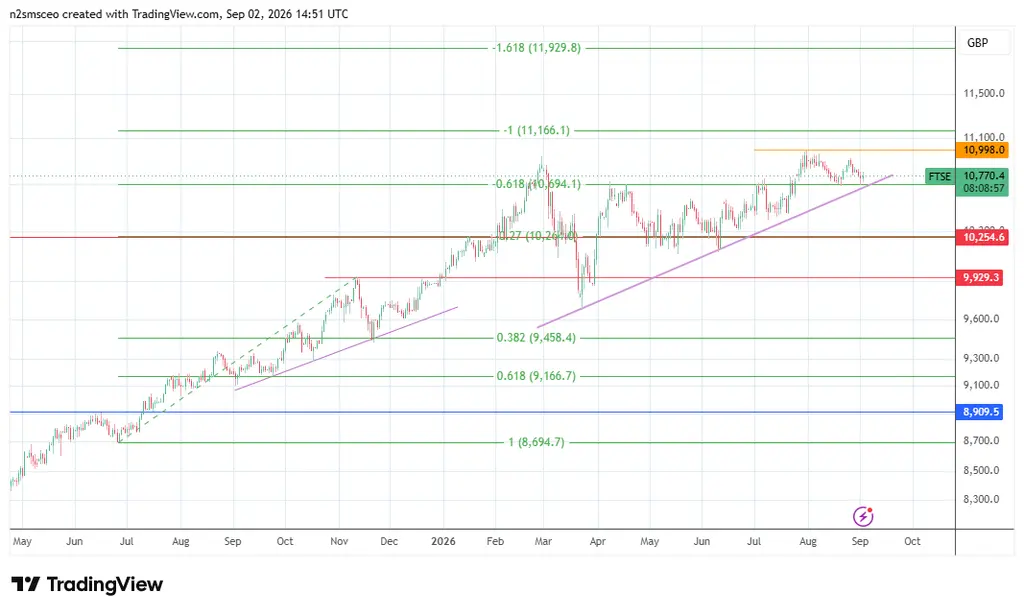
Conversely, a bounce on the trendline and the 10,690 support is required to maintain the modest bullish climb. However, the 11,160 resistance (100% Fibonacci extension) is only exposed if the higher top in the pattern at 10,990 is uncapped.