



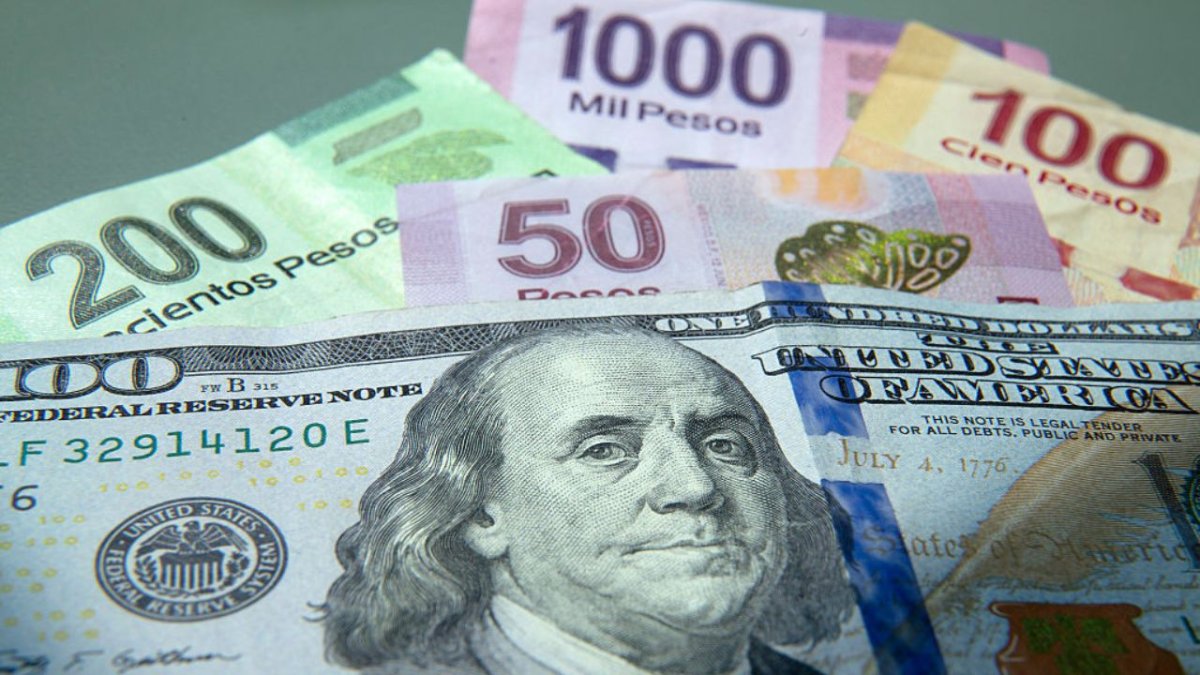
- USD/MXN trades around 16.91, extending a decline that has pushed the pair to levels last seen in 2024.
- Mexico's headline inflation accelerated to 3.26% in the first half of August, although the reading was below market expectations.
- Core inflation eased slightly to 3.93%, keeping the outlook for Banco de México more complicated than the headline CPI increase suggests.
The USD/MXN exchange rate remained near two-year lows on Monday as the Mexican peso held onto most of its recent gains despite a rebound in the US dollar following Washington’s latest sanctions against Iran. USD/MXN is trading around 16.91 at the time of writing, according to the latest daily chart, after falling below the psychologically important 17.00 level last week. The pair has declined sharply from around 17.60 in early July, leaving the dollar at levels against the peso last seen in 2024.
The peso’s resilience is notable because Monday brought two potential obstacles to further gains. Mexico’s latest inflation report showed headline inflation accelerating to 3.26% in the first half of August, while the US dollar strengthened after Washington announced expanded secondary sanctions targeting countries that continue trading with Iran.
The sanctions announcement briefly strengthened demand for the dollar as investors assessed the risk of further escalation in the Middle East. The US Dollar Index rose about 0.17% to 98.99, but the move was not enough to produce a meaningful reversal in USD/MXN.
That leaves the pair in an interesting position. The dollar has found a fresh geopolitical catalyst, yet USD/MXN remains below 17.00. Sellers are therefore still controlling the broader trend, although the combination of stronger dollar demand and increasingly stretched technical conditions raises the risk of a short-term rebound.
U.S. Iran Sanctions Give Dollar a Short-Term Boost
The latest geopolitical developments add another factor to the USD/MXN outlook. US Treasury Secretary Scott Bessent announced new secondary sanctions aimed at increasing economic pressure on Iran following escalating tensions in the Gulf. The measures contributed to renewed demand for the US dollar as markets assessed the potential economic and geopolitical consequences.
The move came during an already cautious session for global markets. Technology stocks declined, while investors also turned toward safe-haven assets, with gold reaching a three-month high. For USD/MXN, however, the reaction has so far been limited. The pair remains below 17.00 despite the broader dollar recovery, suggesting underlying demand for the Mexican peso remains relatively strong.
Mexico Inflation Rises to 3.26%, But Misses Forecasts
Mexico’s latest inflation figures provided a mixed signal for the Mexican peso outlook. Annual headline inflation accelerated to 3.26% during the first half of August, up from 3.10% a month earlier. Consumer prices increased 0.10% during the period. However, the headline figure came in below the roughly 3.30% economists had expected. More importantly for Banco de México, underlying inflation moved in the opposite direction.
Core inflation eased to 3.93% from 3.95%, compared with expectations for an increase to around 3.99%. That distinction matters. Headline inflation is moving higher, but the softer core reading provides little evidence of a sudden broad-based acceleration in underlying price pressures. At 3.26%, headline inflation also remains within Banxico’s target range of 3% plus or minus one percentage point. The numbers therefore did little to dramatically alter expectations for Mexican monetary policy.
Banxico’s 6.5% Rate Keeps the Peso Attractive
Interest-rate differentials remain an important part of the USD/MXN forecast. Banco de México left its benchmark interest rate unchanged at 6.5% earlier this month. Minutes from the meeting suggested policymakers could maintain the current rate for an extended period as they assess persistent inflation risks.
That relatively high yield continues to support the peso. Mexico’s economy has also held up better than some investors expected. Revised data released Monday showed GDP expanded 1.4% quarter over quarter in Q2, marking the strongest quarterly growth rate since early 2022. The economy grew 2.1% from a year earlier.
The combination of resilient growth and a relatively high policy rate gives investors fewer reasons to aggressively price near-term monetary easing. At the same time, the US dollar has struggled to regain sustained momentum, allowing USD/MXN sellers to remain firmly in control.

USD/MXN Technical Analysis: 16.90 Comes Under Pressure
The daily chart paints a remarkably consistent bearish picture. USD/MXN has been forming a sequence of lower highs and lower lows since its July peak around 17.60. The decline accelerated during August, with the pair breaking below 17.20 and eventually losing the psychologically important 17.00 level.
Price is now sitting near 16.91.
Momentum indicators still favour sellers. The MACD remains below both its signal line and the zero level, confirming that the broader trend remains bearish.
There is, however, an important change taking place underneath the surface.The negative MACD histogram is becoming progressively smaller. That suggests bearish momentum is beginning to moderate even though the pair continues to make new lows. This creates an interesting setup around 16.90.
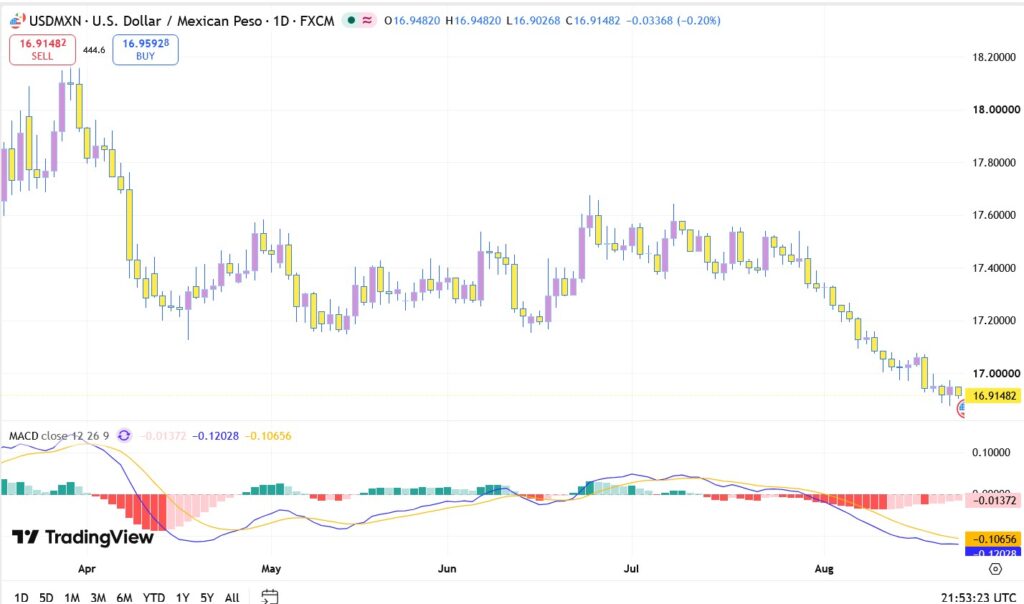
A clean daily break below 16.90 would reinforce the bearish structure and expose 16.80 as the next immediate target. Below there, the 2024 trading range suggests 16.60 could become increasingly relevant. For bulls, the first challenge is getting USD/MXN back above 17.00. A sustained recovery through that level could trigger a larger correction toward 17.10, followed by the stronger 17.20 to 17.30 resistance region.
USD/MXN Forecast: Can the Mexican Peso Keep Rising?
The USD/MXN outlook remains bearish, with the pair holding near two-year lows around 16.90 despite a modest US dollar rebound following Washington’s latest sanctions against Iran.
The peso also showed limited reaction to Mexico’s latest inflation data, suggesting the broader downtrend remains intact. However, after the sharp decline below 17.00, downside momentum is beginning to ease.
A break below 16.90 could expose 16.80, while a recovery above 17.00 would signal that USD/MXN may be entering a short-term correction. For now, 16.90 remains the key level for the USD/MXN price forecast.
USD/MXN has fallen as the Mexican peso benefits from relatively high Mexican interest rates and resilient economic data while the US dollar remains under pressure. The pair has dropped below 17.00 and is now testing its lowest levels since 2024.
Mexico’s annual headline inflation increased to 3.26% in the first half of August 2026, while core inflation eased slightly to 3.93%. Headline inflation remains within Banco de México’s target range.
The peso could extend its gains if USD/MXN breaks below 16.90 and US dollar weakness continues. However, the pair is approaching historically significant territory, while momentum indicators suggest selling pressure is beginning to moderate. That raises the possibility of a short-term USD/MXN rebound even if the broader trend remains bearish.