



- The hotter-than-expected US Producer Price Index print makes a case for a rise in US bond yields, which could impact gold and the US30 asset.
Tuesday’s consumer price index data was hotter-than-expected and was a signal that the oil shock risk premium had started to seep into the consumer end of the supply chain. But Wednesday’s US PPI data really doubled down on that narrative and came in much hotter than expected.
According to data from the US Department of Labor Statistics, the US Producer Price Index for April 2026 rose 1.4% month-on-month, beating the consensus of 0.5% and the prior of 0.7% (upward revision). Furthermore, the core print came in at 1.0%, beating the market expectation of a rise from 0.2% prior (revised upwards to 0.3%). Thus, the inflationary fears which have beset the market since the oil shock risk premium took hold of the markets in March 2026 have been confirmed.
These numbers are the largest monthly increases since March 2022, with the BLS also noting the broad-based nature of the rise across goods and services.
With inflation now coming in hotter than expected, the pathway to any near-term Fed easing appears foreclosed. The markets were relatively subdued post-release, but action appears to have started to kick in on the XAU/USD asset (gold) with the US market open.
Implications for Key Assets
Now that the inflation pipeline appears to be much hotter than the markets had predicted, what is the near-term impact on key assets?
GOLD
The hotter-than-expected inflation prints could lead to a rise in US bond yields, in expectation of hawkish action by the Fed. This has near-term negative macro implications for gold, which is a non-yielding asset.

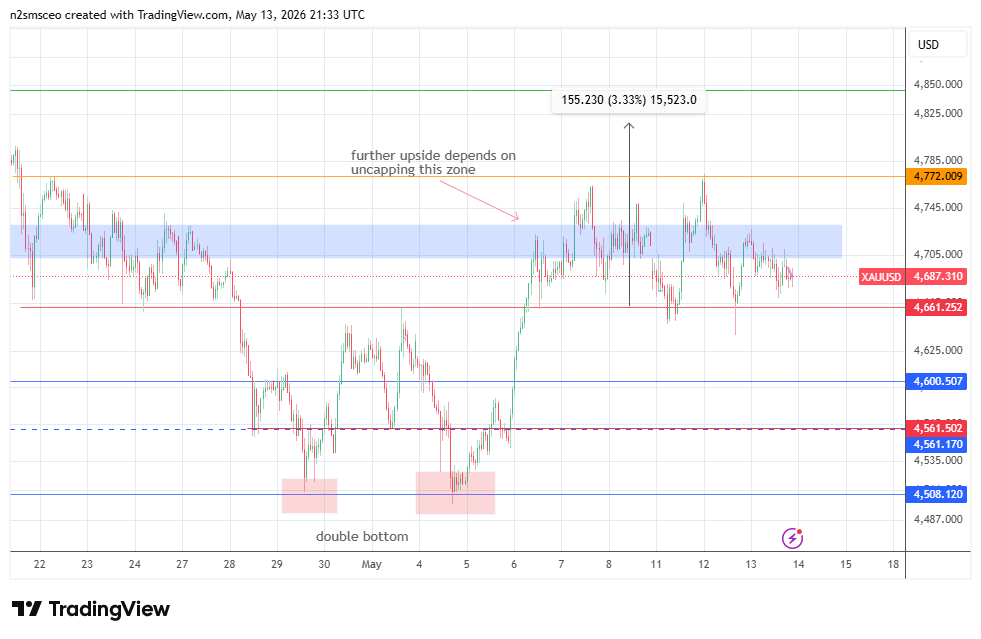
Gold continues to trade in a two-way street, displaying sensitivity to the oil shock risk premium in a bearish manner, even as the US Dollar benefits from safe-haven demand. The red-hot PPI print will add to the already-existing pressure that gold has been facing from higher oil prices that have plagued the markets since the week began.
However, this does not automatically translate into a collapse of gold prices. The two-way trading pattern remains in place as long as the oil shock risk premium remains. What the CPI and PPI data does is that it reinforces the downside leg of the two-way pattern. Gold is expected to trade defensively in the face of higher US bond yields.
US30
Hotter-than-expected inflation data keep the Fed less dovish than before, which is a typical headwind for stocks and stock indices. The Dow Jones Industrial Average (represented by the US30 ticker) is heavy on industrials, consumer-facing stocks, cyclicals, and financials. These companies are typically more exposed to higher input costs than other companies. Therefore, a hotter-than-expected PPI print can quickly squeeze margins for these companies if they are unable to pass those costs down the supply chain.
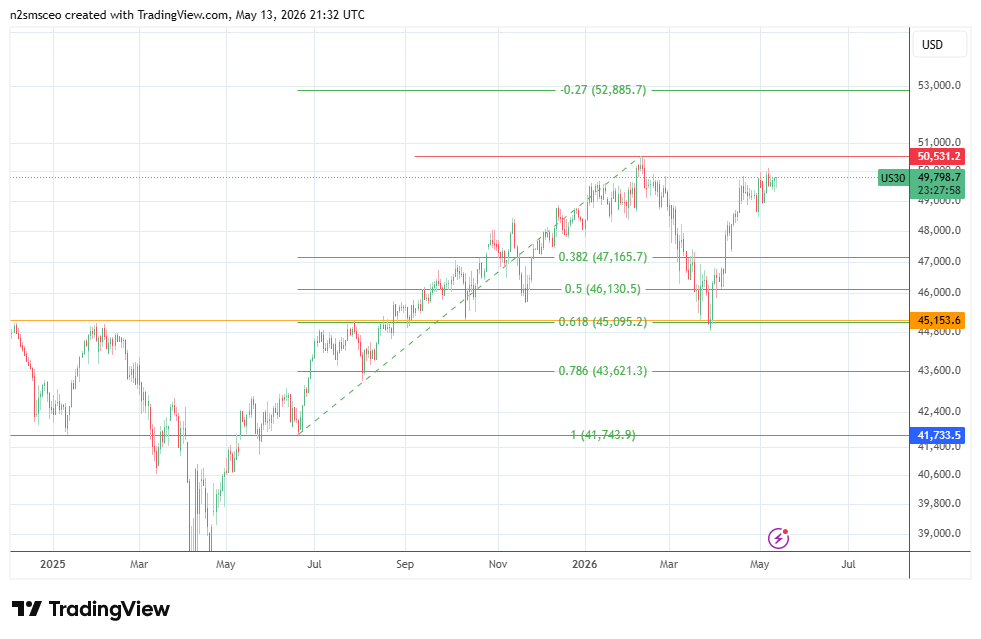
Today’s PPI print will matter for the Dow in the days and weeks to come. Currently, the market has had a mixed response to the data print, but as the market digests the data, a more defined reaction will follow.
Market Focus Post-PPI
For gold, the market response will remain cautious, waiting to see if this week’s CPI and PPI data are one-off occurrences or the start of a much broader round of inflation. Gold will remain under pressure if US bond yields rise. The US PPI data triggered a new yearly high for the 10-year US Treasury yields. But if this is more of a one-off event that has already been priced in, we may not see any price moves different from the two-way street that has been in place since March.
For US indices such as the US30, traders will watch to see whether the current earnings season offsets any margin pressure from higher US bond yields. The issue of Fed rate pathway repricing will be on the front burner for a while. Continuous hawkish repricing will cap any earnings-beat-driven rallies.