
Archived Article This article was published more than 5 months ago. The market data, prices, forecasts, and analysis were accurate at the time of publication but may have changed since then. Please use this article for historical reference only and refer to our latest content for current market information.
- Zomato shares drop over 10% after BofA downgrade to ‘Neutral’; stock nears ₹200 support as bearish momentum builds.
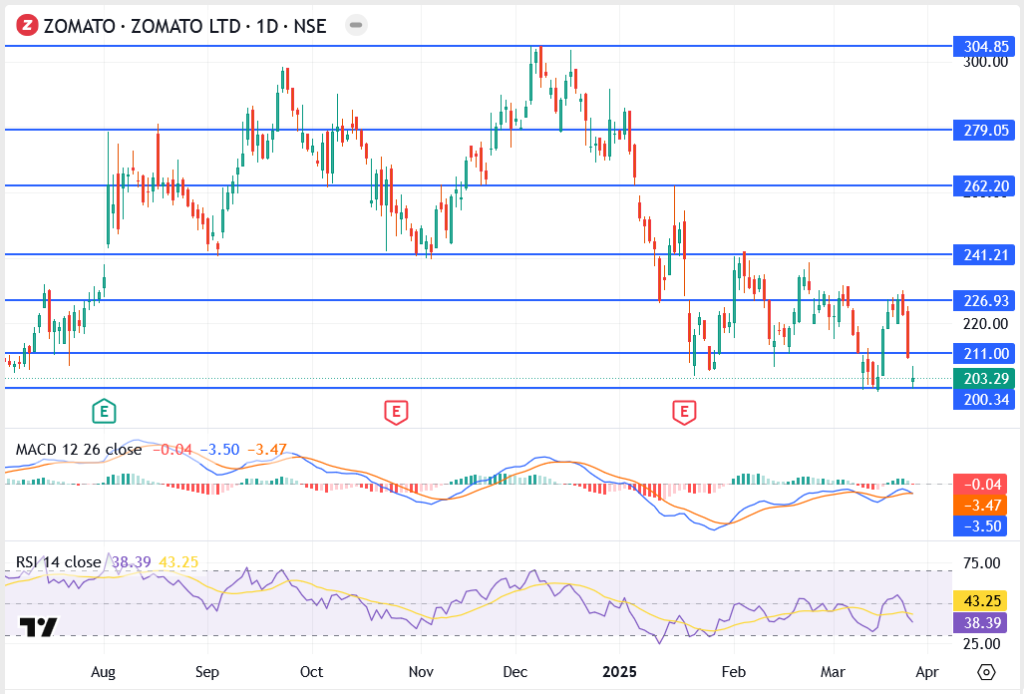
Zomato Ltd. shares have dropped more than 10% since Bank of America (BofA) downgraded the stock to ‘Neutral,’ raising concerns over valuation and profitability. The stock, which recently traded around ₹226.93, has now slipped to ₹203.29, erasing recent gains and threatening to break below the crucial ₹200 psychological mark.
What Triggered the Zomato Fall?
- BofA Downgrade: BofA cited near-term margin headwinds in Zomato’s food delivery segment and a plateau in growth, prompting a shift from ‘Buy’ to ‘Neutral’.
- Revised Target: The brokerage also slashed its target price to ₹250, signaling a muted outlook and limited upside potential from previous expectations.
- Weak Sentiment in New-Age Stocks: With growing investor scrutiny on tech valuations and delivery unit profitability, the downgrade amplified bearish sentiment.

Technical Breakdown: Zomato Cracks Below Key Levels
Zomato’s daily chart paints a bearish picture, confirming a technical correction of 10.4% from the recent swing high.
Support Levels:
- ₹203.29: Immediate support, currently under retest.
- ₹200.34: A critical zone — breakdown here could trigger steeper falls toward ₹190 or even ₹180.
Resistance Zones:
- ₹211.00: Nearest resistance that must be cleared to reverse momentum.
- ₹226.93: Recent top where selling pressure intensified.
Conclusion
Zomato’s sharp 10% drop following BofA’s downgrade has brought the stock to a critical technical juncture. With ₹200 acting as a make-or-break level, the coming sessions will be crucial in determining whether buyers step in or the downtrend deepens. For now, caution remains key — especially with broader market sentiment turning selective around high-growth tech names.