




- Insider trading occurs when individuals use material non-public information to gain an unfair advantage in financial markets before information becomes publicly available.
- Regulators such as the SEC closely monitor suspicious trading activity, as insider trading undermines market transparency, fairness, and investor confidence.
Insider trading is the purchase or sale of a publicly traded corporation’s stock by someone who has non-public, material information about that stock. That is, information that has not been released to the public and that, if disclosed, could have a material effect on an investor’s decision.
“Non-public information” means information not publicly available to the general investing public. It is generally accessible only to select individuals, such as corporate executives or other insiders, who may have early access to confidential company information or upcoming financial disclosures before they are made public.
In this piece of content, you will learn what insider trading is, how it works, real-world examples, and the penalties associated with this practice.
What Is Insider Trading?
Insider trading occurs when someone in a position of trust buys or sells a security, using knowledge not yet available to the public. It usually involves “material non-public information,” that is, information that could materially affect a company’s stock price but has not yet been made public.
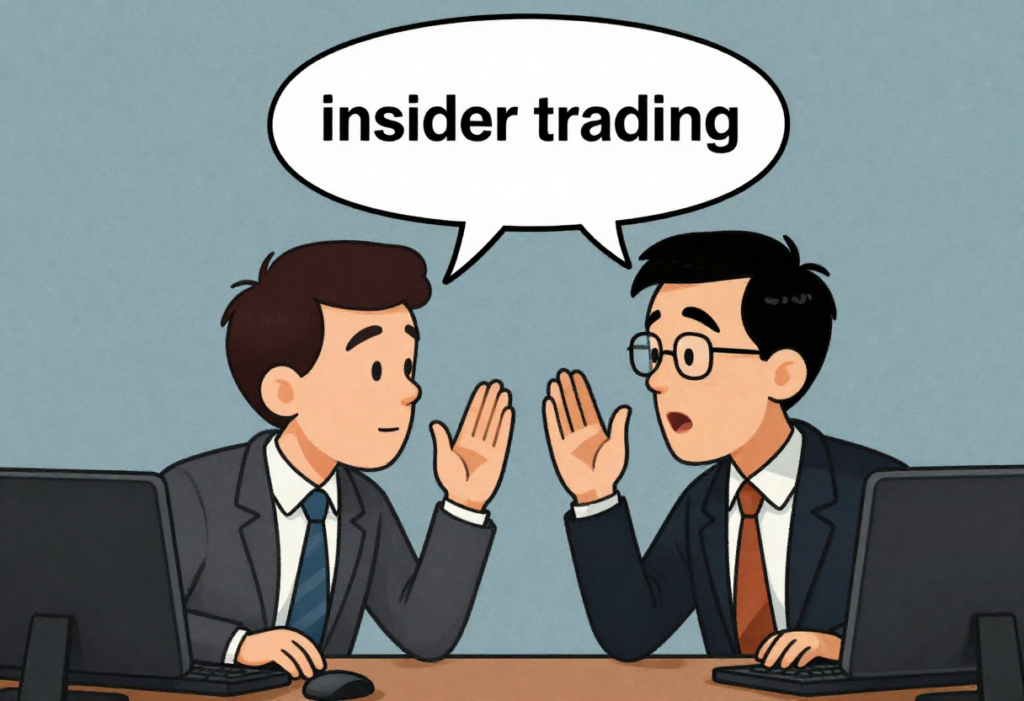
In many cases, this information is not only used directly by the insider himself. It can also be passed on to other people in a practice called “tipping,” where someone makes trades based on that shared information. The violation is the same for those who receive and act upon it, even those who abuse confidential information for trading. At the heart of all insider trading is the violation of trust, using confidential, market-changing information for personal financial benefit.

How Does Insider Trading Work?
Insider trading is mainly characterized by two major components: who has access to information and whether the information is material and nonpublic.
Actually, an “insider” is not limited to top executives or board members. This could be anyone with a trusted position in a company that gives them access to sensitive information. It could be an employee on the payroll or a temporary insider, like a lawyer or accountant working with the company, or even someone indirectly tied through business relationships. The important thing isn’t the job title, but the duty to keep that information confidential.
From the SEC’s perspective, insider trading occurs when someone breaches that duty of trust and confidence by buying or selling a security based on material, non-public information. This includes corporate officers, directors, and major shareholders, but also extends to anyone who receives inside information through their relationship with the company or its representatives.
The SEC says this is illegal because it undermines market fairness. The violation occurs irrespective of whether the trade is made by the original insider or by someone who received the information indirectly, as it involves the improper use of information not yet available to the rest of the market.
Real-Life Insider Trading Examples:
- Raj Rajaratnam & Galleon Group 2009-2011:
Raj Rajaratnam’s insider trading case became one of the most high-profile examples of how insider information can be used to gain an illegal trading advantage. Between 2009 and 2011, the founder of the Galleon Group hedge fund built an extensive network of corporate insiders who provided him with confidential information from major companies, including Google, IBM, and Goldman Sachs.
The information included unreleased earnings results and details about potential corporate deals before they became public. Rajaratnam then used these early insights to place trades ahead of the market, allowing the hedge fund to generate more than $60 million in illegal profits.
This case drew major attention because it showed to what extent insider trading behavior can operate through networks of information-sharing rather than direct company involvement alone. - Martha Stewart & ImClone Systems (2001):
The Martha Stewart and ImClone Systems case became one of the most high-profile insider trading cases in the celebrity world. Stewart sold her ImClone shares in 2001 after her broker tipped her off that the CEO of the company was rapidly selling his stock.
The trades came just before the U.S. ImClone’s experimental cancer drug was rejected by the Food and Drug Administration (FDA), sending the stock of the company into a nosedive. Stewart sold before the announcement was public, saving himself from losing millions of dollars.
The case captured intense media and regulatory attention because it exemplified how non-public information, even when passed indirectly via a broker or personal connection, can create an unfair trading advantage in the market.