


- The Dow Jones Industrial Average remains in a long-term uptrend, supported by resilient corporate earnings and strong technical momentum, despite a recent period of consolidation.
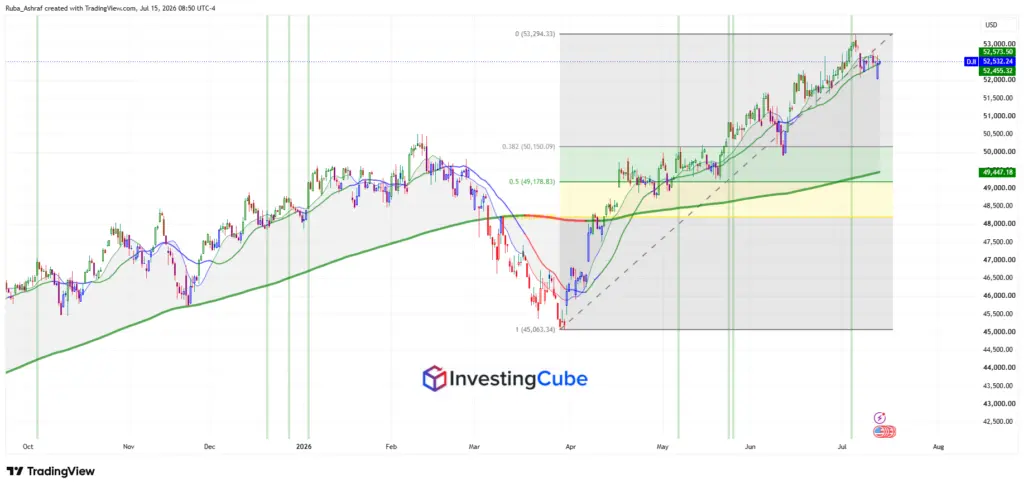
Dow Jones‘ price action remains in a well-established uptrend on the 4-hour chart. It continues trading comfortably above its key moving averages. After rebounding strongly from the April low near 45,063, the index has respected a rising trendline and formed a sequence of higher highs and higher lows. This confirms the sustained bullish momentum.
The recent rally extended to a new swing high around 53,294, which aligns with the 0% Fibonacci level drawn from the April low to the July high. Since reaching this peak, however, the price has entered a consolidation phase, with several small-bodied candles. This reflects indecision as buyers and sellers battle for control.
Despite this pause, the index remains holding above the short-term moving averages, while the long-term averages are sloping upward. The recent pullback found support around the 52,450-52,500 region, preventing a deeper correction. This suggests that buyers are still defending higher price levels. As long as DJI remains above this support region, the consolidation is likely to be viewed as a healthy pause within the broader uptrend rather than a trend reversal.

The first major support level is 50,150 if selling pressure accelerates, aligning with the Fibonacci retracement level 38.2%. It is followed by a 50% retracement at 49,179, which also coincides closely with the rising long-term moving average. These overlapping technical levels strengthen the support zone and could attract renewed buying interest if tested.
A decisive break above 53,294 would signal continuation of the primary bullish trend and could open the door for another record high. Conversely, a sustained move below the recent consolidation range would increase the likelihood of a deeper retracement toward the Fibonacci support levels.
Dow Jones Faces a Tug-of-War Between Strong Corporate Earnings and Growing Macroeconomic Headwinds:
- Middle East Escalated Tensions and Energy Shocks:
The breakdown of the ceasefire deal between the US and Iran, with subsequent strikes, caused an immediate “geopolitical-risk premium” to the market. The ongoing conflict in the Strait of Hormuz has sent crude oil up over 5%. As a result, this boosts the energy component but threatens broader corporate margins.
How does this reflect on the DJI? The defensive industrial giants like Caterpillar (CAT) and transport conglomerates are highly sensitive to elevated energy costs. This keeps the Dow capped from running too far past its recent record highs. - The Warsh Fed Repricing Rate Cuts:
In the latest FOMC minutes, the Fed warned that they are open to keeping interest rates higher for a longer time to tackle sticky inflation. With CPI inflation still uncomfortably elevated, the Fed has completely dismantled its “easing bias” and is signaling that rates must remain higher for longer.
How does this reflect on the DJI? The highly rate-sensitive components of the Dow Jones are facing pressure as traders push rate-cut expectations further into the future. - A Strong Q2 Bank Earnings Season:
Major financial firms, including Goldman Sachs, JPMorgan Chase, and American Express, collectively posted incredibly robust Q2 numbers, helped by a massive 39% jump in profits powered by equity/bond trading, commercial lending, and high-profile investment banking deals.
Since Goldman Sachs holds the single highest price weighting in the entire Dow Jones index, its exceptional performance provides a massive structural floor for the index.