


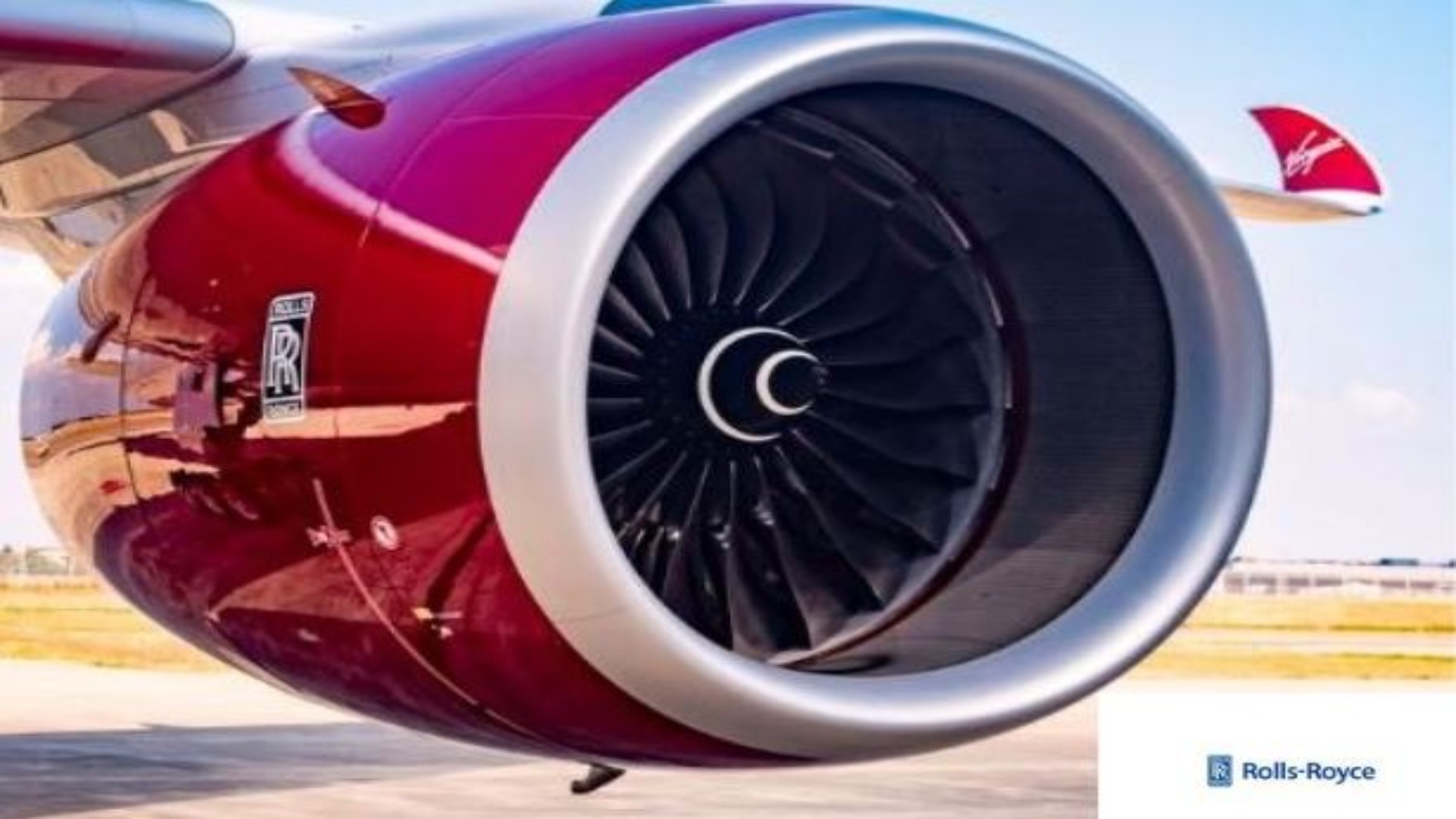
- Rolls-Royce large engine flying hours grew in Q1 2026 to 115% of 2019 pre-pandemic levels
- Despite the geopolitical risk in the Middle East, flight hours have recovered to pre-conflict hours, signaling good news to the flight-per-hour model
- Power generation segment, strong free cash flow and share buyback support the upside momentum but valuation concerns present a challenge
After experiencing a temporary dip from May 7 to 15, 2026, Rolls-Royce shares have demonstrated renewed vigor, hovering around 1,249p by May 22. However, a significant resistance point near 1,320p, first encountered in early March, remains. This piece will delve into the factors propelling this recent uptrend and consider whether it possesses enough momentum to surpass that key level.
Why Is Rolls-Royce Stock Rising?
Civil Aerospace continues to power the company’s performance. Large engine flying hours grew 5% in Q1 2026, reaching 115% of 2019 pre-pandemic levels, as per its trading update. The company expects between 115% and 120% for the full year. This matters a lot for a business that gets paid every time one of its Trent engines flies. Even Middle Eastern airline flying hours, which were affected by a regional conflict, are now back to pre-conflict levels.
Prudent financial management is also yielding positive results. The company reiterated its 2026 projections for underlying operating profit, expecting £4.0–£4.2bn, and free cash flow between £3.6–£3.8bn, even in the face of geopolitical challenges.
Demonstrating this strength, it paid a €750m bond fully using only free cash flow, leading to improved credit ratings. Moody’s gave it A3 while Fitch rated it A– from. Additionally, a £2.5bn share buyback program is currently active, offering a steady support for the shares.
Defence is now a major part of the bull case. First-quarter defence deliveries were up over 20% year-on-year. Big contract wins included EJ200 engines for Türkiye’s Eurofighter Typhoons and MT30 turbines for Australian Navy frigates. European rearmament is drawing institutional money toward defence-related industrial companies like Rolls-Royce.

Power Systems contributed too, as power generation orders jumped 50% year-on-year in Q1. This pushed the order backlog to £7.3 billion. UBS analyst Ian Douglas-Pennant pointed to more contributions from data-centre power sales. He raised his price target to 1,625p, based on better power-generation growth forecasts through 2028.
Can Momentum Break the 1,320p Resistance?
The 1,320p level has consistently served as a ceiling since early March, with the stock recently touching peaks around 1,329-1,330p before retracting. It is important to note that this 1,320p barrier is more of a technical hurdle than a fundamental one, especially given that the company’s core fundamentals appear to be moving positively. However, breaking heavy resistance requires fresh catalysts.
On the valuation front, there is a clear division among analysts. Simply Wall St’s detailed Rolls-Royce Valuation Analysis, using a discounted cash flow (DCF) framework, suggests the stock may trade at a premium. With current forward cash flow projected at £3.8 billion for 2026, that means near-term growth is already heavily priced in.
Strong performance in civil aerospace aftermarket, defence demand, and power systems growth from data centres fuel the momentum.
Broader market turbulence and short-term profit-taking pressured the stock, though the underlying business fundamentals remained unchanged throughout that period.
This level indicates a price range where sellers have consistently absorbed buying pressure since early March, effectively establishing a technical ceiling that would likely require more powerful catalysts to decisively surpass.