
- The Nifty 50 has been supported by improving liquidity conditions following the RBI’s new dollar swap facilities, which are expected to attract significant foreign capital inflows. Combined with strength in heavyweight stocks, which has helped the index reclaim the key 24,000 level.
- Short-term momentum remains constructive above 24,000; the index continues to face a critical resistance zone between 24,100 and 24,575.
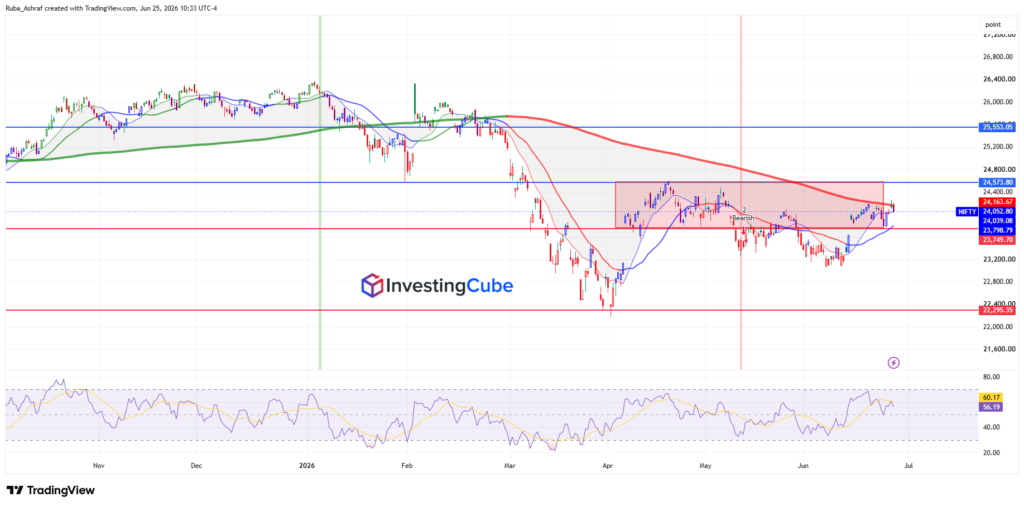
The price action shows that the Nifty 50 is trading within a broad consolidation range after the sharp sell-off seen in March. The price is currently hovering around 24,050, holding above the short-term moving averages. This suggests that buyers have regained some near-term control. However, the index remains capped by a significant resistance zone between 24,100 and 24,575, highlighted by the shaded rectangle.
This area has repeatedly rejected upside attempts over the past several weeks, indicating strong selling pressure from market participants. The longer-term outlook remains neutral to slightly bearish as NIFTY is still trading below the declining 200-period moving average. The inability to reclaim this major trend indicator keeps the broader recovery vulnerable. Meanwhile, the shorter-term moving averages have crossed above each other and are sloping higher, reflecting improving momentum and supporting the recent rebound from the June lows.
A sustained move above 24,160 followed by a break of 24,575 would likely signal a continuation toward the next resistance around 25,550. Conversely, failure to overcome the current resistance zone could trigger renewed selling pressure, with immediate support located near 23,800, followed by the key swing support at 22,295.
The RSI is trading around 56, remaining above the neutral 50 level but below overbought territory. This indicates positive momentum is building, although not strong enough yet to confirm a decisive bullish breakout.

The primary catalysts shaping the Nifty 50 Index:
- A significant liquidity tailwind has emerged following the Reserve Bank of India’s (RBI) latest policy initiatives, providing fresh support for domestic equities. The central bank’s decision to introduce two new dollar swap facilities. This aims to attract between $40 billion and $50 billion in foreign capital. This is expected to enhance liquidity conditions across financial markets while easing concerns over funding availability. The move has been widely viewed as a proactive step to strengthen capital inflows and reinforce financial stability, boosting investor sentiment and encouraging greater participation from institutional investors.
- As confidence improved, the Nifty 50 successfully reclaimed the psychologically important 24,000 level, highlighting the market’s positive response to the prospect of stronger liquidity and sustained foreign investment demand.
- As a massive net importer of oil, India’s macroeconomic landscape heavily depends on energy costs. A sharp cooling in global crude oil prices, triggered by easing US-Iran geopolitical friction and reduced concerns around major supply chokepoints like the Strait of Hormuz, has directly relieved pressure on India’s current account deficit.
- This decline in input costs has triggered strong rallies in energy, retail, and manufacturing components of the index, as noted by India Infoline Market Reports.
- The Nifty 50’s recent strength has been driven more by sector rotation and gains in key heavyweight stocks than by a broad improvement in the overall economy. Major companies such as Reliance Industries, supported by positive business updates. Rebounds in the IT and pharmaceutical sectors have provided strong support to the index. At the same time, investors are increasingly directing capital toward specialty chemicals and infrastructure stocks.
- This is reflecting growing confidence in these sectors and helping sustain the market’s upward momentum.