




- The outlook for gold price action post-FOMC is for short-term weakness to dominate. However, the outlook improves in the medium term.
The FOMC decision of 29 April 2026 sparked dissension among four board members, three of whom supported removing any language that signals the likelihood of rate cuts in the foreseeable future. Markets viewed this as USD-supportive, and precious metals have extended their decline, which began late last week.
The market sentiment post-FOMC is one of greater market uncertainty, a higher-for-longer rate pathway for the Fed, and fewer rate-cut bets on the table. All this comes despite the Fed leaving interest rates unchanged at 3.50%–3.75%, in what is increasingly being seen as a hawkish hold.
Gold price extended its intraday decline, and fell 1.15% on the day. However, this was in the context of the breakdown of the rising wedge pattern which was already close to completion. Gold has had a recovery bounce having completed the price objective of the pattern. However, it remains inherently weak and and is set for a it remains to be seen whether sellers would fade the rallies at a relevant resistance, as has been the case in recent weeks.
Gold Price Outlook Post-FOMC
Post-FOMC, gold prices remain fragile amid the hawkish hold. The intraday bounce is merely a relief rally triggered by the completion of a key technical pattern’s measured move.
As long as short-term Treasury yields are up and traders price out 2026 cuts (there are some outlier bets of a rate hike in 2027), it remains questionable if the non-yielding yellow metal can triumph over the greenback.
Despite the intraday bounce, gold prices remain on track for a second straight month of losses, down slightly more than 2% in April. Gold prices continue to face a larger issue: oil-driven inflation expectations. Higher oil prices bring about producer inflation, which then seeps into the consumer chain. The Fed’s typical response is to keep rates restrictive for longer, which supports US bond yields and the greenback. The two-way gold price move remains: geopolitics supporting gold price as a safe-haven asset, but inflation expectations and a rise in Treasury yields promoting a flight to the US Dollar, which is hurting gold more than any supporting factors can keep the yellow metal up.

Post-FOMC, the market response is expected to plot the following pathway:
- Short term: gold prices will remain cautious to mildly bearish. There may be occasional bounces on dip-buying or any news on the economic calendar that renders the USD softer. However, rallies remain vulnerable to inflation expectations if oil prices exceed $100 per barrel.
- Medium term: Institutional price targets are not much changed from what they were after we provided the gold price updates for 2026, and they are mostly less negative than the short-term outlook. Goldman Sachs still maintains a $5,400 price per ounce by the end of the year, even though it still flagged some downside risks to its projections. The bank expects central bank demand and eventual Fed easing to kick in.
Implication of Outlook Changes for Gold Price
- Improved outlook: triggered by lower oil prices, softer US inflation data, weaker growth data, lower US yields and a weaker dollar.
- Worsened Outlook: The outlook will worsen if oil prices remain higher for longer. Stickier inflation and rising US yields will lead to a further hawkish repricing of expectations for Fed rate easing in 2026 (i.e., no cuts in 2026).
Gold Price Forecast: Technical Outlook
The breakdown move from the rising wedge has eventually found completion at the 4508 support; this level is the end point of the measured move that corresponds to the pattern’s base.
Selling pressure has eased at this pivot, from where a small bounce has occurred. However, this bounce needs more conviction for to push towards the 4600 resistance. If this level is uncapped, a return to the 4666 price mark that forms the base of the triangle pattern, becomes the next upside target for the bulls.
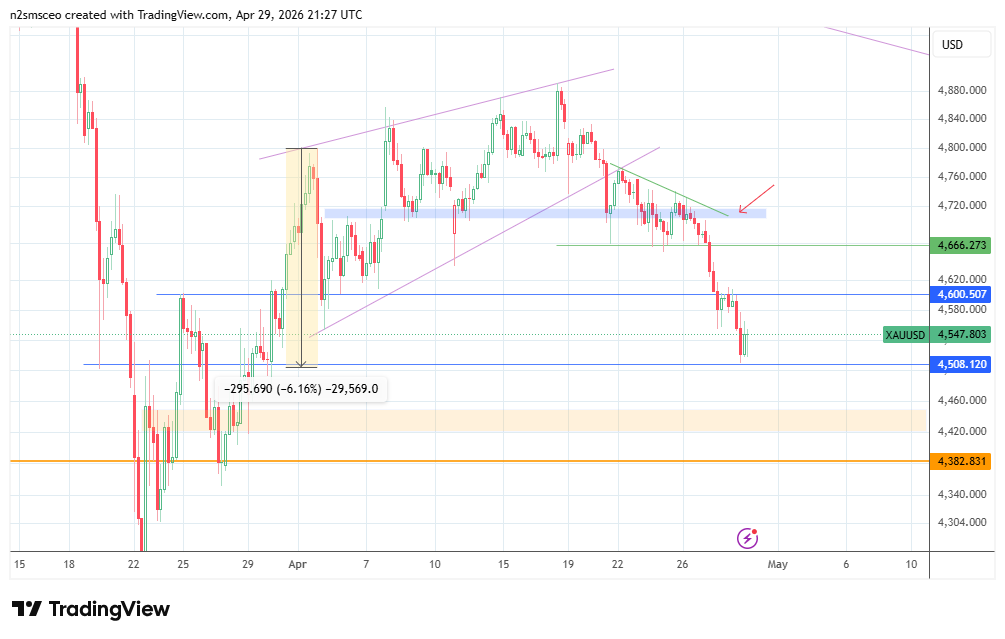
On the flip side, if downside pressure returns and takes out the 4508 support, this forms a basis for a further move south towards the next support target at 4382. There may be some intervening support around the 4449-4421 price zone.