


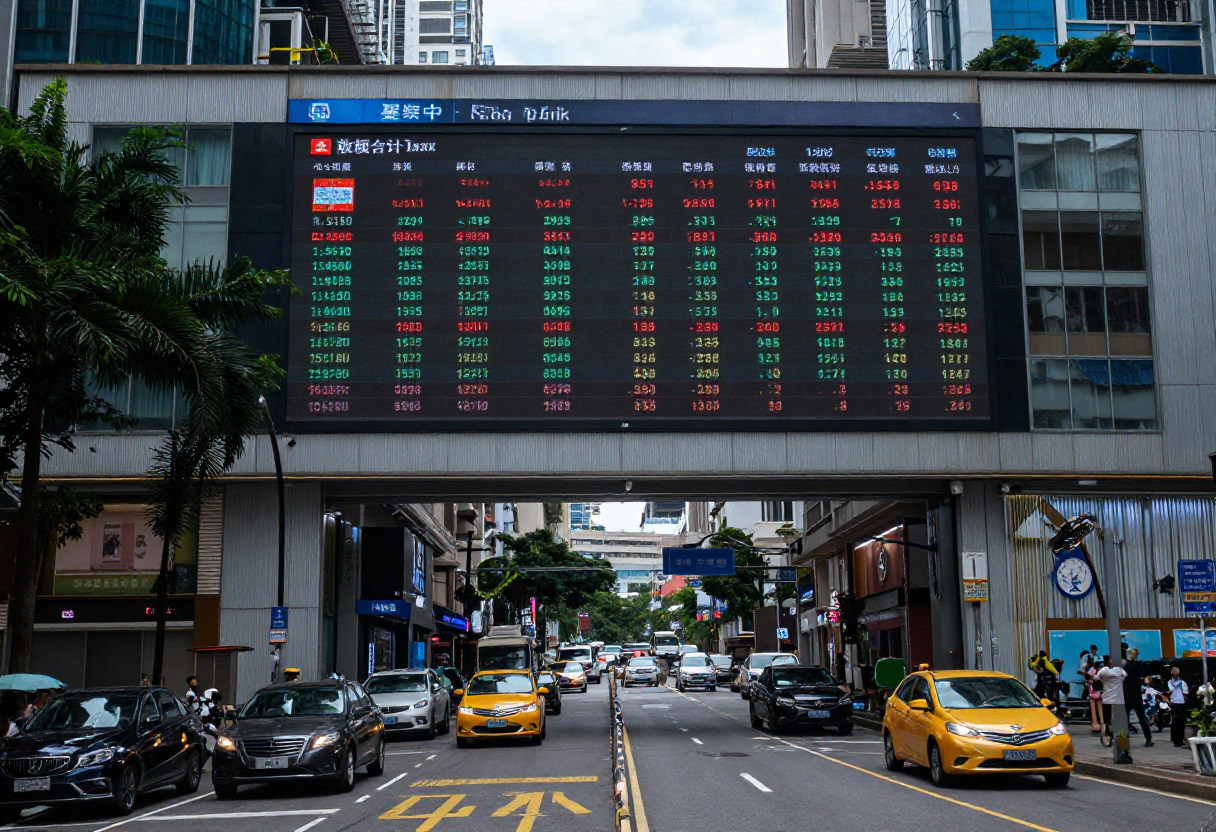
- U.S. stock futures started September lower. Investors are reacting to higher oil prices, stemming from renewed U.S.-Iran tensions, and rising global bond yields, weighing on market sentiment
- The jump in crude oil prices has reignited inflation worries. It's also made another Federal Reserve interest rate hike seem more likely.
- This week's economic data will offer more clues about possible interest rate changes and where the market's headed. Among them are the JOLTS report out today and Friday's jobs report.
Global stock markets are seeing more ups and downs. Investors are trying to balance rising government bond yields with new geopolitical developments.
The S&P 500 slipped a bit from its recent high. The Dow Jones Industrial Average dropped over 370 points after key interest rate benchmarks climbed quite a bit.
September, historically a difficult stretch for stocks, has also brought a surge in geopolitical risks and renewed attention to inflation and monetary policy.
What’s Moving Markets?
The main force driving markets today is the renewed military action between the U.S. and Iran. Following a stretch of quiet, U.S. forces hit targets near the Strait of Hormuz. Iran then responded by attacking U.S. positions.
Oil prices jumped quickly after these developments. Brent crude went past $90 a barrel, with some reports suggesting it hit or even topped $93.
West Texas Intermediate (WTI) prices rose too. A main worry is that any long disruption to shipping through the Strait of Hormuz could cut global oil supply and push energy costs higher.
U.S. stock markets ended Monday lower. Tensions between the U.S. and Iran had escalated into open conflict, which sent crude oil prices sharply higher.
The Dow Jones Industrial Average shed 0.7% to 53,185.90. The S&P 500 dropped 0.3% to 7,686.14, and the Nasdaq Composite dipped 0.1% to 26,370.89.
All three major stock indexes finished lower for the day, even after ending the previous month with positive gains.

Bond markets were active too. The benchmark 10-Year Treasury note yield rose to 4.75%, its highest level since January 2025. The 30-Year Treasury yield climbed to 5.243%. In Japan, yields rose to 3% on Monday, the first such rise in the intraday session 1996, pointing to worsening fiscal strain around the world.
These shifts come after Federal Reserve Chair Kevin Warsh’s remarks at the Jackson Hole symposium. He warned about ongoing high inflation. Futures markets now show about a 57.5% chance of a 25-basis-point interest rate hike in September.
Potential Disruptors
More military escalation blocking traffic through the Strait of Hormuz would likely worsen oil price increases and inflation worries. Also, stronger-than-expected JOLTS or payroll reports could firm up expectations for interest rate hikes, pushing yields even higher.
On the other hand, any de-escalation or weaker labor market data would likely support equity markets, easing immediate pressure for tighter monetary policy. Global yield movements, especially if they pick up speed in Japan or Europe, could also put more pressure on U.S. markets.
Are Bubble Burst Fears Still Valid?
Talk about high market valuations, particularly in the technology and artificial intelligence sectors, has continued throughout 2026. Things like concentrated market leadership and high price-to-sales ratios have fed these discussions.
However, today’s market structure is very different from past speculative periods. Unlike the dot-com era, leading companies now generate substantial free cash flow and show double-digit earnings growth, backed by real corporate capital expenditures.
Instead of expecting a complete bubble collapse, analysts mostly see the current risks as part of a necessary market repricing. Bubble risks are still a concern for the medium term, but they’re less pressing than immediate factors like energy prices, interest rates, and economic growth data.
Stocks are down today largely because oil prices are up due to renewed U.S.-Iran tensions. Higher global bond yields are also weighing on equities
Later this week, markets will be watching the JOLTS report and Friday’s August jobs numbers. These figures should shed some light on how strong the labor market is, directly impacting the Federal Reserve’s interest rate decisions.
Fiscal concerns in Japan, higher energy prices, and shifting expectations for tighter monetary policy have driven yields higher across major government bond markets.