


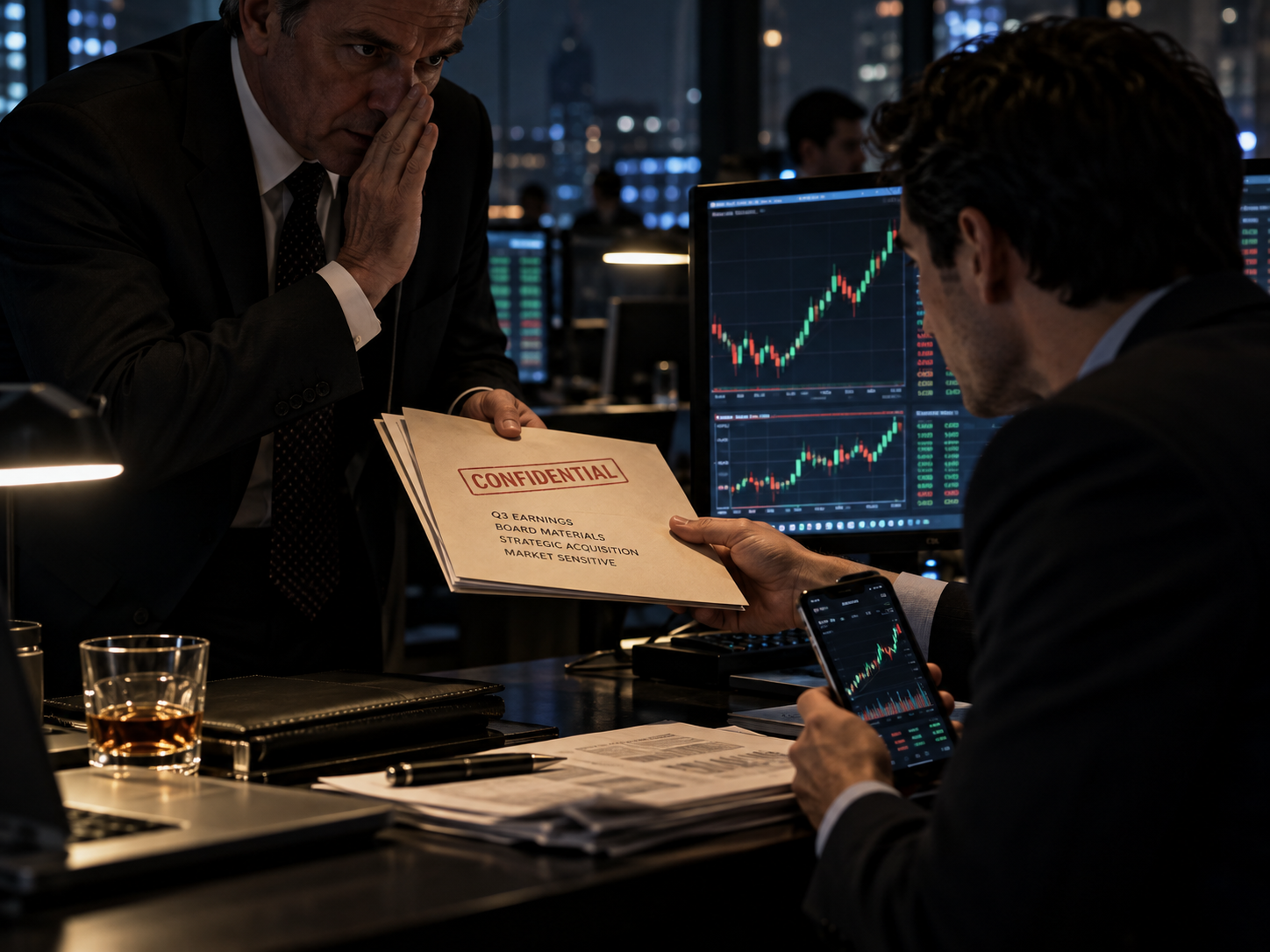
- Explore what insider trading is, its meaning, the legal situation, and examples of how to approach the concept.
The concept of insider trading has been around for many years, with many individuals spending years in prison for doing that. This guide walks you through what insider trading is, whether it is legal or illegal, and gives some examples of popular cases in history.
What Is Insider Trading? Meaning and Definition
Insider trading is the buying or selling of a company’s securities by someone who has important information about that company that the public does not yet have. The key idea is an unfair advantage. One person trades with knowledge that could move the price, while everyone else on the other side of the trade is working in the dark.
In most cases, the term insider refers to a company’s executives and board members and their family members. However, it can also reach other people, including consultants, investment bankers, and accountants.
Legal vs. Illegal Insider Trading: What’s the Difference?
Insider trading is not always illegal. In fact, corporate executives are always doing insider trading in some ways. A good example of the legal one is when an executive sells or buys shares in a company. In this case, the executive must publish information about the transaction with the regulator. For example, following this link will show you insider trading activity of Plug Power.
The illegal trading is when one trades on material non-public information. For example, if an executive or advisor knows that the company is being acquired, they can buy shares. Also, if the individual knows that a drug trial has failed, they can short shares. In this case, they must disclose the transactions to avoid legal issues.
Insider Trading Laws and Penalties
Most countries have legal provisions on insider trading. In the United States, these issues are adjudicated by the Securities and Exchange Commission (SEC), which brings civil cases. The Department of Justice can also bring criminal cases. Depending on the crime, the SEC can seek financial penalties, prison sentences, and even a ban from participating in the financial market.
The same applies in other countries like the UK, European Union, Australia, and Asia. Regulators implement these laws to ensure that the financial market is healthy.
Famous Insider Trading Examples and Cases
There have been some notable insider trading cases in the US. The most notable one was on SAC Capital, which was started by billionaire Steve Cohen. At the time, SAC was one of the best-performing hedge funds in the US. It was later found out that the company was using insider trading. In the aftermath, Cohen paid millions of dollars in restitution and barred from the market for years. Mathew Martoma, an employee, was sentenced to prison.

Another good example is Martha Stewart, who was sentenced to prison for selling shares in ImClone, a biotech company before it disclosed that a key drug had been rejected by the FDA. She spent five months in prison for obstructing justice and lying to investigators.
Amother example is Raj Rajaratnam, who founded the Galleon Group. He was sentenced to 11 years in prison for building sources inside publicly traded companies in the United States who shared crucial information to him.
How Insider Trading Is Detected and Prosecuted
Regulators use several approaches to detect insider trading cases. A common one is leaks from insiders. When a leak is successfully prosecuted, the person can get a financial incentive.
Also, Exchanges and regulators monitor trading around major announcements such as mergers, earnings and regulatory decisions. Unusual spikes in volume or in options activity just before news breaks are a classic red flag.
Once a case is established, the regulators request investigations. This could be in the form of wiretaps and subpoenas. They can subpoena their email and phone conversations to get more information. After that, the person can decide to cooperate with regulators to get a favorable outcome in court. They can also decide to fight the lawsuit.
Frequently Asked Questions About Insider Trading
Is insider trading always illegal?
No. Insiders such as directors and executives are generally allowed to buy and sell shares in their own companies, provided they trade openly, report the trades as required, and are not acting on material information the public does not have. Illegal insider trading is specifically about trading, or tipping others to trade, on confidential information that could move the price.
What counts as material non-public information?
Information is material if a reasonable investor would likely consider it important when deciding whether to buy, sell or hold a security, or if it would probably move the price once released. It is non-public if it has not been broadly shared with the market through an official announcement, filing or press release.
Common examples include: Upcoming mergers, acquisitions or takeover bids, earnings results before they are published, and major contract wins or losses.
Can you go to jail for insider trading?
Yes. In the United States, a criminal conviction can carry a sentence of up to 20 years, and real cases have ended with prison terms ranging from a couple of years to over a decade. Many other countries, including the United Kingdom, also provide for imprisonment alongside fines and forfeiture of gains.
What should I do if I receive a stock tip from an insider?
The cautious approach is simple. Do not trade using this information, don’t pass it to other people, and write down the details in case the questions come out later.