


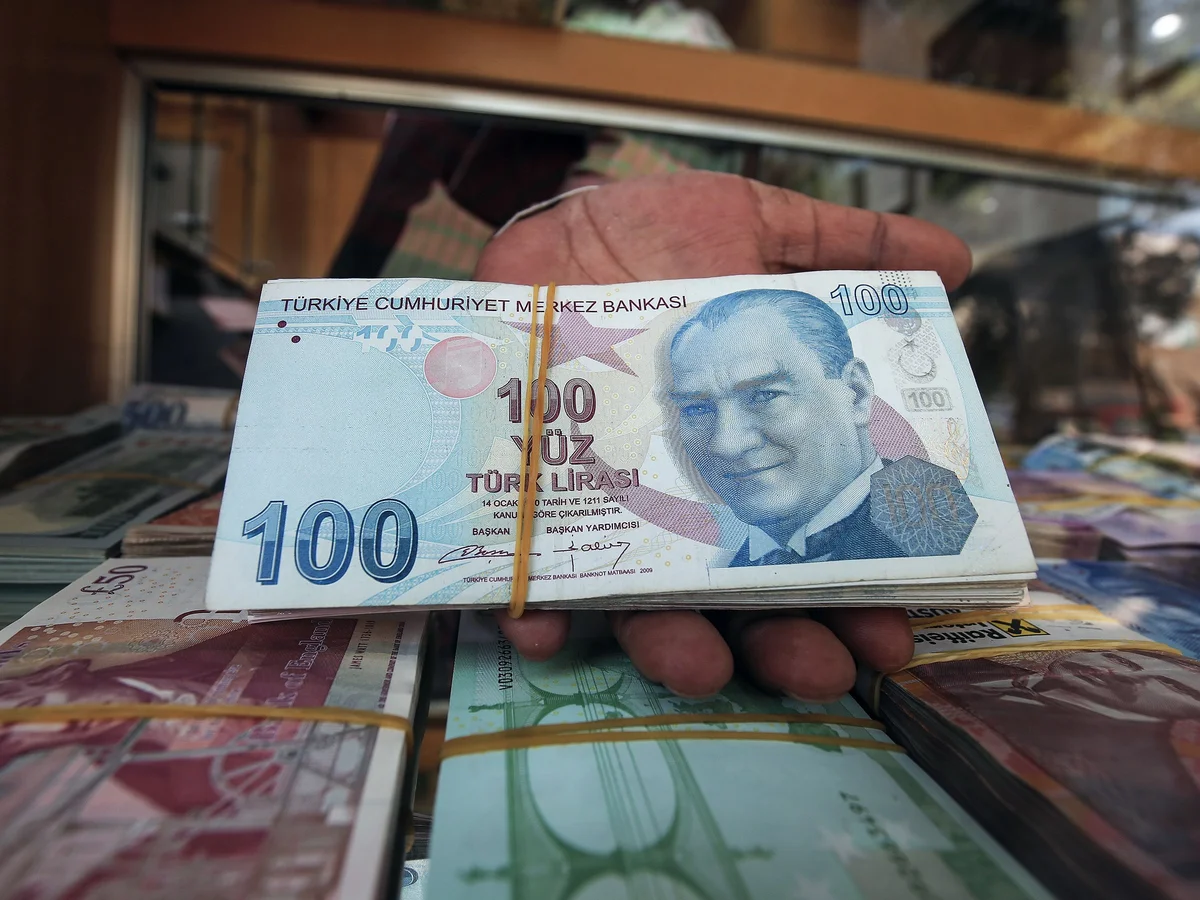
- Rising oil prices and sharp capital outflows have countered the government's efforts to contain inflation and added pressure on the lira
- USD/TRY has extended its gains past 46.00, with analysts forecasting that it could rise to between 48.00-50.00 by year's end
- Central Bank of the Republic of Turkey (CBRT) recently raised its inflation forecast for the year from 16% to 26%, despite a restrictive 37% interest rate already in place
The Turkish lira (TRY) has recently fallen past 46 lira per US dollar, reaching a historic low. Since the start of 2026, the currency has lost approximately 7% of its value. This depreciation occurs despite Turkish policymakers abandoning their previous unorthodox economic models in favor of aggressive interest rate hikes. This situation highlights the limitations of traditional monetary policy when confronting underlying structural economic challenges.
Are Government Policies Bearing Fruit?
Even with the lira hitting a record low against the dollar, it’s not fair to say the Central Bank of the Republic of Turkey (CBRT) is failing. Under Governor Fatih Karahan, the central bank has taken an aggressive monetary stance, keeping its benchmark policy interest rate at a restrictive 37.0%. To rein in excess money supply, the bank has effectively squeezed liquidity by lending to commercial banks at an even higher 40% rate.
The central bank indicated in mid-May that disinflation would be slower than initially projected due to energy and food price shocks linked to the Middle East conflict, with inflation increasing for a second consecutive month to 32.61 percent in May 2026. This geopolitical event has hindered some progress and raised questions about the feasibility of the disinflation target path.
Even more concerning, it’s triggered capital flight. Turkey’s March balance of payments data showed the current-account deficit nearly doubled, accompanied by heavy capital outflows. Official reserves fell by a record US$43.4 billion. Capital outflows intensified sharply. Portfolio investments saw a net outflow of US$14.8 billion, and other investments recorded an $11.7 billion outflow. This resulted in highly adverse financing flows overall.
The Outlook for USD/TRY
Looking ahead toward the end of the year, investors should not expect a sudden, massive rebound for the lira. Instead, a continuation of this gradual, upward drift in the USD/TRY pair remains the most realistic scenario.

The central bank was clear about its expectations during its mid-May presentation. The CBRT raised its year-end inflation forecast to 26%, up from its earlier 16% target. Most investment banking analysts now see the USD/TRY forex pair heading toward 48.00-50.00 by December. This kind of slow, controlled adjustment is meant to bring back long-term economic stability.
However, more pessimistic scenarios are also considered. Some analysts project sharper depreciation, cautioning that persistent capital outflows combined with accelerating inflation could push USD/TRY significantly higher before year-end.
A few things will decide the lira’s path. We’ll need to see if capital stops leaving as fast, especially as inflation falls. Less geopolitical tension in the Middle East would also help. And real interest rates have to stay attractive enough to keep foreign money invested here.
Under Governor Fatih Karahan, the central bank has held its main policy interest rate steady at a restrictive 37.0% level.
Citing Middle East geopolitical supply risks, the central bank increased its year-end inflation projection up to a point target of 26%.
Economists expect the currency pair to experience a managed, gradual drift, likely targeting a range between 48.00 and 50.00 by December.