



- EUR/CHF trades at 0.9189, near the box floor.
- Box: 0.9178 to 0.9267.
- Breaks of either side set the next target.
- 10.91780 CHF Range supportFloor of recent range where buyers previously showed interest
- 20.92670 CHF Range resistanceUpper boundary of recent range; close above triggers buy
- 30.93490 CHF Upside targetPrice target above the box on a breakout above 0.9267
- 40.91300 CHF Downside targetPrice target below the box on a breakdown below 0.9178
- 50.91020 CHF May low · SupportMay low positioned as a key level below the range box
- 60.94870 CHF September peak · Key levelPeak reached in September before recent pullback
TradingView Lightweight Charts™ · Yahoo Finance data
The current price of EUR/CHF is 0.9189, which is 11 pips higher than the bottom level of the range that the pair has traded within during the past few weeks. In October, the Euro fell 3.1% relative to the Swiss Franc (its worst performing month in five years according to IG), and since October the pair has traded horizontally. This brings up the question, is this a temporary lull or a potential trap? Here is how to play the situation. We will take this one step at a time.
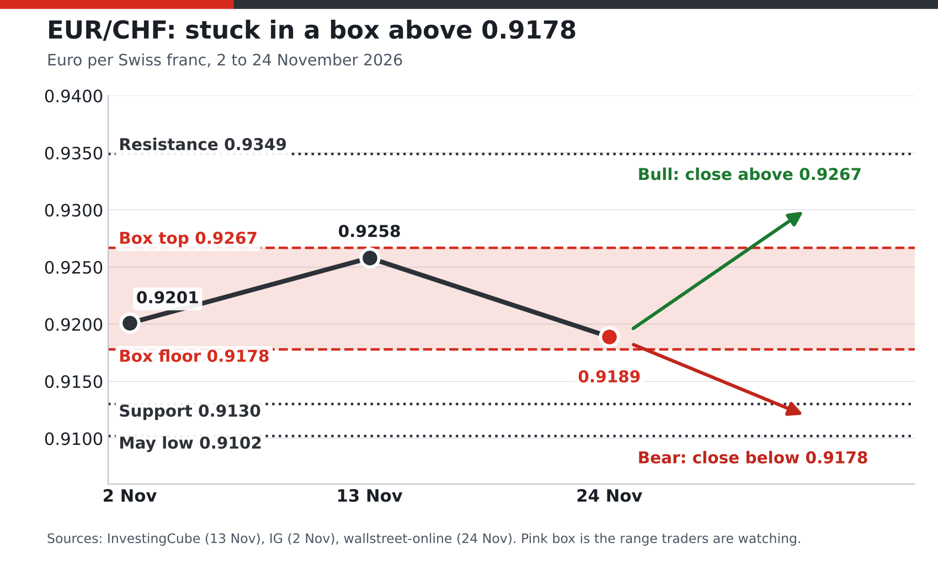
Figure 1: EUR/CHF range box and levels in Swiss red and charcoal. Data as of 24 November 2026.
Step 1: Read the Box
The pink box represents the boundary for the price. This means that the price will remain within this area until a boundary is broken. This area includes 0.9178 to 0.9267. The black line indicates three different prices. For example, on November 2, the price was 0.9201. By November 13, the price had increased to 0.9258, which is close to the upper limit of the box. On November 24, the price decreased to 0.9189. This represents the red dot. Dotted lines represent prices outside of the box. The price above the box is 0.9349. The prices below the box are 0.9130 and the May low of 0.9102. There are two arrows representing when to exit. The green arrow indicates a close above 0.9267. The red arrow indicates a close below 0. 9178.. Our earlier EUR/CHF article set up this same range.
The floor is important because it is where buyers had shown interest in buying at 0.9178 in the past. If the same buyers do not appear again, then the sellers will be able to take over. Also take into consideration the trend. Since late October, the pair has been making lower highs and lower lows. It has lost over half of its gains from 0.8981 up to the peak reached in September at approximately 0.9487.
Step 2: Know the Pull
Two forces pull on this pair. The first is interest rates. The ECB rate is 2.50%. The Swiss National Bank sits at 0.00%. That gap helps the euro. A rate gap pays you to hold euros. But fear can beat carry. The second is fear. When stocks fall, traders buy francs. Our USD/CHF analysis shows early-November tech selling boosted the franc.
France adds worry. Concerns about public finances and the 2027 election can lift demand for the franc. The ECB publishes the official daily rate. Better data would help the euro. Weak growth would cap it. For another euro pair, read our EUR/GBP forecast.
Step 3: Pick a Plan
Then, convert the chart into a plan. Wait until you have closed out of your trading range (box). Do not consider a brief move past a support/resistance level as confirmation of a breakout. Often, false breakouts (spikes) will shake out many forex traders. First, check your news calendar. False breakouts can deceive you.

- Plan A: buy above 0.9267 and go for 0.9349. Move your stop into the box.
- Option B: Sell at less than.9178 and set a target of.9130. Set your stop above the bottom.
- Plan C: do nothing until one side breaks. Patience pays.
In the short run, the mood of investors regarding their willingness to take on risk determines what happens in markets. When there is an upward bounce in stock prices, the demand for safe haven assets such as gold decreases. . Swiss price data from the Federal Statistical Office can also move the SNB debate. Long term, the SNB prefers a weaker franc and may step in. Keep your stops tight. Risk no more than 1% of your account on one trade. Plans only work when you stick to them. Will 0.9178 hold?
Frequently Asked Questions
Why is EUR/CHF falling?
In October and November, demand for the safe-haven currency of the franc increased. During October, the euro dropped by 3.1% compared to the franc.
What is the key EUR/CHF range?
The range runs from 0.9178 to 0.9267. Price was 0.9189 on 24 November.
Could the SNB step in?
The Swiss National Bank is interested in having the Swiss franc depreciate relative to other currencies, and will take action at its discretion. There have been no announcements of possible actions.
What is your outlook on EUR/CHF?
Anonymous · no sign-up · results from the last 30 days · not investment advice