


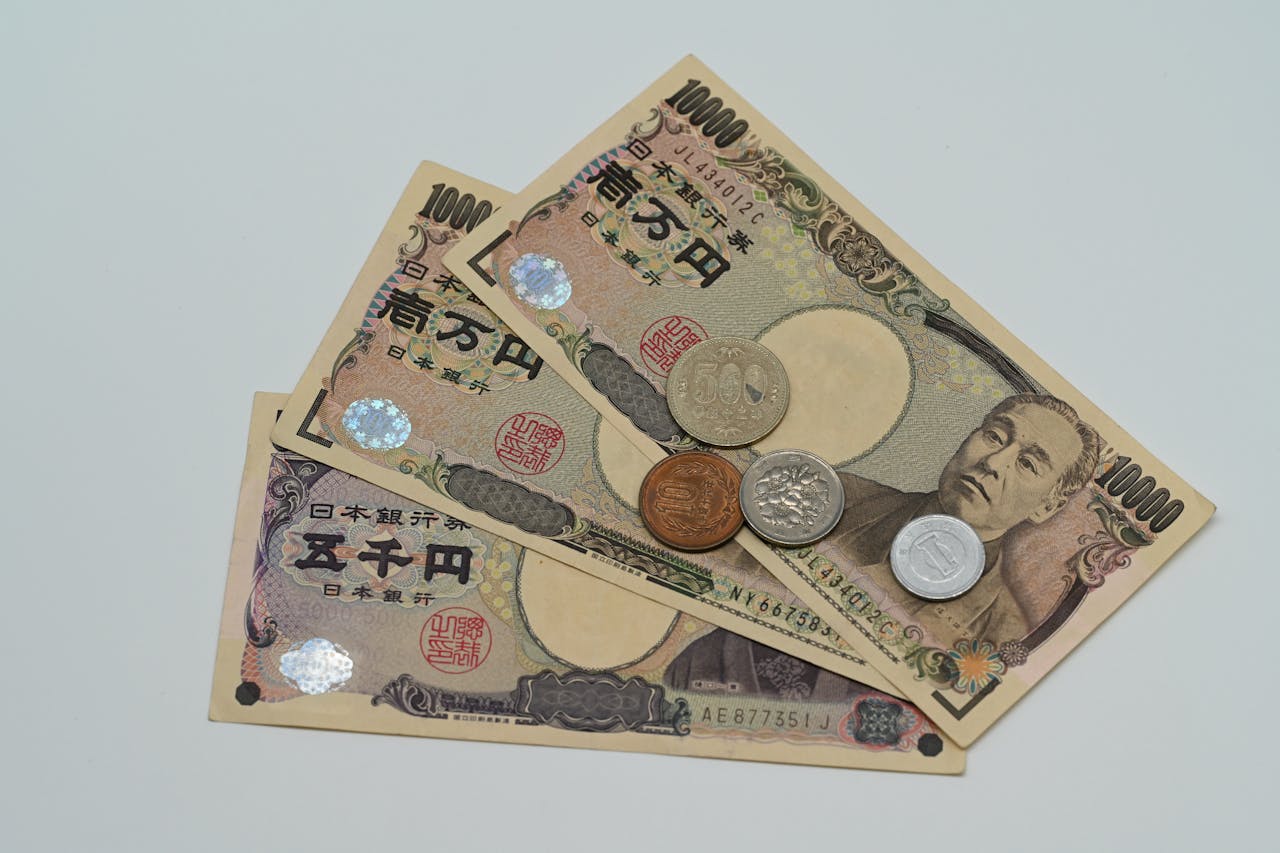
- Rising bets for a September rate hike by the BoJ are capping the recovery move of the CHF/JPY after the sharp intervention-driven slump.
Current Setup and Live Chart
The CHF/JPY pair is made up of two safe-haven currencies that are currently competing due to recent policy actions by Japanese financial authorities. The geopolitical risk premium has favored the Swiss Franc over the Yen, given the latter’s status as the currency of a country that depends heavily on energy imports. Switzerland, on the other hand, is not directly impacted by the oil price shock, but still benefits due to safe-haven demand that has followed the volatility in the global markets following the onset of the US-Iran war, the escalatory/de-escalatory headlines, and the current deadlock over the status of oil shipping via the closed Strait of Hormuz.
The Yen received massive support from the Bank of Japan’s FX market intervention and the hawkish tone of the statement following the recent BoJ monetary policy meeting. The statement, which expressed a stronger willingness to defend the Yen against extreme weakness, continues to weigh on the pair, as the recovery following profit-taking by Yen bulls has been relatively muted.
For CHF/JPY, this creates a tradable asymmetry: safe-haven demand from the geopolitical situation supporting the CHF, and BoJ hawkishness and intervention risk supporting the Yen. Currently, safe-haven demand in the FX market is weak; markets need a genuinely harsh deterioration on the ground to drive the kind of flight to safety seen during the global financial crisis of 2008 or the 2020 pandemic to see a huge upside in the Swiss Franc. Counteracting this is a market that seems braced for further Yen strengthening, especially if bets increase for a September BOJ rate hike.
Macro Drivers for the CHF/JPY
1) Significantly Hawkish Shift in the BOJ’s Tone
Bank of Japan Governor Ueda’s tone after the BoJ’s last monetary policy meeting was decidedly hawkish. The higher probability of a BoJ rate hike, likely in September, has shifted the pair’s outlook. At 1.0%, the BoJ’s interest rate is at a 31-year high. Market expectations for a rate hike in the September 17–18 meeting have risen sharply, with the probability now at 80% in some quarters. No longer is the CHF’s safe-haven appeal the determinant of price action. Potential BoJ action now sets the tone for the pair. Interestingly, the Yen now finds itself in a reverse-carry position, as its 1% rate yield is higher than the Swiss Franc’s 0.00% yield. If rates rise again in Japan, the Yen vs the Franc becomes more attractive.
2) Intervention risk
The 29 July intervention by Japan and the US to firm the Yen from levels the BoJ now considers hurtful to the country’s economy was decisive. The BoJ’s tone a few days later at the policy meeting was even stronger. The language is clear. For now, the era of simply betting on Yen weakness may be over, especially as Japanese finance officials have indicated a strong desire to intervene again to prevent disorderly downside moves in the Yen. A sudden Yen buying spree by the BoJ as part of an intervention could produce a sharp, rapid move that could heavily impact any Swiss Franc longs.

3) The Swiss Franc’s Safe-haven Appeal
The CHF retains safe-haven appeal and remains one of the best defensive currency plays in disorderly markets. The current geopolitical risk premium keeps any downside moves in the pair constrained. If Fed expectations turn dovish and the USD declines, the Franc’s appeal as a defensive currency will rise.
CHF/JPY Near-Term Price Catalysts
1) BOJ communication: this is the pair’s main price catalyst at the moment. Commentary from BoJ officials leaning toward a September rate hike would be bearish for CHF/JPY.
2) Geopolitics: this is the current source of the CHF’s safe-haven appeal. However, the Yen is also deemed a defensive asset, but its exposure to higher oil prices dulls this effect. A significant deterioration in the Middle East geopolitical landscape would be needed to trigger a severe global risk-off episode that would significantly strengthen the Franc. However, if carry trades unwind as a result (AUD and NZD are risk-associated currencies, and their selloff would drag down other Yen crosses), the Yen could outperform the Franc and instigate a sharp CHF/JPY decline. So ultimately, the degree of geopolitical deterioration is what makes the difference between safe-haven support for the pair, or a carry trade unwinding that pushes the pair over the precipice.
3) Global bond yields: A sharp rise in global bond yields, driven by oil-price-related inflation, could boost Yen tightening expectations beyond current probability levels. This will ultimately be bearish for the pair. However, a drop in global bond yields stabilizes the bond markets, and could have a moderating impact on both the CHF and JPY. This will leave the pair firmly in the hands of monetary policy pathways in both countries, with the Yen currently having the upper hand.
CHF/JPY Technical Outlook
The pair’s recovery looks set to challenge resistance at 198.36, the site of former degraded support formed by the lows of 12 February, 1 April and 1 May 2026. If this barrier is uncapped, the recent highs of 30 June and 16 July 2026 at 201.51 become the next upside target. A further advance tests the 2026 highs at 204.42.
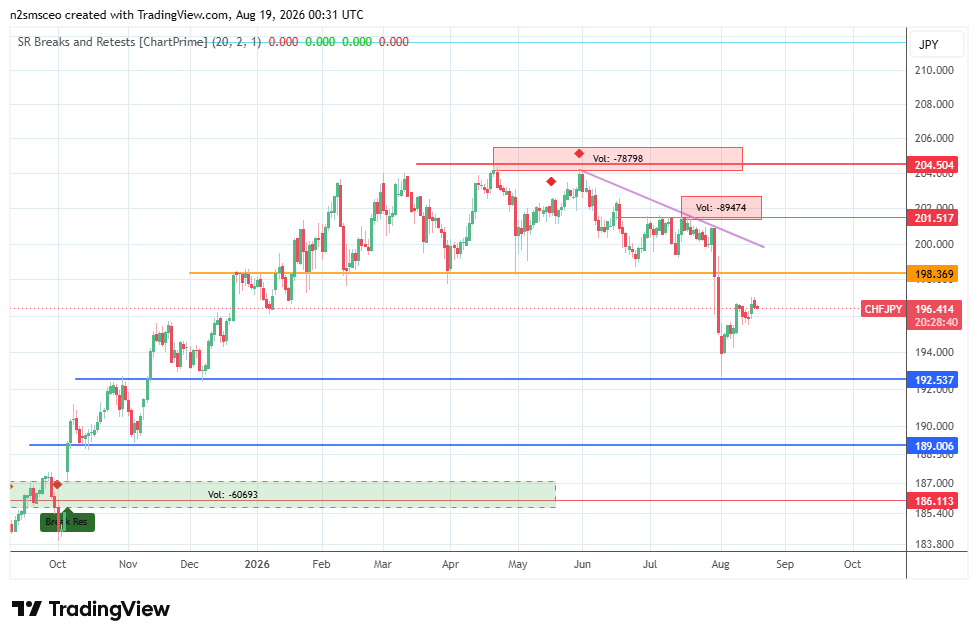
On the flip side, a resumption of the recent selloff tests the 3 August 2026 low at 192.53, which also serves as the prior low of 5 December 2025. A further decline takes out this pivot and brings the 14 October and 5 November 2025 lows at 189.00 into the picture.