


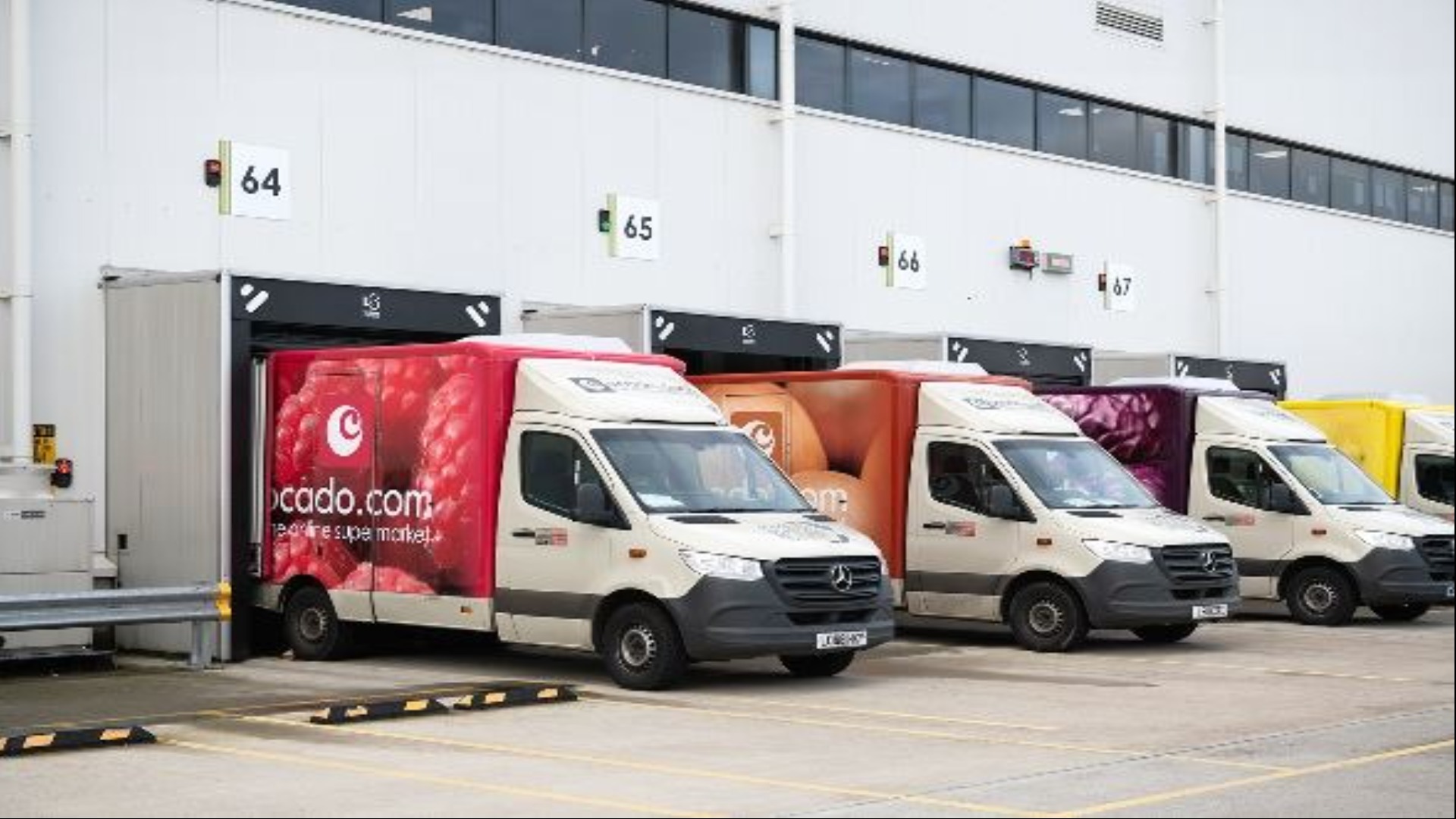
- Ocado Group share price declined to 13-year lows of 140.30p in yesterday's session, but today seems to be a sharp contrast. But will it hold?
Ocado Group has had a wild 48 hours. Yesterday, the shares dropped over 10%, reaching a 13-year low. This morning, however, the trend reversed, with the stock going up by more than 6% as of 09:40 GMT. Such rapid fluctuations often do not reflect fundamental business changes in a short period. It is useful to distinguish between the factual events and market reactions.
Why Did the Stock Fall So Hard in the First Place?
The sharp decline yesterday followed Ocado’s interim financial results, which indicated a lack of significant progress in securing new retail partners in the United States. This comes at a time when previous collaborations with Kroger and Sobeys have been reduced. A Reuters report suggest this lack of clear future direction contributed to a drop of as much as 14% on the day, adding to a roughly 44% decrease over the preceding six months.
The company’s core financial figures were also not great. Ocado’s underlying performance in the first half of the year looked quite poor once special items were removed. Although reported revenue increased by 54% to £1.0 billion, this figure was significantly boosted by £354 million in one-time termination fees from Kroger and Sobeys.
Analysts at RBC were more blunt. They questioned if Ocado’s cash flow targets for the medium term are achievable, considering that cheaper, in-store fulfillment options are becoming more competitive.
What Prompted the Sudden Rebound?
The rebound appears driven by a combination of bargain hunting following the steep sell-off and positive reactions to recent updates. The company confirmed an orderly leadership transition, with founder and CEO Tim Steiner remaining in his role until the start of fiscal 2028 before shifting to a founder advisory position. This resolution followed boardroom tensions, providing some clarity after uncertainty weighed on sentiment.
Also, despite a messy set of numbers, management firmly reiterated its forecast to become cash flow positive during the second half of 2026. They also maintained their target of achieving positive free cash flow for the entirety of fiscal 2027.
How Serious are the Risks?
While the immediate rebound brings short-term relief, the structural hurdles facing Ocado remain exceptionally high.

The primary concern is the performance of its core Technology Solutions division. Ocado’s business model relies on selling its highly advanced, robot-powered Customer Fulfilment Centres (CFCs) to international supermarket chains.
However, key North American partners have recently pulled back. US giant Kroger and Canada’s Sobeys both decided to scale back and close existing automated warehouses, citing softer-than-expected online grocery demand.
To reverse its recent downward trend, Ocado must demonstrate continued demand for its automated fulfillment solutions. This requires securing new, significant international partnerships, especially within the US market, to compensate for the capacity reduced by Kroger and Sobeys.
Additionally, the company needs to manage its leadership transition effectively. The succession plan, keeping Tim Steiner in place until early fiscal 2028, should be used to foster operational stability and reduce uncertainty.
Half-year results showed little progress securing new US retail partners, plus soft underlying revenue growth once one-off payments were excluded.
The rebound was fueled by technical short-covering, oversold conditions, and management reaffirming its goal to turn cash flow positive by late 2026.
The company must deliver new technology deals, positive cash flow, and smooth leadership transition while demonstrating demand for its automation platforms.