



- USD/JPY pulled back sharply during the Monday and Tuesday sessions as traders executed a classic “sell the fact” move following PM Sanae Takaichi’s landslide election victory.
- The Greenback is under pressure as markets brace for a massive US data "double-header" featuring Retail Sales and the Employment Cost Index, while the Dollar also faces headwinds from reports of Chinese divestment from Treasuries.
The Tuesday Reset: Takaichi Victory Triggers Yen Rebound
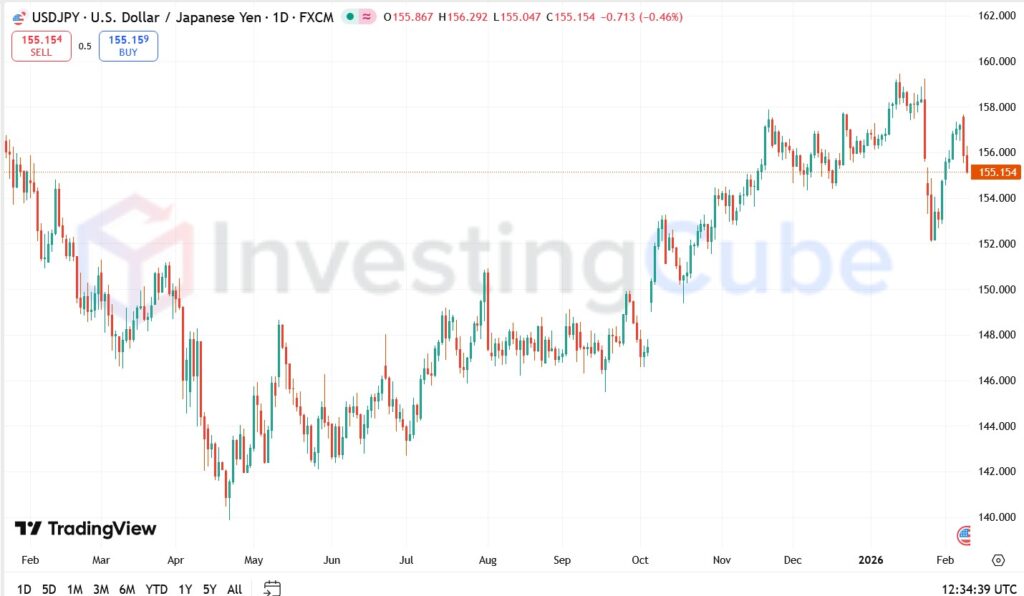
The USD/JPY pair is effectively in a “reset” phase this Tuesday, February 10, following a volatile start to the week. After an initial spike toward the 159.00 level on Sunday evening, the pair has spent the Monday and Tuesday sessions in a steady retreat, hitting an intraday low of 155.10 as the Asian session closed. This reversal stems from a textbook “buy the rumor, sell the fact” reaction to Prime Minister Sanae Takaichi’s historic election win.
While Takaichi’s pro-growth, reflationary mandate initially weighed on the yen, investors have shifted their focus to the reality of Japan’s debt constraints and the Bank of Japan’s (BoJ) independence. The yen has gained roughly 0.4% today, holding its ground near 155 per dollar as speculators unwind election-driven long positions.
As noted by analysts at Forex.com, the market is currently giving Takaichi the benefit of the doubt, but any hint of further fiscal slippage could quickly bring the 160.00 “intervention line” back into focus.
US Retail Sales and ECI: Why the Fed is Under the Microscope
While Japan settles its political dust, the focus has shifted to a heavy slate of North American economic data. Today’s US Retail Sales (December) and the Q4 Employment Cost Index (ECI) are the primary movers for the remainder of Tuesday. The market is currently pricing in a high risk of a hawkish repricing if the ECI, a favorite inflation gauge of the Fed, comes in stronger than the expected 0.9%.
Adding to the dollar’s instability are reports that Chinese regulators have advised financial institutions to curb their U.S. Treasury exposure. This has created a “perfect storm” of selling pressure on the Greenback, which is already struggling after weak job openings data last week. With the January Nonfarm Payrolls (NFP) finally set for release on Wednesday following the brief government shutdown, traders are treading carefully to avoid being caught on the wrong side of a major trend reversal.
USD/JPY Technical Outlook
From a technical lens, the pair is navigating a critical “reset” zone after its recent rejection at 159.00:

- Immediate Support (155.00): The pair is testing the psychological floor at 155.00. A daily close below this level could open the door for a retest of the 153.50 ascending trendline.
- Key Resistance (157.75): This level (the 50-day SMA) must be reclaimed by bulls to regain control and target the 2026 high of 159.45.
BoJ Policy Outlook: Why April Inflation Data is the Deciding Factor for a Rate Hike
Despite the political earthquake, the fundamental outlook for the Bank of Japan remains surprisingly steady. The BoJ held interest rates steady at its last meeting while slightly upgrading growth and inflation forecasts to account for Takaichi’s expansionary fiscal policies.
Governor Kazuo Ueda has repeated that the central bank will keep raising rates if the economic outlook is realized, but he has specifically highlighted April price behavior as the key factor to “mull over” a hike.
Despite political pressure, BoJ Governor Ueda has signaled that April price behavior will be the deciding factor for the next rate hike, keeping the yen resilient even as Tokyo CPI cools. This suggests that unless we see a major spike in services inflation before spring, the BoJ is content to remain on hold, though the market’s focus on April keeps the floor underneath the yen for now.
This was a “sell the fact” reaction. Markets had already priced in her victory, and profit-taking on long USD/JPY positions drove the yen higher once the result was official.
The US Retail Sales and Employment Cost Index (ECI) reports on Tuesday, followed by the Nonfarm Payrolls (NFP) on Wednesday, will dictate the dollar’s strength.
Most analysts now expect the BoJ to wait until April, as Governor Ueda specifically mentioned April price data as a requirement for the next policy move.