


JPY/VND traded near 165.20 on Friday, January 23, 2026, extending its gradual decline as renewed volatility in the Japanese yen overshadowed relatively stable conditions in Vietnam’s currency market. The move comes after sharp intraday swings in USD/JPY triggered fresh intervention speculation, keeping yen crosses under pressure even as regional Asian currencies remain broadly steady.
While the Vietnamese dong continues to be tightly managed by the State Bank of Vietnam, the yen has entered a period of heightened uncertainty following the Bank of Japan’s latest policy decision and rising political and fiscal risks in Tokyo.
Yen Volatility Spikes as Traders Watch for Tokyo Intervention
The Japanese yen jolted markets on Friday after staging a sudden intraday surge against the US dollar, a move that immediately reignited fears of currency intervention from Tokyo. According to Reuters, the yen jumped sharply during the London session before reversing lower, with traders questioning whether Japanese authorities had stepped in to slow the currency’s slide toward multi-year lows.
Analysts cited by Reuters said the move lacked the scale typically associated with direct intervention, suggesting fast-money positioning rather than official action. Still, the timing was enough to unsettle markets already on edge as the yen approaches the psychologically sensitive 160-per-dollar zone.
That volatility has spilled across Asia’s yen crosses, pushing JPY/VND lower as investors reassess Japan’s policy credibility and intervention thresholds.
Why Vietnam’s Dong Remains Stable Against the Yen
Unlike the yen, the Vietnamese dong remains one of Asia’s most stable currencies, supported by tight policy control and consistent foreign exchange management.
Vietnam continues to benefit from:
- Strong export performance
- Stable foreign direct investment inflows
- Active central bank intervention to smooth volatility
With the State Bank of Vietnam maintaining a narrow trading band, JPY/VND price action is overwhelmingly dictated by swings in the yen rather than shifts in Vietnamese fundamentals. This explains why JPY/VND weakness has tracked broader yen moves instead of regional risk sentiment.
JPY/VND Chart Analysis: Downtrend Holds as Yen Loses Momentum
From a technical perspective, JPY/VND remains in a well-defined bearish structure.
- Price is holding below the 20-day and 50-day moving averages
- Momentum indicators show weak recovery attempts failing
- Recent rebounds have been shallow, confirming selling pressure on rallies
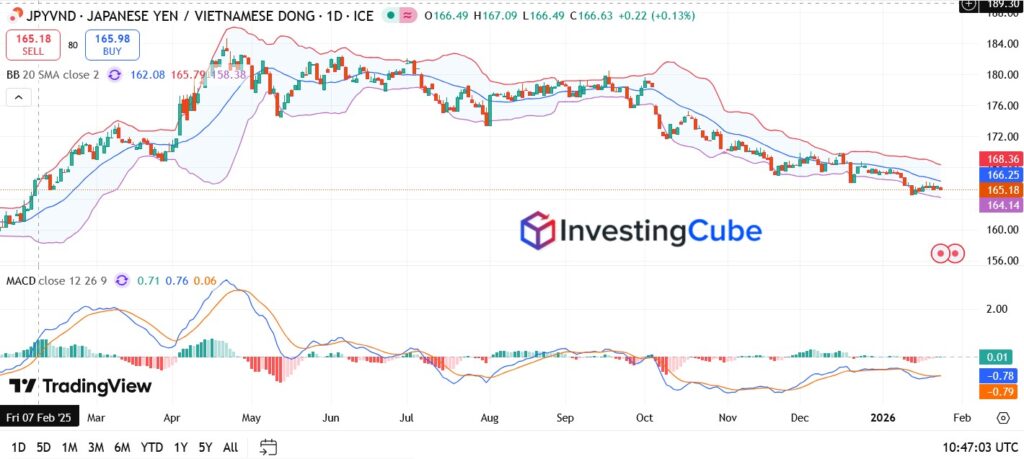
As long as yen volatility persists and intervention uncertainty dominates, JPY/VND is likely to remain heavy, with sellers defending minor pullbacks rather than chasing aggressive breakdowns.
Outlook: JPY/VND Remains Vulnerable as Yen Uncertainty Dominates
Looking ahead, JPY/VND is likely to stay under pressure as long as the Bank of Japan maintains a cautious policy stance and intervention remains only verbal rather than decisive.
Vietnam’s currency stability limits upside volatility, meaning the pair is unlikely to see explosive moves unless Japan steps in forcefully. For now, yen weakness and policy uncertainty remain the dominant drivers, keeping the broader bias tilted lower.
Yes. Sudden yen spikes often reflect speculation about possible Japanese government intervention when the yen weakens sharply, but unless action is confirmed, these moves tend to fade quickly.
The dong is likely to stay resilient if Vietnam’s export growth, foreign investment inflows, and currency management remain stable, especially while Japan maintains accommodative monetary policy.
The yen is under pressure as the Bank of Japan keeps interest rates low amid easing inflation, while Vietnam benefits from strong trade flows, steady growth, and a relatively stable monetary stance from the State Bank of Vietnam.