



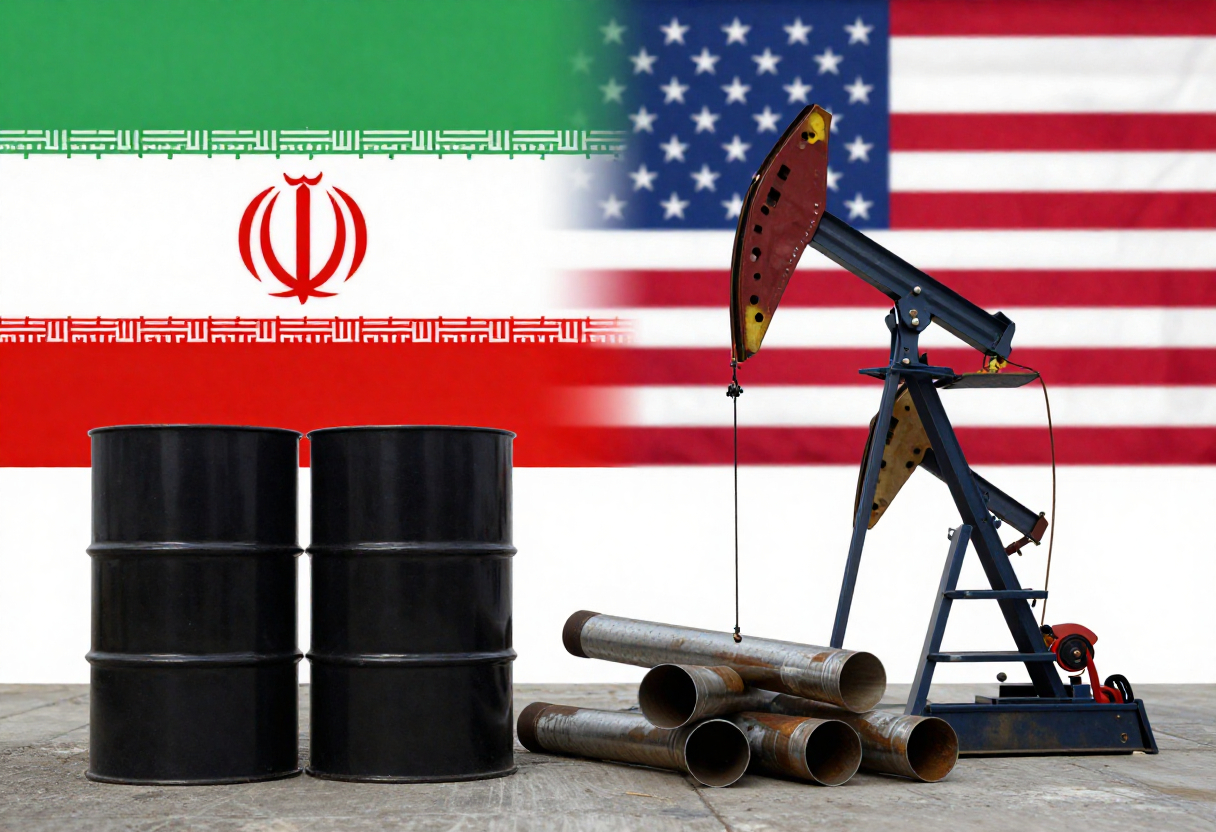
- Brent crude oil price predictions for the week will depend on Iran offering a nuclear deal in addition to its Hormuz reopening offer.
Current Setup and Live Chart
The closure of the Strait of Hormuz and the disruption of oil shipping, primarily to the top importers of crude, have triggered an oil supply shock, leading to a spike in oil prices. Brent has traded above $100 since March 2026, and the asset continues to trade within a Hormuz-disruption regime. This has forced markets to undergo a major repricing of 2026 Brent crude oil price predictions/expectations.
Currently, Brent crude continues to trade in a choppy consolidation, albeit still retaining upside bias. This is despite the latest offer from Iran to reopen the Strait of Hormuz if the US ends its blockade of the area. However, Iran did not offer to reopen nuclear talks, long seen as the final impediment towards implementing a ceasefire to end the current geopolitical tensions.
Drivers of Brent Crude Oil Price Forecasts
1) Gulf Supply Shock/Hormuz Disruption
This factor remains the primary price determinant in the near term. The International Energy Agency (IEA) has described the ongoing conflict as a source of significant disruption as oil shipping volumes across the Strait of Hormuz have plummeted from about 20 million barrels per day to a trickle. Oil producers in the Gulf have seen a constraint of at least 10 million barrels per day due to shuttered exports and storage fills.
2) Higher Shipping Costs with Limited Bypass Options
The Hormuz disruption has led to higher shipping costs and reduced Middle East flows due to limited alternative shipping options to take crude to the consumption belt in the East (China, India).
3) OPEC Response Capacity
A question that has come up is whether the OPEC+ alliance has both the reserves and the capacity to offset the lost shipping volumes at the speed required to have an instant, stabilizing market impact. An end to the Hormuz disruption may not necessarily lead to quick market stabilization.

4) Demand Destruction on Persistently Higher Prices
A globalized second-order effect could occur if prices remain persistently high. Inflationary expectations will prompt central banks to tighten financial conditions, potentially weakening consumption growth and eroding demand (demand destruction) in price-sensitive sectors and markets.
Brent Crude Price Scenario Map
Base case: prices will remain elevated but will move in a two-way street. Spikes are typically driven by escalatory headlines, with price retracing on de-escalation moves. These have been alternating and are responsible for the choppiness in recent oil price action.
Bull case: data and headlines confirming the impact of sustained disruption push oil prices higher, keeping the oil risk premium and inflationary expectations active.market
Bear case: headlines pointing towards de-escalation and normalization of flows across Hormuz will unwind the oil risk premium. However, prices hovered around $60 before the sharp war-driven spike. The fall in prices from Hormuz normalization will take a while to bring them back to pre-war levels, so what will be seen here is a retracement, not a full reversal.
Brent Crude Technical Outlook
Price remains in a choppy consolidation between the 93.23 support and the 111.98 resistance mark. The bulls will need to uncap the 111.98 barrier to unlock access to the multi-year high at 124.47, last seen in June 2022.
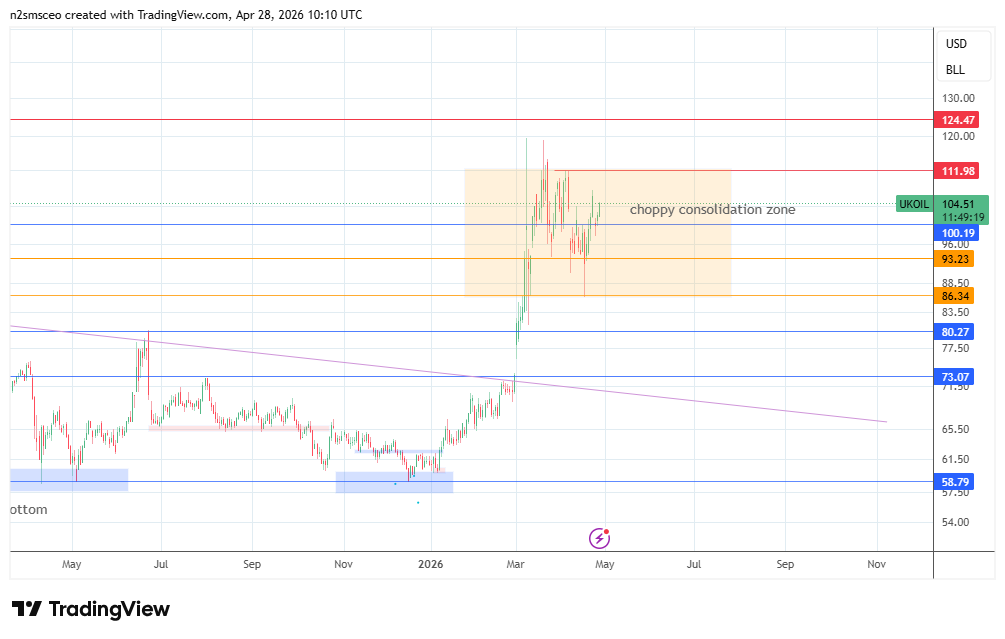
On the flip side, a breakdown of the 93.23 support shifts focus to the 17 April 2026 low at 86.34. A further breakdown of this price level targets the 80.27 support mark and prior high of 23 June 2025.