



- Brent crude oil surges toward $68.00 per barrel, reaching its highest level since September 2025 as major supply disruptions tighten the global market.
- A massive US winter storm has knocked out roughly 2 million barrels per day (bpd) of production, representing 15% of total US output.
- Geopolitical tensions remain high as the US military buildup in the Middle East and potential action against Iran keep a significant risk premium baked into prices.
The rally in energy markets intensified this Wednesday, with Brent crude futures rising to an intraday high of $67.92. The move marks a decisive breakout from the consolidation seen earlier this month, driven by a “perfect storm” of physical supply constraints and a weakening US dollar.
As the market digests the impact of the US cold snap alongside heightened tensions in the Middle East, the path of least resistance for crude remains higher in the immediate term.
US Oil Supply Shock: Winter Storm Fern Triggers 15% Drop in National Output
The primary catalyst for this week’s surge is the severe weather gripping the United States. Trading Economics reports that the winter storm has curtailed up to 2 million bpd of crude production. Energy infrastructure and power grids across the South, particularly in Texas and the Gulf Coast, have come under extreme strain, forcing the temporary halt of several major export terminals.
Bloomberg analysts suggest that while some production may begin to recover as temperatures rise, the damage to infrastructure and the resulting stock drawdowns will likely keep the market tight for several weeks. Compounding this, recent API data showed a surprise draw of 0.25 million barrels in US inventories, defying market expectations of a build and further fueling the bullish narrative.
Brent Crude Oil Forecast: Analyzing the 2026 Geopolitical Risk Premium
Beyond the weather, the “geopolitical temperature” is rising. The market is closely monitoring the US military buildup in the Middle East, including the deployment of an aircraft carrier and supporting warships. Fears of direct conflict or further disruptions to Iranian oil exports have added a significant premium to Brent prices.
Additionally, supply concerns in Central Asia have surfaced as drone attacks on export infrastructure in the Black Sea and Caspian have hampered Kazakh supplies. While OPEC+ is expected to maintain its current production policy in the upcoming meeting, these localized “shocks” are currently outweighing the projected global supply surplus for 2026.
Brent Technical Analysis: Breaking the $66.00 Resistance
The technical picture for Brent crude has turned aggressively constructive following today’s price action:
Key Breakout: Brent has cleared the $66.00 resistance handle, which had capped gains throughout late 2025. This level now flips to primary support.

Key Levels to Watch:
- Support: $66.00 (Previous Resistance), followed by $64.00.
- Resistance: $68.00 (Psychological), followed by the four-month high at $69.50.
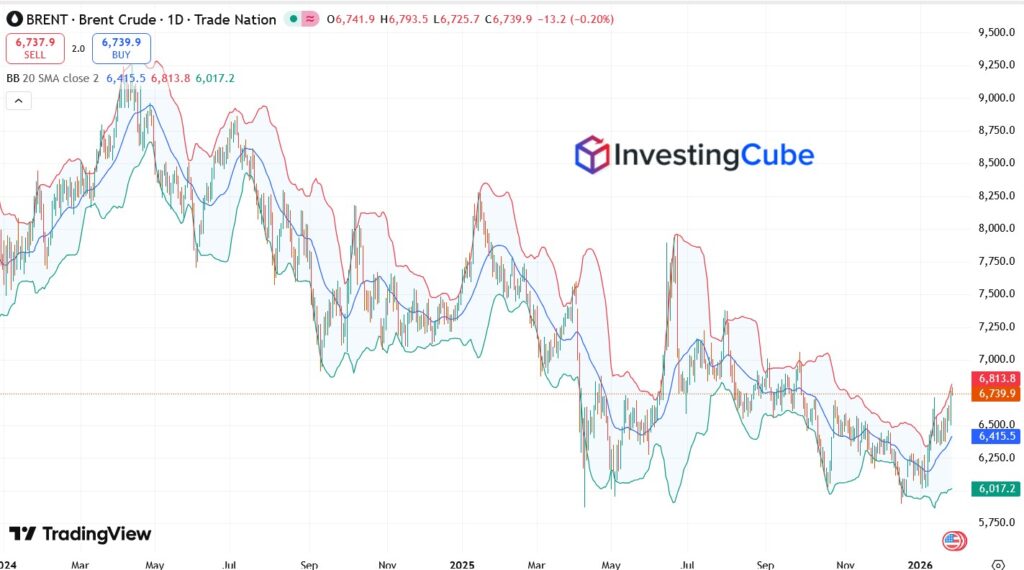
Writer’s Trade Idea: My preferred strategy is to buy Brent crude on pullbacks toward $66.50, targeting a move to $69.50, with a stop-loss set below $64.80.
Outlook: Can Brent Maintain the Momentum?
Looking ahead, the sustainability of this rally depends on the pace of US production recovery and the de-escalation of tensions in the Middle East. The IEA notes that while a supply buffer exists globally, the “turbulent start” to 2026 has caught many traders off guard.
For now, the combination of physical supply shocks and a US dollar sliding to a four-year low provides a powerful tailwind for dollar-denominated commodities like Brent.
While long-term forecasts from the IEA and EIA suggest a surplus, short-term physical “shocks”, such as the 2 million bpd loss in US production, create immediate scarcity that drives prices higher regardless of the 12-month outlook.
Analysts estimate that between $3 and $5 of the current Brent price is attributed to risks surrounding Iran and the potential for wider conflict in the Middle East.
Historically, once weather conditions normalize and production restarts, some “selling pressure” returns to the market. However, if inventories have been significantly depleted during the freeze, the price floor may remain higher than before the storm.