



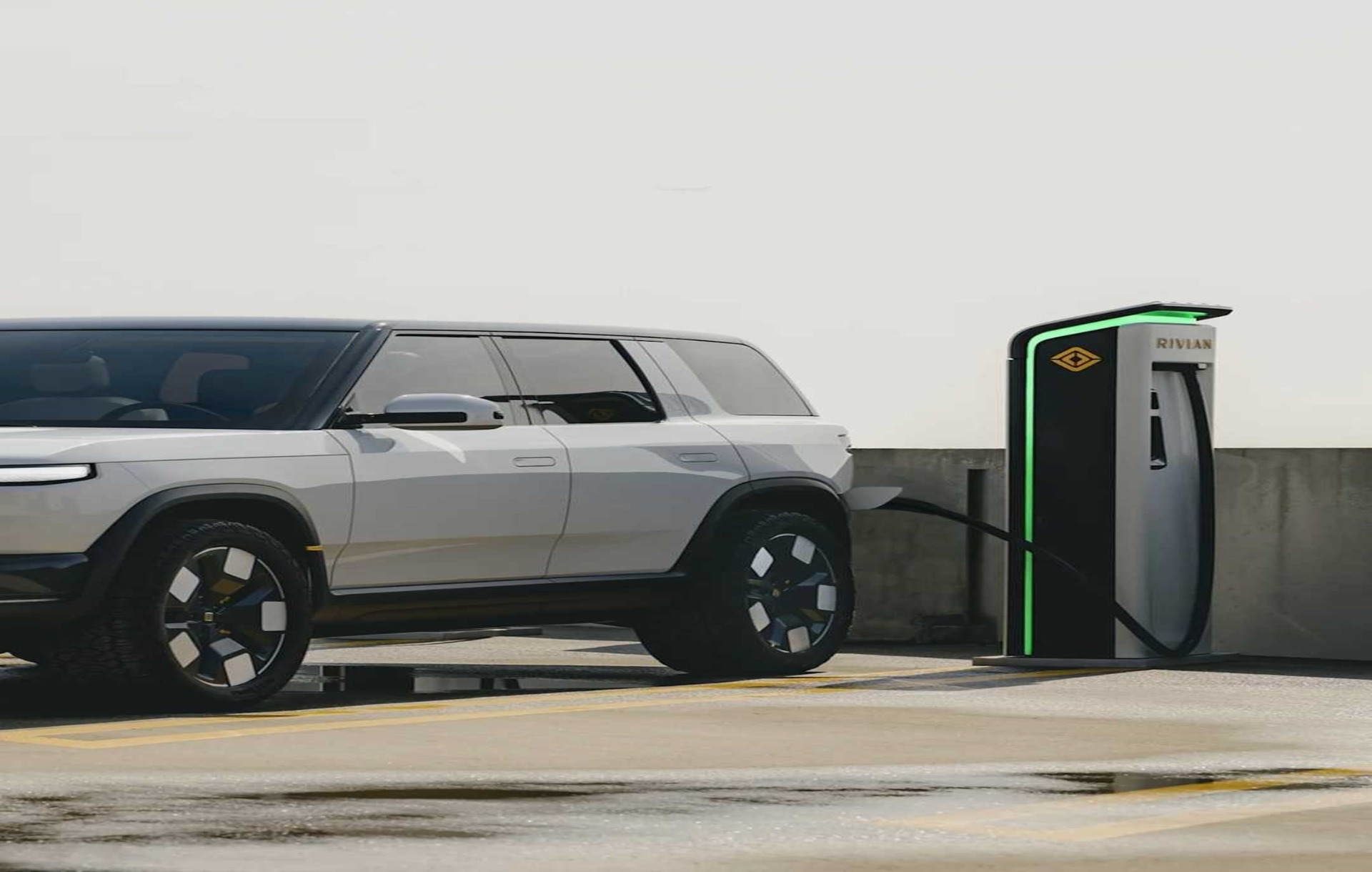
- Rivian stock went down by more than 6.5% after the company's R2 delivery launch failing primarily on its pricing model
- Investors are also concerned about whether the company will meet its production targets 20,000 to 25,000 R2 deliveries by the end of December
- Despite the hiccups at launch, the R2 model remains central to the company's long-term growth strategy
Rivian Automotive began delivering its R2 midsize electric SUV yesterday. This marks a significant effort for the company, aiming to attract buyers beyond its current premium vehicles. Wall Street, however, didn’t seem impressed. Rivian’s shares dropped over 6.5% on Tuesday, with the decline continuing into Wednesday’s pre-market session.
Why Is the Market Not Impressed?
The immediate trigger for the selloff centered on an uncomfortable reality about the R2’s pricing structure. For example, a 36-month lease on the R2 Performance AWD is estimated at $829 per month with a $3,500 down payment. A 24-month lease increases to $949. Lease analyst Travis Ketchum calculated an all-in payment of approximately $988 per month with zero down and estimated an effective lease APR of 9.62%.
This puts Rivian at a disadvantage against Tesla. Tesla’s Model Y, for instance, offers financing as low as 0%-0.99% APR. You can lease a Model Y Performance for $799 a month, and the entry-level RWD starts at $459 a month for a 36-month term. It looks like Rivian’s asking premium prices for a car intended for the mass market, while Tesla provides better financing options for similar vehicles.
Also, despite earlier indications of a mass-market price point around $45,000, initial R2 deliveries are restricted to the high-end R2 Performance with Launch Package, priced from $57,990. More affordable variants, expected to be under $50,000, are not scheduled for delivery until 2027.
Beyond that, initial production volume is quite small. Retail investors on the RIVNstock community Reddit forum, who track production, report Rivian only plans to deliver 400 R2 units in the second quarter of 2026. While the company aims for 20,000 to 25,000 R2 deliveries by the end of December, most of those are scheduled for the latter half of the year.
Is the R2 Mass-Market Strategy Failing?
Rivian’s R2 is a clear move towards the mass market. This five-seat, adventure-focused SUV targets a wider audience than the larger R1 models. Early specs look promising, with an estimated 330-mile range and strong off-road abilities.

The stock’s negative reaction prompts questions about the viability of Rivian’s mass-market strategy. While the R2 initiative faces challenges, its success will depend on effective execution within a competitive environment.
To build market confidence in the R2’s potential, Rivian should focus on several key areas. First, it is crucial for Rivian to demonstrate that R2 production volumes can meet its stated guidance.
Rivian is targeting 20,000 to 25,000 deliveries in 2026 as part of its overall guidance of 62,000 to 67,000 vehicles. Much of Rivian’s growth depends on the R2’s successful launch. Hitting this target is absolutely necessary, and missing it would raise questions about the entire strategy.
Second, they’ll need to accelerate cost reductions to improve gross margins, particularly when more affordable trims come out. Lastly, open updates on demand figures, how reservations convert, and customer feedback will be important.
Investors cited broader EV market weakness, higher initial pricing, and ongoing financial losses despite the milestone.
As a mass-market SUV, the R2 aims to drive higher volumes, improve profitability, and expand beyond premium segments.
Rivian is aggressively targeting 20,000 to 25,000 R2 deliveries by year-end, which represents a heavily back-half weighted manufacturing ramp schedule.