


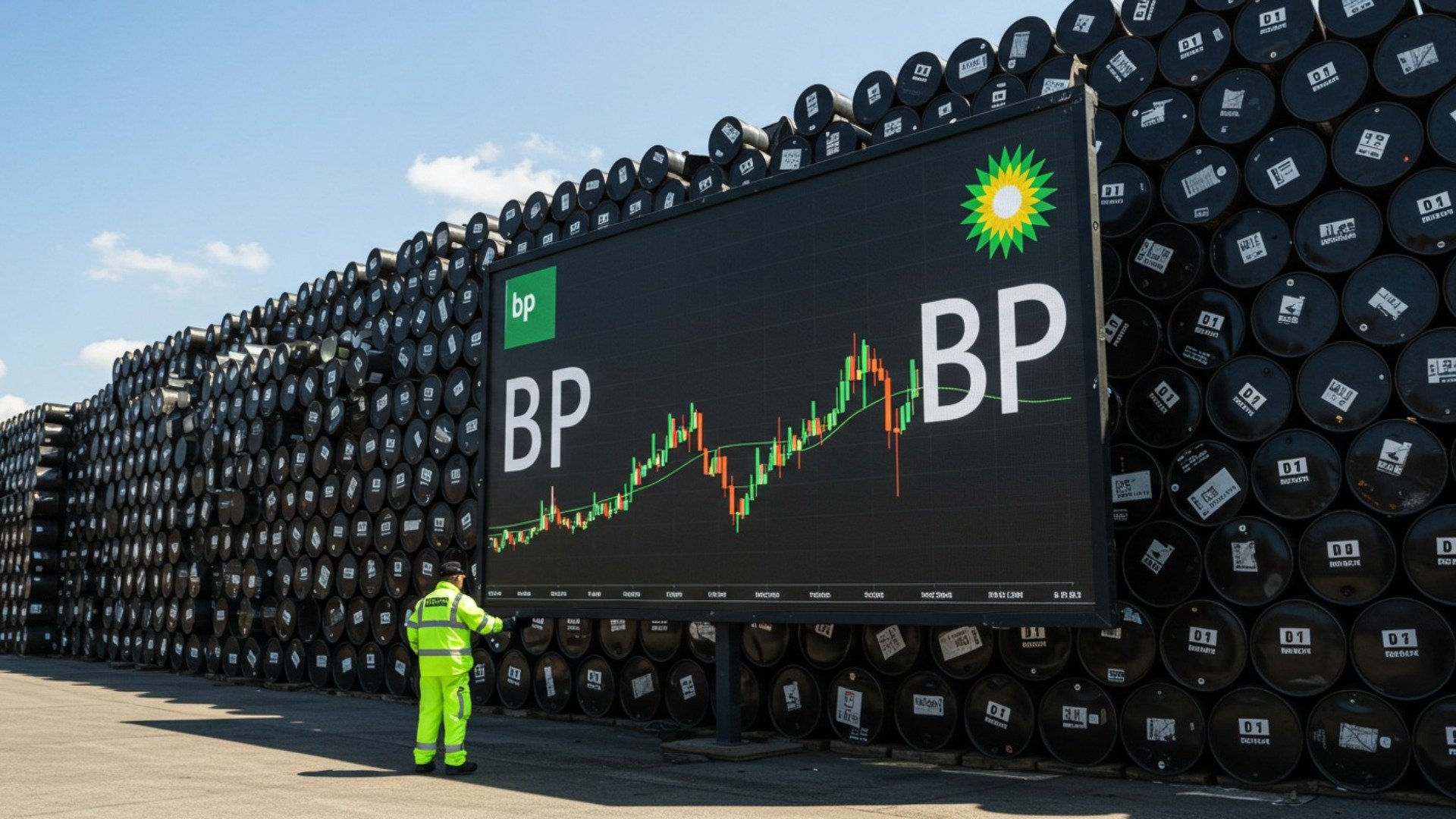
- BP share price started its decline long before the calming of the geopolitical risk caused by the Iran war
- There's been a significance divergence between BP share price and global crude oil prices
- Amidst the declining oil prices, BP also struggles to steady its in-house ship rocked by high-impact management changes which have casted doubt on growth plans amid a shift from renewable energy strategy
BP’s recent stock performance has energy investors scratching their heads. While crude oil prices are down 3.4% since March, BP shares have fallen a steeper 12.1% from their peak. This gap suggests that factors beyond commodity prices are influencing investor sentiment toward the integrated energy major.
Recent Downtrend and the Oil Price Divergence
Oil prices had a strong run through the first quarter of 2026. Brent crude, for example, shot past $100 a barrel thanks to rising geopolitical tensions in the Middle East. Energy stocks initially followed suit, pushing BP to an annual high of £5.72 per share by mid-March.
But as crude prices stabilized and cooled, BP stock fell much faster than the commodity. The disconnect between BP’s performance and crude movements stems from the company’s operational complexity.
BP’s earnings operate through multiple channels, including upstream production, refining margins, and trading activities. Here, crude prices represent just one variable affecting profitability. Refining margins, influenced by product spreads, freight costs, and regional differentials, can diverge meaningfully from crude price movements.
Geopolitical dynamics have also shifted decisively. The recent Iran ceasefire agreement further pressured prices by reducing geopolitical risk. Meanwhile, internal governance issues have intensified investor caution. In late May, the board removed non-executive chairman Albert Manifold, following a period of turnover that saw three CEOs and three chairmen in three years.

New CEO Meg O’Neill, who took over on April 1, 2026, has been working aggressively to reshape the company. Starting July 1, 2026, BP plans a major restructuring, breaking up the Gas and Low Carbon Energy business unit. This move marks a departure from the previous net-zero push strategy.
What Comes Next?
The repeated strategic resets from emissions targets to renewable energy commitments have created credibility challenges. While intended to refocus the company, these frequent changes in strategy have raised questions about long-term consistency, particularly when compared to peers like Shell.
The market should brace for near-term consolidation. Until the new management team establishes a stable direction and oil prices find a consistent floor, BP shares are likely to trade sideways with a downward bias.
Company-specific factors like governance issues, buyback pauses, project risks, and stretched valuations have tempered gains despite earlier oil-driven rallies.
The Board of Directors unanimously voted to remove Chairman Albert Manifold, disrupting a heavily anticipated corporate turnaround strategy and triggering sell-offs.
Integrated operations, trading strength, upstream focus, and portfolio optimization provide resilience, offering potential upside on oil recovery.