


- AMD delivered excellent revenue, bringing in $10.3 billion and registering a threefold growth in free cash flow to $2.6 billion in Q1 2026
- The company's $5.8 billion data center revenue signifies its muscle as a formidable number 2 in AI infrastructure market behind Nvidia
- AMD has partnered with multiple hyperscaler companies including Meta and OpenAI, with multi-year order pipelines
Over the past 30 days, AMD stock (NASDAQ: AMD) has shown significant upward movement, achieving a 96% gain. This momentum intensified last week, with the stock opening higher after its Q1 earnings report, culminating in an 11% increase on Friday that brought its intraday peak to $430.
Considering the company’s shares were trading in the $200 range only a few months ago, this represents a substantial market adjustment. But is there more to it than earnings figures?
Behind the Blowout Numbers
Looking at the numbers, AMD’s first-quarter 2026 results were simply excellent across the board. They brought in $10.3 billion in revenue, which is a 38% increase from last year and beat what Wall Street expected by more than 4%. Their adjusted earnings per share were $1.37, topping the $1.29 estimate and showing a 43% jump year over year. And the real jaw-dropper was that the company generated a record $2.6 billion in free cash flow, more than triple from the prior year.
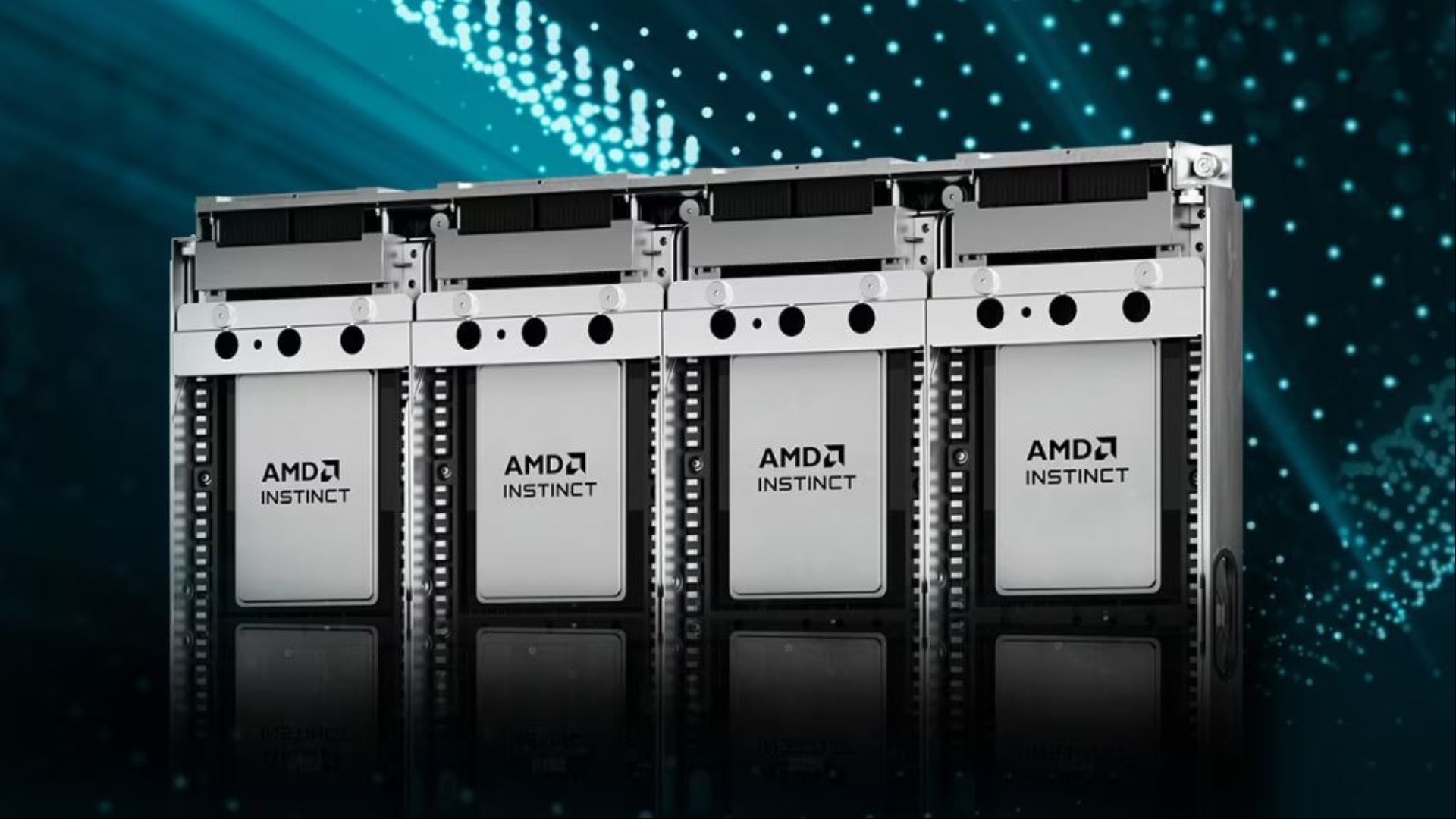
Most of this growth comes from their Data Center business. That segment of the company alone generated $5.8 billion in revenue, a huge 57% increase. This was largely thanks to strong demand for AMD’s EPYC processors and more and more shipments of their Instinct GPUs.
What Else Is Holding AMD Up Beyond Earnings?
Here’s where it gets interesting. The earnings beat is only part of AMD’s growth story The company is riding the bigger wave of AI growth, putting itself in a strong second place behind Nvidia for data center AI chips, while still being a leader in CPUs. Hyperscalers are trying to avoid relying on just one supplier, and AMD’s open system is becoming more popular for running AI programs and training them.
Looking ahead, strategic initiatives include the introduction of Ryzen AI processors for client PCs and sustained gains in server CPU market share against Intel. Analysts have revised their price targets upwards, with examples such as Jefferies raising its target to $415, reflecting a growing acceptance of the view that the AI market has sufficient scope for multiple leading participants.
Big tech companies are expected to keep spending heavily on AI infrastructure well into 2027. For example, Meta signed a multiyear deal to use up to 6 gigawatts of AMD GPUs in its AI data centers. OpenAI has also agreed to buy AMD’s upcoming rack-scale AI platform, Helios, which will compete directly with Nvidia’s Grace Blackwell system. Bank of America estimates that every gigawatt of AI capacity could bring AMD $15–20 billion in revenue.
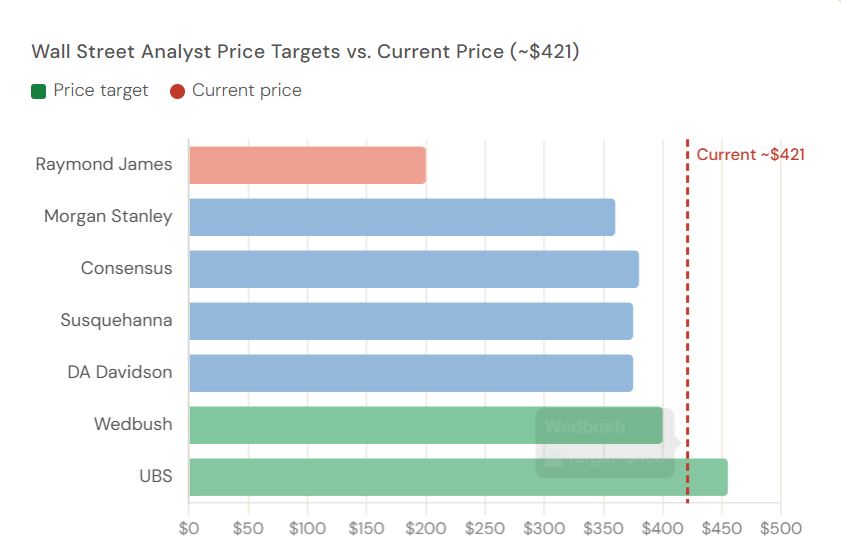
Sources: TradeThePool, Techi– as of May 2026

AMD has registered steady market share gains, but Nvidia’s CUDA moat keeps it in second place. Valuation will likely normalize gradually as earnings catch up. That could translate to solid returns for patient holders tied to overall AI adoption.
The Risk Playbook
AMD stock carries real risks that every investor should understand clearly. Currently, AMD trades at a trailing price-to-earnings ratio ranging from approximately 92 to 136 times. Should the company report Q2 results below its $11.2 billion guidance, this could lead to a rapid adjustment in its valuation multiple.
Secondly, Nvidia maintains a substantial share, estimated at 80–90%, of the AI GPU market. Its CUDA software ecosystem, developed over more than two decades, establishes considerable barriers to switching, which AMD’s ROCm platform has made limited progress in overcoming.
Meanwhile, Google and Amazon are building proprietary AI chips, chipping away at the addressable market AMD is counting on from hyperscalers over the long run. Finally, U.S. export restrictions already cost AMD roughly $1.5 billion in 2025. China market access remains a live wildcard, and any new BIS policy shift could re-open that wound.
AMD stock upside has support from AI diversification by hyperscalers, CPU market share gains, Ryzen AI momentum, which give it multiple growth levers.
The partnership is very significant. Meta’s 6-gigawatt GPU deal alone could generate $90–120 billion in AMD revenue over time, based on BofA’s per-gigawatt revenue estimate of $15–20 billion.
AMD is gaining share, but Nvidia’s CUDA software ecosystem and 80–90% GPU market hold remain formidable barriers. AMD is best positioned as the market’s credible No. 2.