


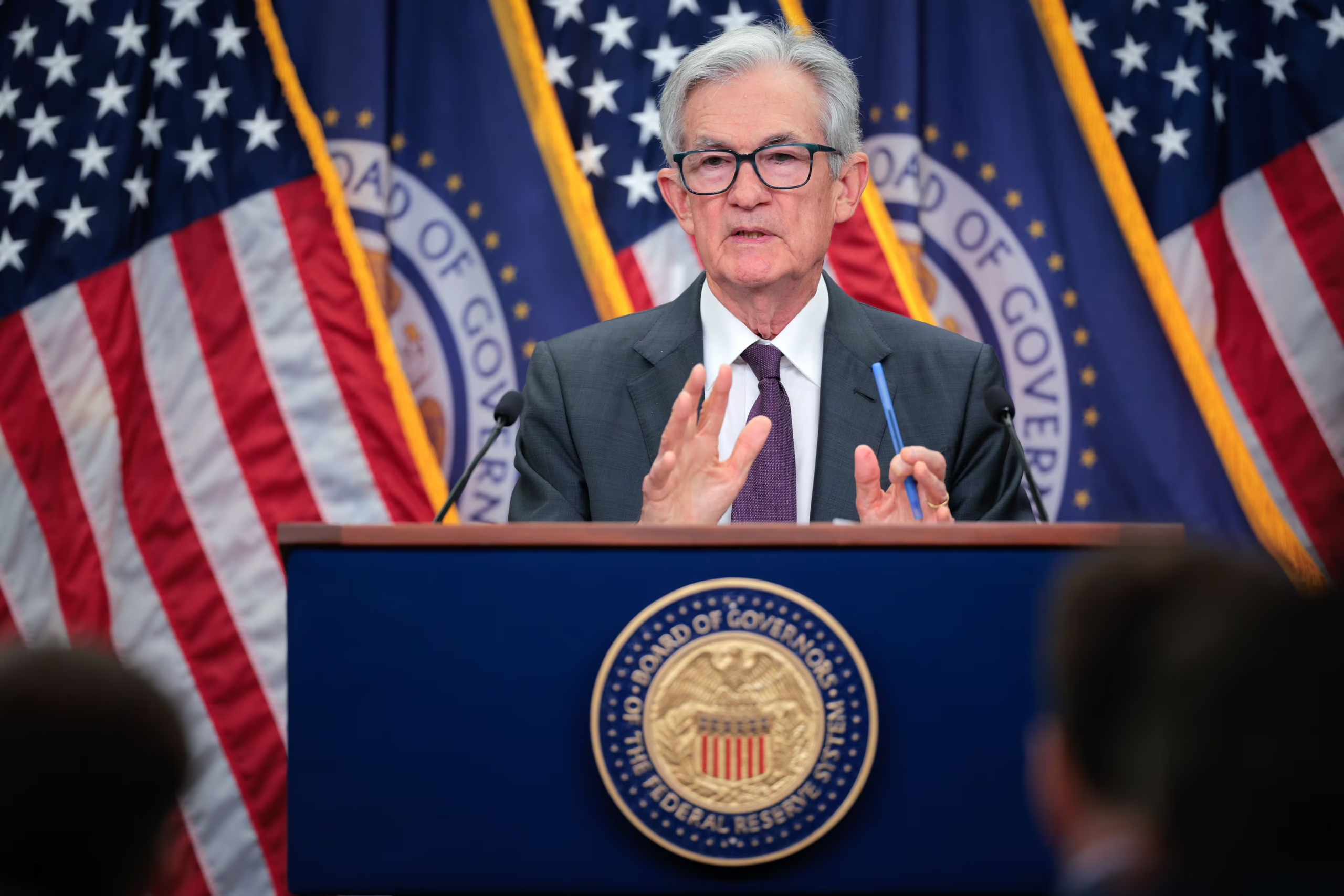
The Federal Reserve meets later today at 2pm ET, and the decision is shaping up to be one of the most fractured in years. Several policymakers are preparing to vote in opposite directions, a rare occurrence that signals deep uncertainty about the state of the US economy.
I beleive today’s call will likely emerge as the Fed’s toughest since at least September 2024, as officials openly disagreeing on whether full employment or stable prices should take priority.
Weak job growth, rising unemployment, and narrow industry hiring are pushing some officials to demand faster cuts. Some warn that inflation, although lower than last year, remains too sticky to justify aggressive easing. This divergence is amplified by limited fresh data; inflation and employment reports for October and November were delayed by the earlier shutdown, leaving the Fed to “steer with missing pieces,” as one strategist put it.
Is a Fed rate cut expected?
Yes. Markets are overwhelmingly positioned for a 0.25 percentage-point cut at today’s meeting. According to reporting from Yahoo Finance, traders see this as the third reduction of the year and have already priced in a very high probability of another move. The Fed’s updated economic projections for 2025 and 2026 have also added to expectations, since earlier forecasts showed only a limited number of cuts next year.
With a softening labor backdrop and policymakers debating how much easing is appropriate, investors largely agree that the central bank is set to deliver another step toward a more neutral policy stance this afternoon.
What is the federal funds rate?
The federal funds rate is the interest rate banks charge one another for overnight loans to meet reserve requirements. It serves as the benchmark for borrowing costs across the US economy, and the Federal Reserve adjusts this rate through its monetary policy decisions to guide inflation, employment, and overall financial conditions.
What will a Fed rate cut do to the stock market?
A rate cut immediately improves the backdrop for equities because it lowers borrowing costs across the economy and makes cash-like assets less competitive, pushing investors toward riskier sectors. When financing becomes cheaper, businesses can invest more, profit margins widen, and earnings expectations strengthen, all of which tend to lift stock prices.
The recent market rebound has closely tracked rising expectations for a December cut, reflecting how sensitive sentiment is to the Fed’s direction. Rate-sensitive groups like small caps, real estate, and cyclical industries often respond first since even modest declines in interest expenses can meaningfully improve their outlook.
While traders have embraced the likelihood of another cut today, the sustainability of the rally will depend on how quickly policymakers signal follow-through in early 2026.
Is it good or bad if the Fed cuts rates?
A Fed rate cut can be both supportive and risky depending on the economic backdrop. Lower rates reduce borrowing costs for households and businesses, which helps stimulate spending, investment, and job creation. That’s why markets typically view cuts as positive for growth and corporate earnings.
However, easing policy too quickly can also reignite inflation or weaken the Fed’s credibility if price pressures remain above target. The challenge for investors is that a rate cut may signal confidence in stabilizing inflation, but it can also reflect deeper concerns about a softening labor market.
This mixed message is why a cut often delivers short-term momentum for risk assets while raising longer-term questions about the economy’s underlying strength.

Who benefits from Fed rate cuts?
Lower rates benefit households and businesses that rely on credit, from mortgages to equipment financing. Real estate investors, in particular, gain from improved cash-flow potential. However, savers and money market investors typically see lower yields as easing continues.
What is the current Fed rate now?
The federal funds rate currently sits in a target range of 3.75 percent to 4.00 percent, a level the Fed has maintained since October 2025. That adjustment came after a quarter-point cut from the previous 4.00 percent to 4.25 percent range as policymakers began shifting away from the restrictive stance used to fight inflation.
This rate influences everything from credit-card interest to mortgage costs and business loans, so even small moves ripple across the economy.
Today’s decision will determine whether the Fed keeps that range in place or lowers it again as officials weigh softening job data against persistent inflation pressures.
What is the effect when the Federal Reserve increases interest rates?
When the Fed raises interest rates, borrowing immediately becomes more expensive for households and businesses, which slows consumer spending, reduces corporate investment, and cools overall economic growth.
Higher rates often strengthen the US dollar, making exports less competitive, and can put pressure on interest-sensitive sectors like housing as mortgage costs rise. While rate hikes are one of the Fed’s most effective tools for controlling inflation, they also increase debt burdens and can strain weaker parts of the economy.
If tightening goes too far or happens too quickly, the risk of a sharper slowdown, or even a recession increases.
What happens when the Fed cuts interest rates?
When the Federal Reserve cuts interest rates, borrowing becomes cheaper for consumers and businesses, which encourages spending, investment, and faster economic growth. Lower rates often weaken the US dollar and make exports more competitive, while also supporting risk assets like stocks and boosting demand in the housing market as mortgage costs decline.
However, easier policy also comes with trade-offs. Reduced savings returns, the potential for higher inflation, and the risk of asset bubbles can emerge if rate cuts continue for too long or happen too aggressively. The overall impact depends on the strength of the economy and how markets interpret the Fed’s path forward.
Mortgage rates may decline after a Fed rate cut, but the drop depends on inflation trends, bond yields, and market expectations rather than the Fed’s move alone.
Americans who have felt pinched by excessive borrowing costs. Lower interest rates make it affordable to borrow money and lower debt payments owed on borrowing instruments such as mortgages, student loans, and credit cards.
A Fed rate cut can lower the interest you earn on bank deposits while reducing borrowing costs on credit cards, auto loans, and mortgages, directly affecting your monthly finances.