




- The S&P 500 Index has risen by over 8% to all-time highs, overcoming the stark odds set by the Israel-US vs Iran war
- With oil prices remaining relatively stable after US-Iran ceasefire, there is an element of calm, with focus shifting to corporate earnings
- However, there is a widespread consensus of a 50% chance of a recession by the end of the year, up from 25% in January
If you were to look at a news ticker and then immediately glance at your brokerage app, you might think you were seeing two different realities. On the one hand, the Middle East has been grappling with a complex, multi-front conflict involving Israel, Iran, and the United States. On the other hand, the S&P 500 appears to operate within its own sphere, having risen by over 8.5% in the past month and recently achieving new all-time highs near 7,150.
What Is Driving the Rally?
The catalyst for the rebound was a ceasefire agreement between the U.S. and Iran, brokered on April 7, which quickly reset market risk assessments. Elevated investor confidence concerning a potential de-escalation of hostilities in the Gulf has been instrumental in propelling stock values upwards since the two-week truce began. However, this rally has not simply mirrored diplomatic developments, but it has drawn strength from more enduring undercurrents.
According to strategists at Morgan Stanley, led by Michael Wilson, the recovery in corporate earnings remains robust despite prevailing geopolitical uncertainties. This resilience has been significant enough for analysts to revise their profit expectations upward since the onset of the conflict. Preliminary reports indicate that nearly nine out of ten S&P 500 companies, representing about 10% of the index that have already reported Q1 2026 results, have surpassed analyst projections, as noted by FactSet.
Recent data from Bloomberg indicates that approximately 80% of S&P 500 firms have exceeded analyst estimates this quarter. When key players like Tesla, Boeing, and major chipmakers deliver better-than-expected results, it establishes a compelling underlying momentum that tends to drive the broader market higher, often independently of daily headlines.
Is This a Green Light for High-Risk Assets?
The strong earnings backdrop and peace-deal optimism create a credible bull case for Q2. But the risk of a relief rally trap is real, and the valuation cushion is thin. The market is pricing in a 50% probability of a formal recession by year-end, a sharp increase from 25% in January.
Provided the energy market maintains its belief that supply chains will not face permanent disruption, Wall Street generally categorizes the conflict as a regrettable yet manageable macroeconomic variable. For investors evaluating high-risk assets, a selective strategy is more appropriate than a broad-based approach.

Companies in the energy sector and those domestically focused with proven pricing power are structurally better positioned than highly leveraged growth companies that depend on interest rate reductions which may not materialize.
S&P 500 Index Forecast
The S&P 500 Index pivots at 7,060 points and action above that level denotes control by buyers. The current all-time high of 7,145 is the major ceiling. If bulls clear this, the next key level is 7,200. The RSI is at 68.85, which is just below the overbought threshold. Immediate support sits at the 7,000 psychological level. A break below this would target 6,948, which has been a key inflection point in recent months.
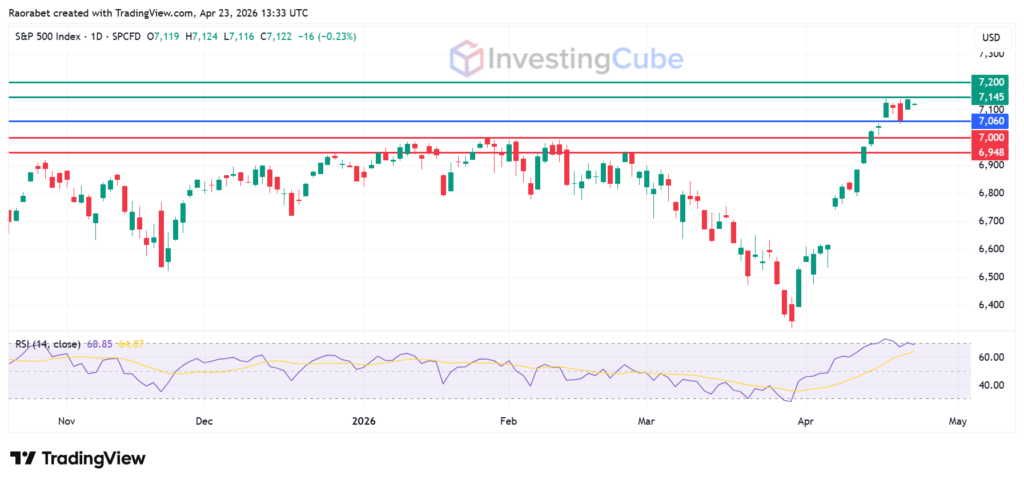
S&P 500 Index daily chart with the key resistance and support levels on April 23, 2026. Created on TradingView
The resilience is driven by strong Q1 earnings beats and optimism surrounding the U.S.-Iran ceasefire. Markets are currently prioritizing corporate profitability and AI growth over geopolitical headlines.
Not necessarily. While the trend is bullish, the rally is highly concentrated in tech. Investors should prioritize quality-focused strategies, as the risk premium remains minimal and valuations are historically elevated.
The re-opening of the Strait of Hormuz led to a decline in Brent crude prices to below $90, effectively alleviating concerns regarding “imported inflation.” As long as oil prices maintain stability, the S&P 500 frequently demonstrates a tendency to disregard more distant conflicts.