

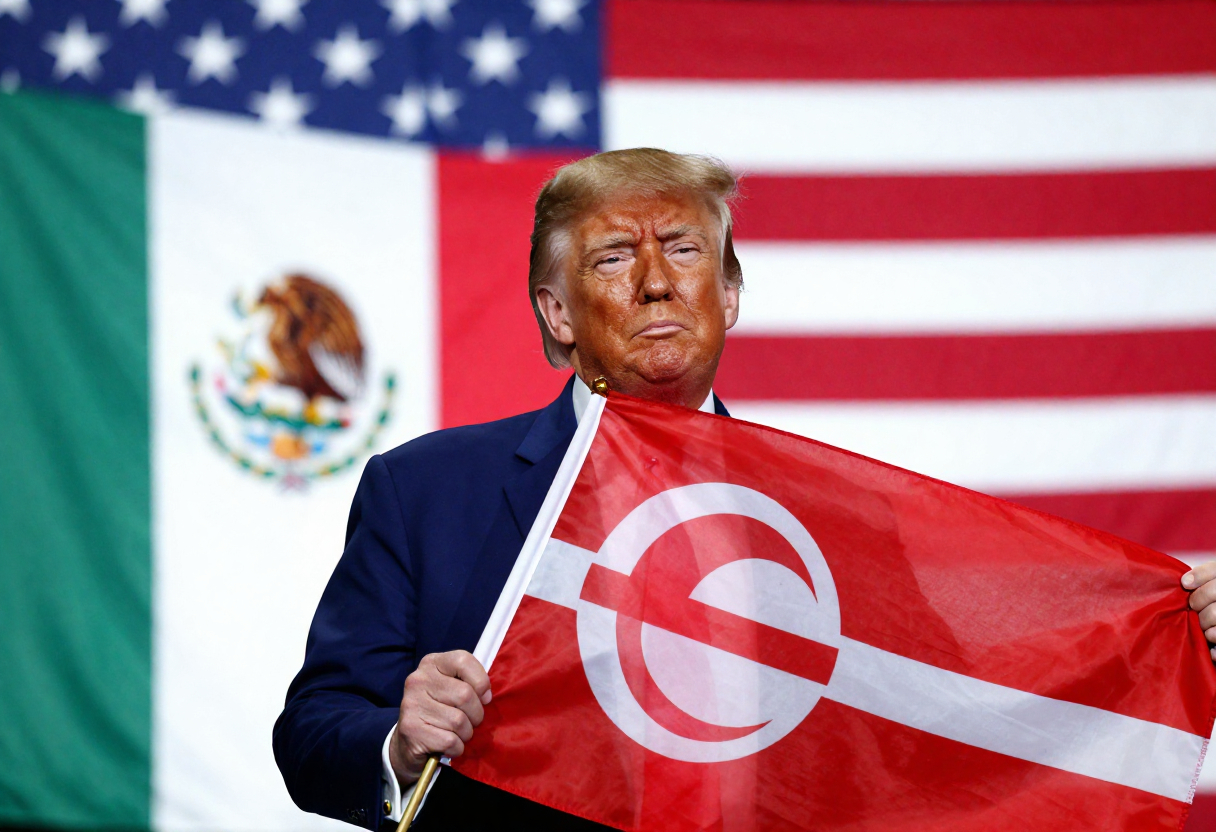
- Easing Greenland tensions improve risk sentiment, reducing safe-haven demand for the USD and supporting the Mexican peso.
- Rising Mexico 10-year bond yields attract foreign inflows, strengthening peso demand and adding selling pressure on USD/MXN.
The USD/MXN depreciated by more than 3% since 2026 started. It’s trading within the 17 peso per dollar area, which has not seen for several years. There is a consistent selling pressure on the USD/MXN due to the ongoing Greenland tensions. These tensions caused a consistent weakness in the U.S.dollar.
Amid such tensions, the Mexican Peso strengthened and recovered steadily. The USD/MXN trades around 17.47, sliping 0.03% as of 22 January at 17:27 GMT+2. This article explores the impact of easing Greenland tensions and stronger yields on the Mexican government’s 10-year bond on the currency pair, along with a technical outlook.
USD/MXN | De-escalation of Tensions Over Greenland at The Davos Conference:
- During the 2026 World Economic Forum in Davos, the US President Donald Trump announced that he would not use military force to take control of Greenland.
- He also ruled out his previously threatened tariffs tied to the issue. This announcement was delivered first on his Truth Social Platform.
- Then, Trump and NATO Secretary General Mark Rutte agreed on a “framework of a future deal” regarding Greenland in Davos.
Easing Greenland tensions let the USD/MXN trade sideways as an immediate reaction. Peso traders are digesting the impact of the easing. It’s expected that the USD/MXN remain trading sideways until a new catalyst.
One of the key factors let the USD/MXN trade sideways is that the USD has regained some ground after Trump’s announcement. Dropping threats of tariffs and military action reduced the immediate downside risk.
Stronger Mexico 10-Year Bond Yields Support Peso Demand, Adding Selling Pressure on USD/MXN:
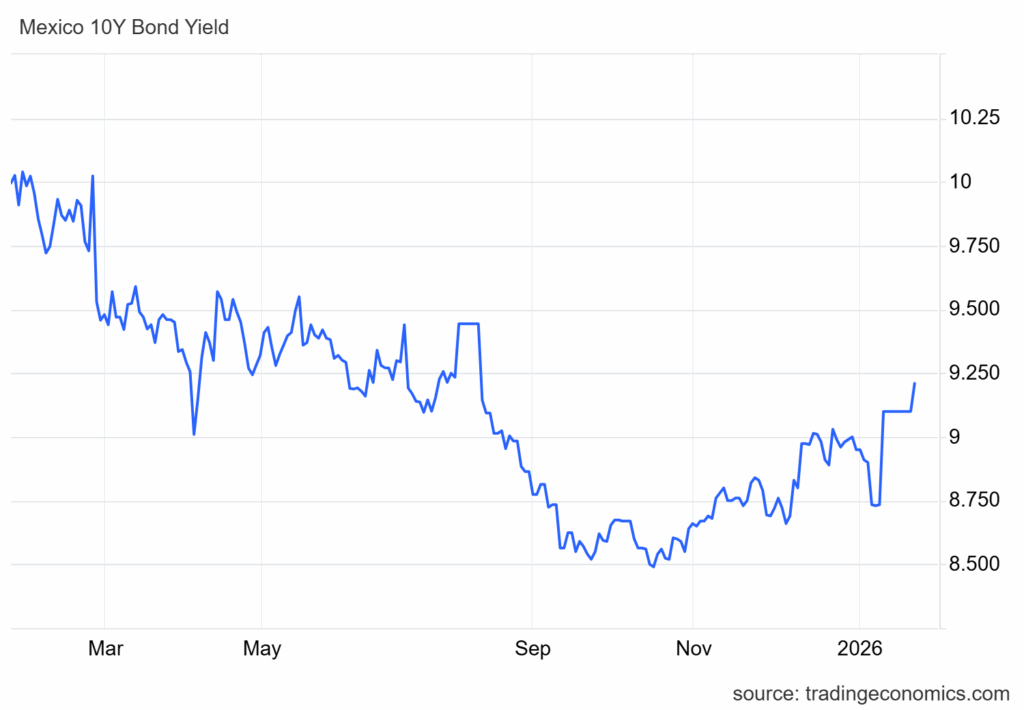
On the domestic front, Mexico’s 10-year government bond yields have been rising steadily. After breaking above the 9% level, yields are now approaching 9.5%, reflecting a positive trend and renewed attractiveness of Mexican fixed-income assets, which supports demand for the peso. This indicates an increase in foreign inflows, which will continue to support strong peso demand and add further selling pressure on USD/MXN.
The Technical Outlook for the USD/MXN:
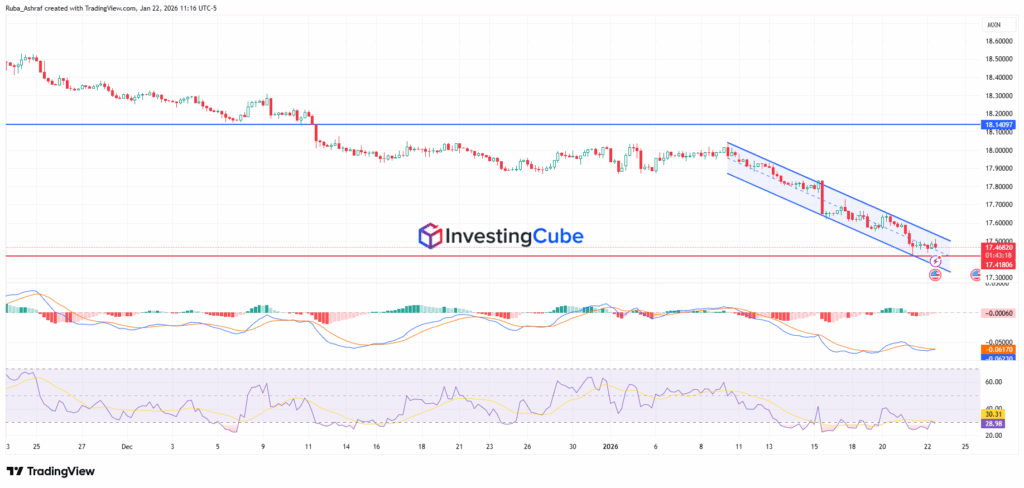
USD/MXN is trading within a downward channel, showing continued bearish momentum as it approaches the support area around 17.41–17.46. The MACD remains below its signal line in negative territory, confirming the ongoing downtrend, while the histogram shows slight contraction, suggesting the selling momentum may be easing.
The RSI is near 28–30, indicating oversold conditions and the possibility of a short-term corrective bounce. Overall, the pair remains under pressure, but traders should watch for potential pullbacks near the current support before a continuation of the downtrend.