


- EUR/USD stabilises near 1.1650 after US CPI data aligns with expectations
- Cooling inflation eases pressure for aggressive Fed easing while capping dollar strength
EUR/USD is attempting to stabilise above the 1.1650 level after recent downside pressure eased following the release of key US inflation data. While the pair remains below recent highs, selling momentum has slowed as investors reassess the outlook for US interest rates and broader dollar demand.
The initial post-CPI reaction saw limited volatility, reflecting a market that is increasingly hesitant to extend dollar positions aggressively. With political scrutiny around the Federal Reserve still in focus, traders appear more inclined to fade extremes rather than chase directional moves, keeping EUR/USD locked in a consolidation phase.
US CPI Data Reinforces Cautious Fed Outlook
US consumer price inflation rose 0.3% month-on-month, broadly in line with expectations, reinforcing the view that inflation pressures are cooling without collapsing. Core CPI remained firm but showed no upside surprise, reducing the urgency for imminent policy shifts.
According to Reuters, the CPI print strengthened expectations that the Federal Reserve will keep rates unchanged in the near term, with markets pricing a gradual and cautious easing path later in the year rather than aggressive cuts.
The inflation figures come at a sensitive time for markets, with Federal Reserve Chair Jerome Powell facing unusual political pressure. Uncertainty around Fed independence has introduced an additional risk premium into dollar pricing, limiting upside follow-through even when US data remains resilient.
EUR/USD Technical Outlook: Consolidation Within a Broader Uptrend
From a technical perspective, the daily chart shows EUR/USD holding above the lower Bollinger Band, suggesting downside pressure is being absorbed rather than accelerating.
Key technical observations:
- Price remains supported above the 1.1640–1.1620 demand zone
- The 20-day moving average near 1.1720 continues to cap upside attempts
- Bollinger Bands are narrowing, signalling reduced volatility and range conditions
- The MACD remains negative but is flattening, pointing to fading bearish momentum
As long as EUR/USD holds above the mid-1.16s, the broader structure remains constructive. However, failure to reclaim the 1.1720–1.1750 zone keeps the pair vulnerable to extended consolidation rather than a renewed bullish leg.
Key Levels to Watch
- Support: 1.1650, then 1.1620
- Resistance: 1.1720, followed by 1.1800
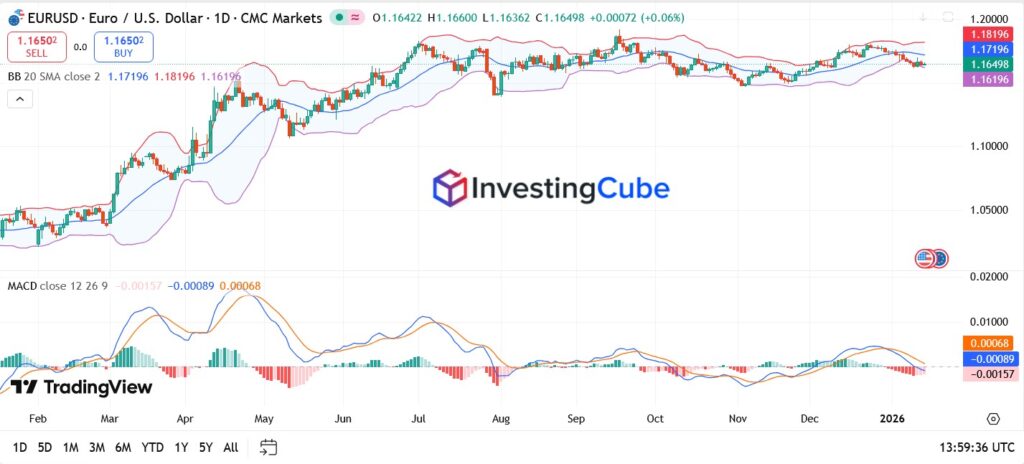
A decisive break below 1.1620 would weaken the near-term outlook and expose deeper downside. Conversely, a daily close above 1.1750 would shift momentum back in favour of the bulls.
EUR/USD Outlook
In the near term, EUR/USD is likely to remain range-bound as cooling inflation, Fed credibility concerns, and softer dollar momentum offset the lack of strong euro-area catalysts. With CPI risks now largely priced in, attention will turn to upcoming Fed communication and broader risk sentiment for the next directional cue.
Writer’s Trade Idea:
My preferred approach remains buying dips toward the 1.1650–1.1620 support zone, targeting a recovery toward 1.1750, while placing a stop-loss below 1.1580.
The data met expectations, reducing volatility and limiting fresh dollar buying, especially amid Fed independence concerns.
Dollar momentum has softened as inflation cools and markets reassess the pace of future Fed easing.