


- USD/JPY has been on a rebound since late January after the market digested rate check rumours
- The BoJ has adop
- The February 8th elections could increase the volatility around the yen
- The BoJ has shifted from ultra-loose to hawkish, giving the yen an edge it lacked previously
Since January 28, 2026, the USD/JPY pair has bounced back after a sharp drop caused by talks between US and Japanese officials about currency rates, leading to speculation about intervention. After hitting a low around 152.09, the pair has moved up to almost 157.00. With Japan’s quick elections set for February 8, things are tense. Prime Minister Sanae Takaichi wants another term to push her Sanaenomics 2.0, which ING analysts think could focus on government spending. So, what might happen?
How Fast Could USD/JPY Hit 160 With Elections Coming Up?
The speed of the rebound suggests 160 could be tested soon, but the February 8 election adds volatility. If Prime Minister Sanae Takaichi’s party wins big, it could lead to looser spending policies like tax cuts, which would hurt the yen.Most think this will limit the yen’s gains in the short run. But if the election win is big, it could cause the yen to fall even more if the market worries about the sustainability of debt from the spending plans.It’s also possible that the saying buy the rumor, sell the fact could come true.
Takaichi’s plans to boost the economy are already reflected in the current price of 157.00. If her party wins big, the focus will quickly shift from promises to how to pay for them. If the government struggles to explain how it will pay for these cuts without messing up the bond market, the yen could get stronger as people look for safer investments, potentially keeping USD/JPY below 160.
What a Hawkish BoJ Means
For a while, the BoJ was the last major central bank with easy money policies. But that’s changed. After raising the key rate to 0.75% in January, board members like Kazuyuki Masu are saying that tighter policies are the new normal. The market is now expecting at least two more rate hikes in 2026, with some predicting rates of 1.25% by the end of the year.
This shift is a mixed bag. On one hand, it helps the yen by reducing the difference in interest rates between the US and Japan. On the other, higher rates could control inflation but also slow down growth in a country with a lot of debt, which clashes with Takaichi’s spending promises.
How to trade USD/JPY In the Current Market
When trading USD/JPY this week, be aware that volatility is the main risk. With the threat of rate checks still there, don’t put stop-loss orders too close to key levels like 160.00. Instead, think about using wider stops around 161.50 to avoid being caught by a quick spike, or tighter stops below 156.20 if you’re betting the price will go up.

USD/JPY Forecast
The first barrier is 157.77, followed by the red line at 158.70. The RSI is currently neutral at 52, suggesting the price could go either way. Expect strong warnings from the Ministry of Finance if the price breaks through 159.00. If the price falls below 154.95, it would signal that the current rebound has failed. Below that, the 153.40 mark, where the rate check happened in late January, is the main support level.
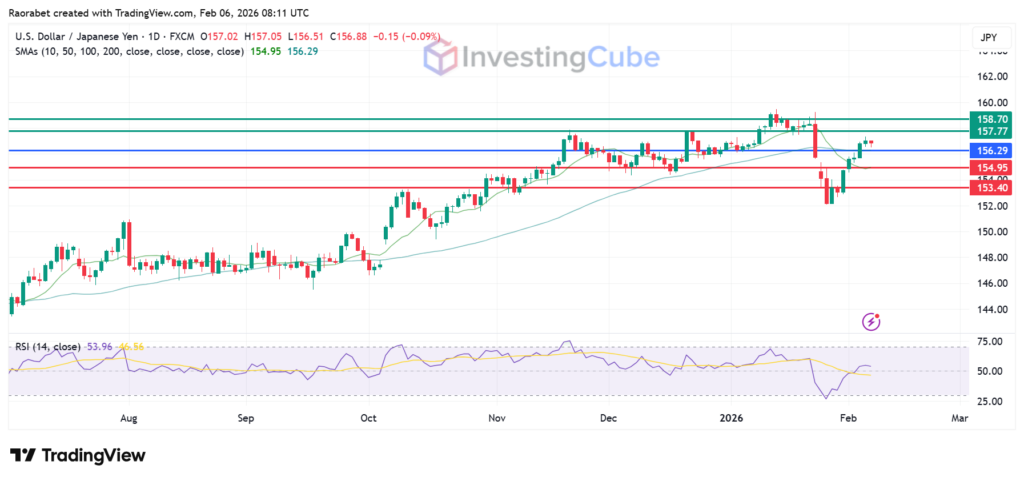
USD/JPY on the daily chart on February 6,2026 with key support and resistance levels. Created on TradingView
If Prime Minister Takaichi wins by a wide margin, the yen might initially weaken toward 159.00 because of the planned spending. But if the market doubts the debt can be managed, we could see a quick turnaround as people become more risk-averse.
A rate check is the BoJ’s last warning before stepping in directly. It signals that officials are asking banks for price quotes, which scares investors into closing their bets against the yen right away.
A hawkish BoJ limits the pair’s upside in the short-term with tighter policy. However, election-related spending plans challenge these impacts, keeping the yen weak and the pair high.