


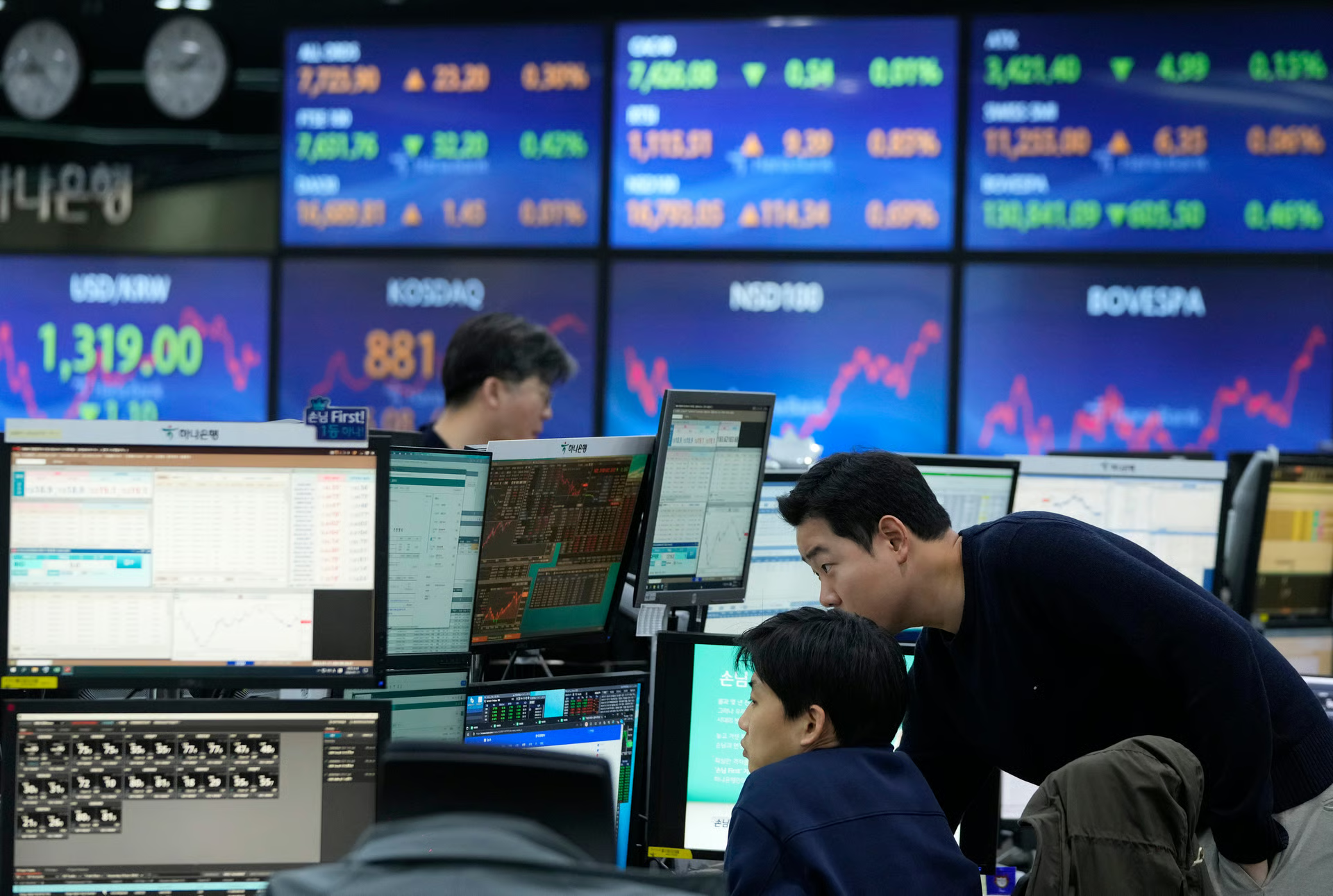
- Investors are fleeing risk across Asian indices today as the collapse of peace talks and a U.S. naval blockade of the Strait of Hormuz send Brent crude oil prices soaring.
- With global supply chains under pressure, traders are rotating into defensive assets. Discover how to navigate the current headline-driven volatility and rising bond yields.
Asian markets opened lower today, Monday, April 13, 2026, as geopolitical instability returned to the forefront of global investor sentiment. The collapse of weekend peace negotiations in Islamabad and President Trump’s subsequent order to blockade the Strait of Hormuz have triggered a “risk-off” environment. Brent crude has surged to near $102 a barrel, putting immediate pressure on regional equity indices and raising renewed concerns over global inflation.
Asian markets today: Regional performance breakdown
The failure of diplomatic efforts has washed away the optimism that fueled last week’s global stock market gains. Investor anxiety is currently centered on the potential for prolonged energy supply disruption and the resulting inflationary impact on industrial economies.
- Nikkei 225 (Japan): The index slipped more than 0.5% in early trading, weighed down by higher energy costs and the strengthening dollar.
- KOSPI (South Korea): The index faced significant pressure, dropping over 1% as traders retreated from export-heavy sectors sensitive to global growth.
- Hang Seng (Hong Kong): Shares in Hong Kong fell 1.1%, reflecting the broader regional trend of defensive rotation.
- India’s markets: Analysts note that India remains particularly vulnerable. Given the country’s high import dependency, the surge in oil prices is intensifying concerns regarding currency pressure, potential margin stress for corporations, and a resurgence in headline inflation.
The Strait of Hormuz blockade and global energy impact
The primary driver for the volatility in Asian markets today is the direct order from U.S. Central Command to implement a blockade of maritime traffic entering and leaving Iranian ports, beginning at 10 a.m. New York time as reported by Reuters.
- Oil supply shock: With approximately 20% of global oil flow usually transiting the Strait, the closure of this vital chokepoint is forcing a rapid repricing of energy assets. Brent crude has jumped roughly 7%, while West Texas Intermediate (WTI) has seen even sharper gains.
- Inflationary risks: Higher energy costs are acting as a tax on global economic growth. Investors are pivoting toward defensive assets, with the U.S. dollar strengthening across the board and Treasury yields in Japan climbing to multi-decade highs.
- The “fog of war”: Markets are struggling to gauge the duration of this escalation. While some analysts suggest that the reaction is a “knee-jerk” response, the lack of clear diplomatic progress signals that the volatility is likely to persist through the start of the Q1 earnings season.
How to navigate risk-off sentiment in Asian markets today
As the region moves through the trading week, the focus remains on whether diplomatic channels can be salvaged. However, until a resolution is in sight, market participants are bracing for continued turbulence.

- Watch for headline risk: Markets are currently highly headline-driven. Contradictory news flows regarding the status of the blockade are causing wild intraday swings.
- Earnings season sensitivity: With Goldman Sachs and other major firms beginning the Q1 reporting season, corporate leadership will be closely scrutinized for their outlook on mounting inflation and consumer spending resilience.
- Defensive rotation: While tech stocks in the region have shown slight resilience, overall sentiment is driving capital toward safe-haven currencies and high-quality liquid assets.
Conclusion: Market outlook amid geopolitical uncertainty
For markets, the failure to reach a deal over the weekend is clear negative news. We can expect oil and gas prices to remain elevated at the open, bond yields to face upward pressure, and equities to remain under selling pressure. Bond markets are currently navigating competing themes: typically, a geopolitical shock prompts investors to sell risk and buy haven assets, which would lower yields.
However, given persistent inflation concerns amid these elevated energy prices, a further rise in yields remains a highly plausible outcome. Investors should prepare for continued volatility as headlines from the Strait of Hormuz continue to override fundamental economic data.
FAQs: Understanding Today’s Market Volatility
Asian markets are lower today due to the collapse of peace talks over the weekend and President Trump’s subsequent order to blockade the Strait of Hormuz, which has sent crude oil prices soaring.
India is highly sensitive to crude price fluctuations due to its heavy import dependency. A surge in oil prices threatens to weaken the rupee, increase inflation, and pressure corporate margins across manufacturing and transport sectors.