



This article examines the various types of stock market trading. The topic can be dissected from three angles:
- Trading styles from the standpoint of length of strategy and positioning (scalping, day trading, swing trading, position trading, etc).
- Trading styles from the prism of asset contract specification (physical stocks vs CFD trading)
- Trading styles from the capital allocation perspective (cash vs margin).
However, for the purpose of this discussion, we will only deal with the types of stock market trading based on the length of the position and the strategies deployed to exemplify each one.
STOCK TRADING TYPES BASED ON STRATEGY & POSITIONING
When it comes to strategy and positioning, it is largely a function of how long the trader intends to hold stock trading positions open. This gives us the following stock trading styles:
- Scalping
- Day trading
- Swing trading
- Position trading
1. SCALPING
In terms of the length of the positioning, scalping is the fastest stock trading style. It is also the most intense as it requires full concentration on the charts. The scalper has to be on the charts throughout the trade, as stock positions are opened and closed in minutes or seconds.
The essence of scalping is to profit from small price movements. To do this, the scalper typically trades leveraged stock CFDs, as it requires more buying power to turn small movements into appreciable profits. The scalper also targets the period with the highest volatility. Most scalpers work in the first few minutes of market open, as that is when the stock exchanges are catching up on any new developments that may have occurred in the after-hours or during the weekend break.
To be able to use scalping in stock market trading, they have to focus on the following stock metrics:
- the spread for the stock being traded (the difference between the bid and ask prices, which is a cost)
- market depth and order flow
- liquidity
- speed of execution, which depends on the stock’s liquidity and the trading architecture.
Characteristics
- Very short holding periods (typically a few seconds or minutes)
- Very high trading frequency
- Requires 100% chart monitoring and intense focus
- Is heavily dependent on the quality of the execution, as latency or lags between order placement and execution can erode any profitable moves very quickly.
Who is Scalping Suited For?
Scalping is best suited for advanced-level traders who have access to efficient trading infrastructure, such as a Virtual Private Server or VPS (which cuts latency times to 1ms or less from the standard 350ms), have experience in order use and order placement, and have knowledge of fundamental analysis, being able to use longs or shorts appropriately in response to new developments.
2.DAY TRADING
Day trading carries a longer time horizon than scalping, but still requires opening and closing stock trading positions within the same trading session. Many of the elements of scalping still apply to day trading: using leveraged stock CFDs to trade, intense chart monitoring, and targeting intraday price movements with additional buying power that leverage provides to maximize positioning.
Day traders are typically insulated from after-hours market surprises or developments that can impact trading positions because they do not leave positions open beyond a trading session.
On a typical day, a trader will focus on the following stock metrics:
- market momentum, as the goal is to catch a momentum move and ride it to profit.
- Spikes in trading volume can signify an institutional entry.
- macroeconomic news releases, such as an interest rate decision.
- Geopolitical news events
- Pure technical setups, especially when there is no news.
Characteristics of Day Trading
- Positions are opened and closed within the session’s trading hours.
- High trading frequency, but not as high as in scalping.
- Continuous market monitoring is required.
- Entries require some technical analysis for execution.

Who is Day Trading Best Suited For?
Day trading requires some trading experience. Intermediate-level traders can participate in day trading, as it requires the correct order type selection, technical analysis, some skill in news interpretation, and the ability to devote time to market observation. It also requires a robust trading architecture. However, since the goal is not to close out trades within seconds, using a VPS is optional.
3.SWING TRADING
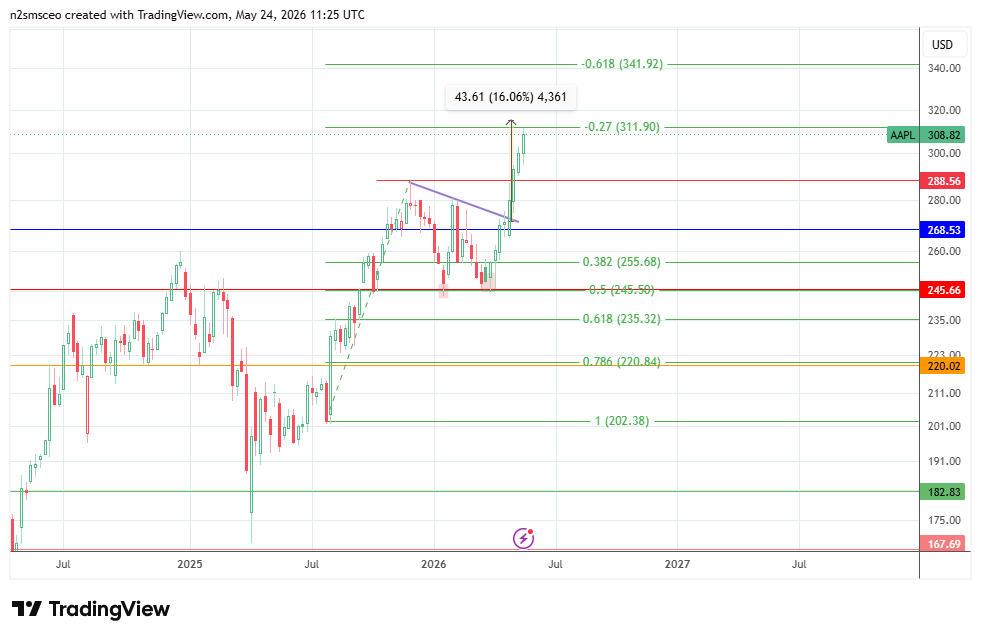
Swing trading looks beyond the intraday minor trend and focuses on the major and secondary trends, then rides a momentum move within these trends. Swing trading typically involves holding overnight positions, which can remain open for days or even weeks.
The principle of swing trading is to benefit from price swings between major support and resistance levels on the weekly and monthly charts. These movements can be momentum breakouts, trend continuations, or reversals. This is also where the use of patterns and indicators comes in, as they are more reliable on longer-term charts than on 1-minute or 5-minute charts used by scalpers and day traders.
A swing trader is less concerned with a company’s long-term prospects and more focused on the next significant price movement. Due to the duration of the trade, swing trading is not restricted to stock CFD trading. It can used to trade physical stocks that are listed on exchanges.
Characteristics of the Swing Trading Style
- The holding period can be from a few days to several weeks.
- Swing traders use technical analysis more than day traders and scalpers.
- The aim is to capture longer-term price moves without incurring costs from taking several positions.
- Trading frequency is reduced because the trader uses a single move to accumulate many pips.
- Swing trading does not require the trader to be on the charts all day. Chart watching is usually for trade entry, occasional management, and exits.
Who is Swing Trading Best Suited For?
Individuals who want active stock market participation without the need to stare at charts for long periods will find swing trading an attractive proposition. Furthermore, swing trading allows the trader to avoid intraday volatility and market noise, focusing on a clearer picture of the long-term charts.
4. POSITION TRADING
Position trading is a stock trading style in which the investor aims to capture major market trends that last for months and sometimes a few years. This form of trading fits more with the investment model,, where the trader also seeks to profit from dividend payments if the physical stocks are held.
Position traders typically do not trade leveraged stock CFDs; instead, they purchase the underlying stock to benefit from price appreciation and dividends/bonus share awards. The focus of a position trader is the broader economic outlook, earnings growth, sectoral trends and long-term structure.
For instance, position traders use the following major triggers for their positional playbooks:
- Changes in interest rate cycles, especially if rates are shifting towards an easing pathway.
- Structural growth within particular sectors, such as the type being witnessed in 2025 and 2026 among defense and AI stocks.
- earnings are expected to improve.
- re-rating of a stock’s valuation to the upside after a prolonged selloff or consolidation period.
Characteristics of Position Trading
- The trading frequency is much lower than scalping, day trading and swing trading.
- Position traders rely heavily on fundamentals and macroeconomic indices, since the impact of these drivers can be long-lasting.
- Transaction costs are lower because a single position can be left open to ride price action for extended periods.
- There is no pressure to be on the charts frequently.
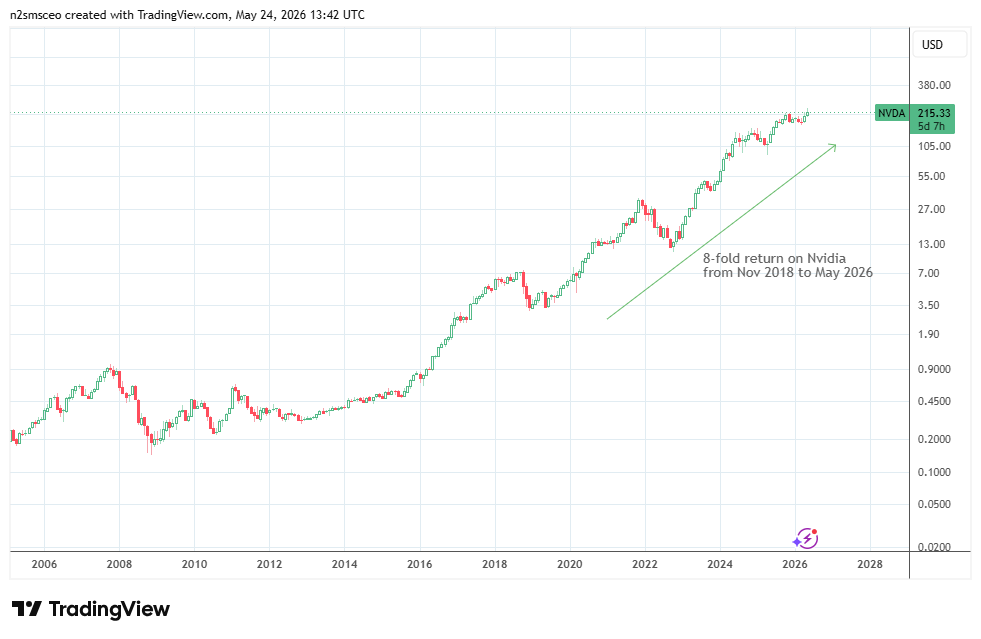
For instance, an investor who was looking to buy into an emerging AI industry by taking a position trade on Nvidia (NVDA) in 2018 when the stock was trading at $3.50, would have made an 8-fold returns on that investment as of writing in 2026.
Who is Position Trading Best Suited For?
Position trading suits those with an investment focus; aiming for dividend returns and stock growth via bonus shares, as well as capital appreciation. It also fits the profile of those who are not interested in using leverage to trade, but prefer to use their own funds.
Conclusion
There are different ways to participate in the stock market, ranging from scalping to position trading. Each way has its own approach, trading methodology, risks and returns profile. Whichever style you choose, make sure to master it and follow the necessary rules to ensure a profitable outcome.