

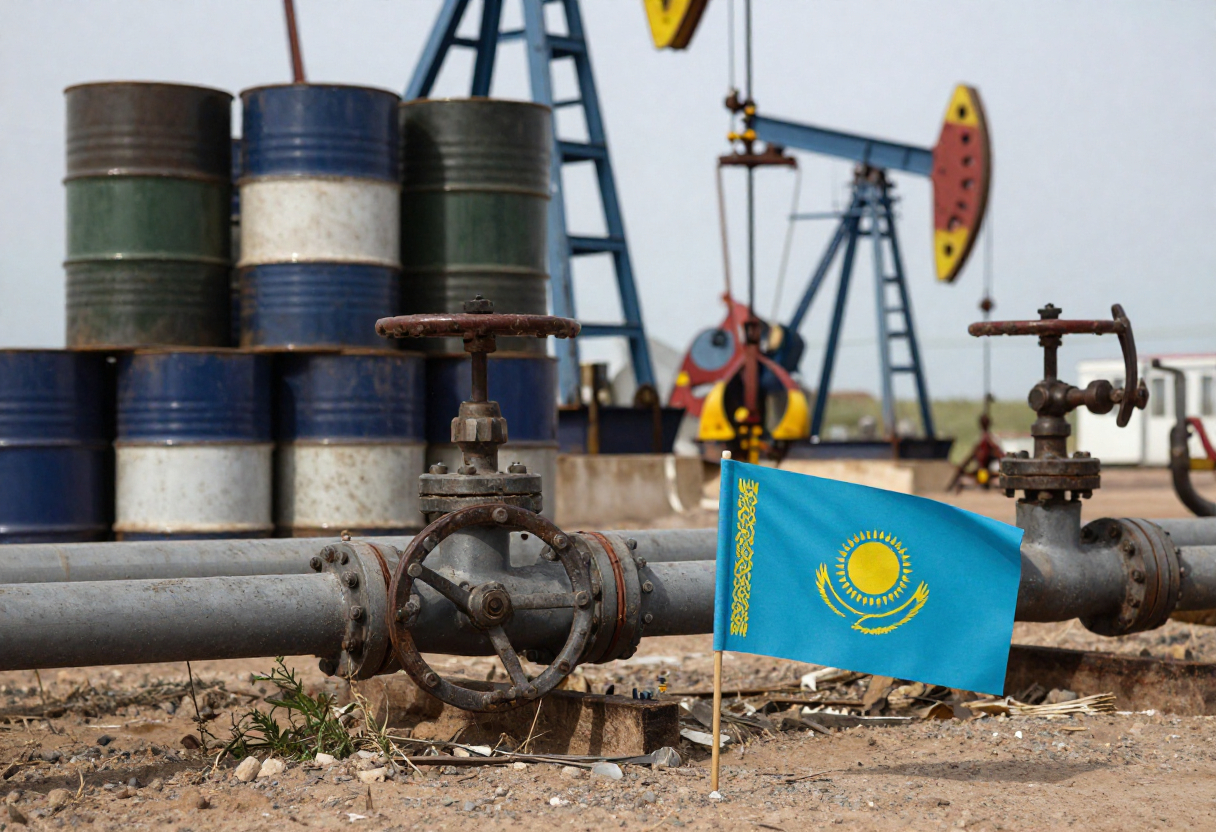
- Crude oil prices are influenced by rising demand, supply disruptions in Kazakhstan, and geopolitical tensions, including Greenland and US-EU trade threats.
- Market concerns over US oil inventories and potential economic measures add volatility, making technical and fundamental analysis crucial for traders.
As of today at 12:33 GMT+2, Crude oil futures slip around 0.44 points or 0.73%. This decline can be considered profit-taking. Crude oil price trades around $59.80 per barrel, extending its winning streak for the fourth consecutive day. Such gains are driven by the temporary halt in output at two large fields in Kazakhstan.
On the other hand, oil prices are under pressure due to rising geopolitical tensions. Trump’s desire to control Greenland is escalating tensions with other countries, weighing on Crude oil prices. This article examines all key factors influencing crude oil prices, along with a technical outlook
Crude Oil Prices | Kazakhstan Oil Output: Key Updates
On Sunday, OPEC+ and its producers in Kazakhstan suspended production due to power disruption problems. The output halted at the Tengiz and Krolev oilfields there. According to Reuters’ sources, the output could remain offline there for another seven to ten days.
Crude oil prices fell on Wednesday as expectations of rising US oil inventories outweighed a shutdown at the two large oil fields in Kazakhstan. Moreover, the International Energy Agency (IEA) downgrades Kazakhstan’s oil production forecast. It has revised down its forecast for Kazakhstan’s oil production to 100000 barrels per day in 2026.
IEA expects that the global oil demand will grow by 930,000 barrels a day this year, from 860,000 a day previously. With increasing demand, output disruptions, and escalating geopolitical tensions, including tensions surrounding Greenland, crude oil prices are expected to rise.
Crude Oil Prices | Greenland Tensions and Trump’s Trade Threats: Key Updates
Crude oil prices may face pressure due to the key updates mentioned below:
- The US President Donald Trump reaffirmed that he wants to take control of Greenland.
- Trump’s threats of 10% tariffs on eight EU countries.
- The European Union signaled potential duties on $93 billion of US goods.
- France reportedly pushed for the use of the bloc’s Anti-Coercion Instrument
- Markets are concerned that Europe could leverage around $10 trillion in US assets.
- A danish pension fund is planning to exit US treasuries, adding market worries.
The Technical Outlook for the Curde Oil Prices:
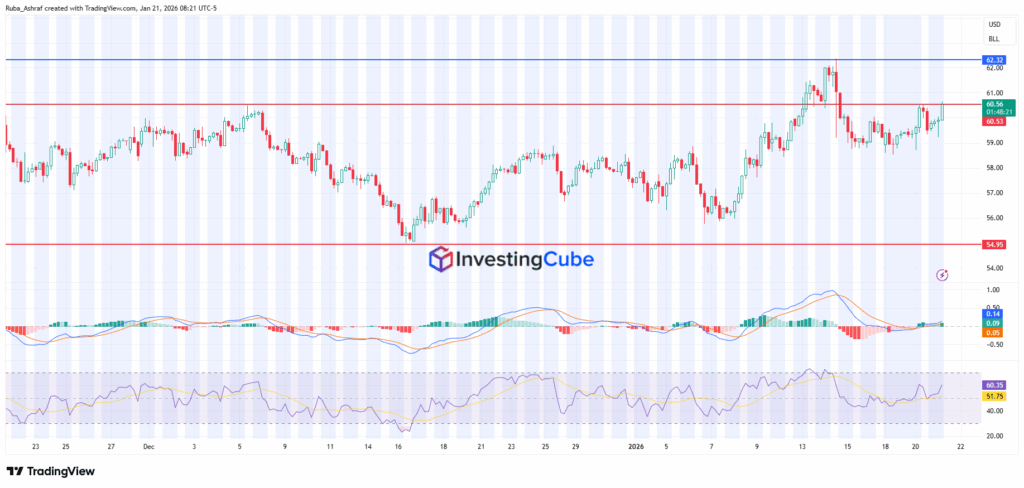
Crude oil prices are currently testing resistance near $60.55, having rebounded from support around $54.95. The RSI is trending upward at 60.26, indicating bullish momentum but not yet overbought. A decisive breakout above 60.55 and daily close could pave the way toward 62.32 resistance. The 62.32 level is an all-time high that have been tested last week.
The MACD shows a positive crossover, suggesting potential continuation of the upward move. Overall, the chart signals a short-term bullish bias, with key levels to watch at $60.55 for resistance and $54.95 for support.
conflicts and political risks can dirupt supply or create uncertainty, often pushing crude oil prices higher.
Yes, measures like US-EU tariffs or sanctions can influence oil demand, investor sentiment, and market volatility.