

- Tesla has risen by more than 7% in the last two sessions, coming from a long downtrend that started in late December
- The company will release its quarterly earnings results for Q4 2025 on January 28 and that could shake up the momentum
- Investors were impressed by Tesla's energy segment earnings, and that alongside AI and FSD are seen as key growth frontier
Tesla stock (NASDAQ: TSLA) has had a rough time since late December 2025. Shares fell from around $488 to a low of $419 by January 20, 2026. However, recently, the stock jumped over 7% in two days, hitting $449 by January 22 before dropping slightly to $448 on January 23. This prompts the need to assess the underlying causes and whether the momentum can endure.
Making Sense of the Rebound
This week, stocks in general, especially the “Magnificent Seven”, rose as global tensions decreased. President Trump eased off on tariff threats against European allies, which was great news for global trade-sensitive stocks like Tesla.
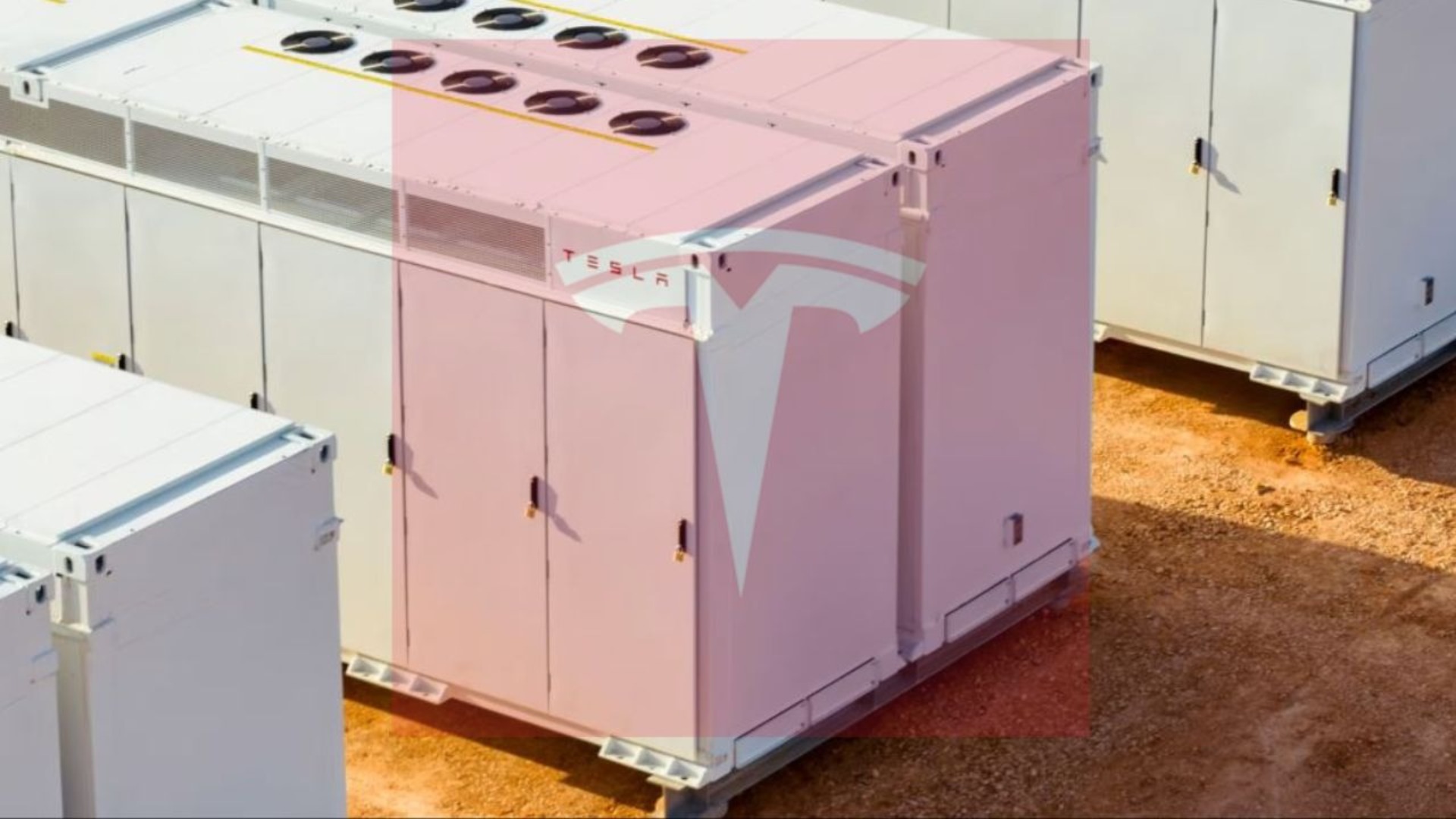
The recent increase seems to be because of more optimism about Tesla’s ventures outside of EVs. Tesla’s energy division is quietly becoming very important. While Q4 2025 vehicle deliveries were a bit low at 418,227 units, the company had a record 14.2 GWh of energy storage deployments. This record-breaking growth in the energy sector is beginning to make investors believe that Tesla is not just an EV maker anymore, but it’s also a formidable AI and energy infrastructure player.
Comments from analysts like Dan Ives of Wedbush, who mentions a potential $3 trillion market cap because of autonomy, have increased short-term buying, as discussed in AOL’s price prediction.
Can the Momentum Hold?
The rise in Tesla’s stock price is encouraging, but whether it will continue is uncertain. If the January 28 earnings report shows weak delivery numbers or lower profits, the stock could drop again. But, if Elon Musk gives a clear idea of when Robotaxis might become available during the earnings call, the stock could keep going up.
For the rest of 2026, Tesla’s performance will likely depend on FSD adoption, energy scalability, and regulations. Wedbush analysts are very optimistic, with price targets as high as $600, pointing to the chance for software-driven profit margins. Also, the move to a subscription-only model for FSD in February will be a key test of consumer demand.
For the rest of 2026, Tesla’s story will likely be defined by FSD adoption, energy scalability, and regulatory hurdles. Analysts from Wedbush remain highly optimistic, with price targets as high as $600, citing the potential for software-driven profit margins. On the flip side, the transition to a “subscription-only” model for FSD in February will be a critical litmus test for consumer demand.
Tesla Stock Price Forecast
The recent 7% rise has pushed the price back towards the 20-day Moving Average at $447.82, which is now a key level it needs to break through. The Relative Strength Index (RSI) has gone up from 30s to 51, which means the selling pressure is decreasing. If the price can break above $455, the next target is the November highs near $475. There’s support at the 100-day Simple Moving Average (SMA) at $431. If it falls below this, it could drop to the year-to date lows near $418.
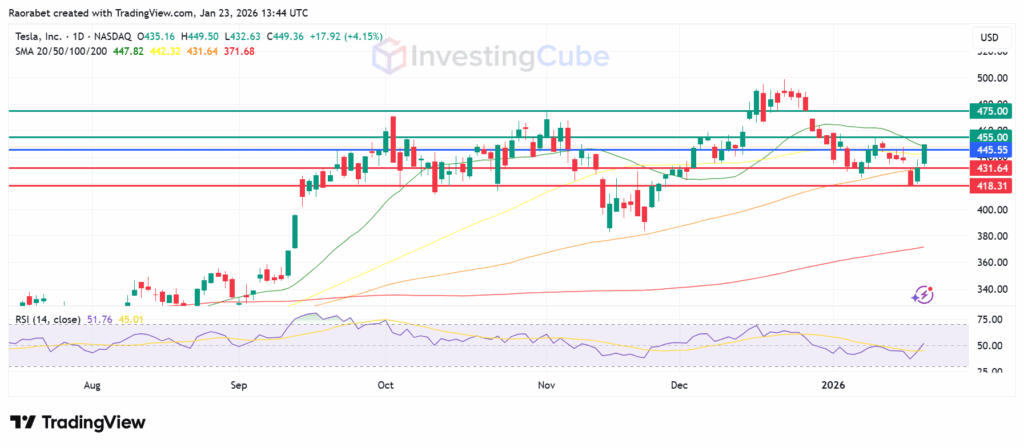
Tesla stock daily chart on the daily chart on January 23, 2026 with support and resistance levels. Created on TradingView
The decline was due to poor Q4 deliveries, which dropped 16% year-over-year because of subsidy expirations and competition, leading to worries about market share.
The gain was primarily driven by a broader tech rally following the easing of trade tensions between the US and Europe. Additionally, record-breaking results in Tesla’s energy storage division boosted investor confidence.
That is uncertain. High valuations and delivery risks could limit gains, but energy growth and rate cuts might with support if earnings on January 28 are better than expected.