



- SBI's Q4 earnings are expected to show steady loan growth but could face margin pressure and elevated credit costs in select segments
- While consensus sees the dip as healthy consolidation, structural challenges and valuation risks suggest caution
- Investors should monitor slippages in the SME and agriculture segments to gauge the true health of rural consumption.
SBI stock had a rough March, falling 18%. But in April the bank recovered much of that lost ground, giving investors a break they desperately needed. However, turning the page to May, that recovery stumbled. SBI has fallen nearly 3% since April 27, slipping from recent highs to the ₹1,060 level. So how is the stock likely to behave in the context of the May 14 earnings call?
What the SBI Q4 Earnings Results Could Mean for the Stock
According to Univest’s preliminary analysis, market consensus suggests a Q4 Profit After Tax (PAT) within the ₹17,000–19,000 crore bracket. The analysis forecasts Net Interest Income at ₹1.3–1.45 lakh crore. NIM is expected to recover modestly to the 3.2–3.4% range. A result in line with these estimates is unlikely to drive a sharp rally. The stock will need a genuine upside surprise, particularly on asset quality and credit costs, to break meaningfully higher.
Dividend clarity will also matter. The board is set to evaluate a final dividend for the fiscal year 2026. Historical data from INDmoney indicates that SBI distributed ₹15.90 per share for FY25, translating to a dividend yield of approximately 2.66% based on current market prices.
Should there be any communication suggesting the payout will be maintained or increased, this could establish a degree of price support, particularly for the domestic retail investment community.

What to Watch in the Q4 Call
When the management speaks later this month, look past the Profit After Tax (PAT) figures. Instead, attention should turn to potential slippages within the SME and Agriculture portfolios. Together, these segments constitute 22% of the bank’s total loan book and often serve as key indicators of rural economic vitality. Maintaining a Gross Non-Performing Asset (GNPA) ratio below 1.6% would generally suggest the bank is sustaining a robust financial standing.
Beyond headline numbers, participants should listen closely for management’s outlook on net interest margins, deposit franchise strength, and credit cost trajectories. Their commentary on how the bank plans spend its earnings, especially payouts to shareholders, also requires a keen focus. Also, watch how they address risks building in rural lending segment. Any mention of loan expansion during softer economic times will likely influence investor response.
SBI Share Price Forecast
Technically, SBI is testing the strength of its April recovery. The MACD is about to cross downwards across the signal line, suggesting room for consolidation. The first resistance is seen at ₹1,1080, with further hurdles up to ₹1,100. Conversely, a significant support area is observed at ₹1,060. Should the stock fall below this level, it might re-approach ₹1,040, particularly if market conditions become highly risk-averse.
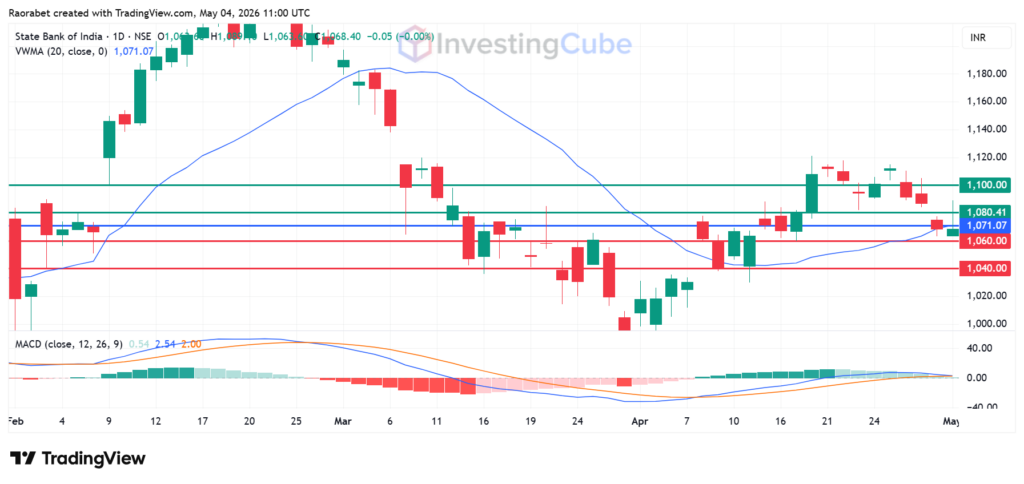
SBI stock ‘s performance on the daily time frame on May 4, 2026 with key levels of near-term support and resistance shown. Created on TradingView