


- The Dow Jones Index had been on a recovery for the past week and the two-week ceasefire between the US and Iran has added fuel to the momentum
- Dow Futures popped up 1,000 points in the aftermath of the ceasefire news, signaling its likely substantial impact in the coming days
- However, this is not a peace deal and any sudden flare up could reverse gains
Following a difficult period from mid-February through late March, the Dow Jones Industrial Average (DJIA) has demonstrated a notable recovery in early April. Earlier concerns centered on persistent inflation and geopolitical instability have recently shifted, driven largely by the announcement of a formal US-Iran ceasefire. This diplomatic development has altered global risk assessments and contributed to renewed investor confidence.
Drivers of the Recent Rebound
The recent upward movement in the Dow reflects a combination of reduced geopolitical risks and a positive shift toward cyclical sectors. Progress toward a ceasefire has eased worries about prolonged supply disruptions in the Strait of Hormuz, which in turn has helped moderate oil prices and alleviate inflation concerns. As a result, investors have become more willing to engage with sectors sensitive to interest rates, as observed in recent market reports.
Within the Dow, financial and industrial stocks have been at the forefront of gains. This trend indicates improving expectations for lower corporate borrowing costs and increased capital expenditure, enabling the index to recover some of the losses experienced earlier this year, even while broader market sentiment remains cautious.
What the US-Iran Ceasefire Means for the Dow
The ceasefire agreement announced on April 7 introduced further optimism by removing a key element of uncertainty. President Trump declared a conditional two-week ceasefire with Iran, contingent on Tehran permitting the full and safe reopening of the Strait of Hormuz. This announcement prompted immediate market reactions. Dow futures surged by over 1,000 points at the opening, Brent crude oil prices dropped nearly 16% to approximately $95 per barrel, and Bloomberg reported that European equities experienced their largest single-day rally in a year.
Despite these initial gains, the lingering impact of higher energy costs from earlier in the quarter and potential delays in implementing the ceasefire may temper the upside. The measured response of the Dow suggests investors remain cautious, weighing the sustainability of this recovery. Analysts note that easing regional tension should stabilize oil prices. That in turn benefits American consumers and the heavy manufacturing sectors prominent in the Dow by effectively reducing costs.

Dow Jones Forecast
The index has pivots at 45,529 and its primary resistance is 47,000. Going above that level will signal a strong control by buyers which could push the Index to test 47,428. Initial key support is likely at 46,200 points, near the recent daily lows. Going below that level will invalidate the upside narrative and the second support could come at 45,897 points.
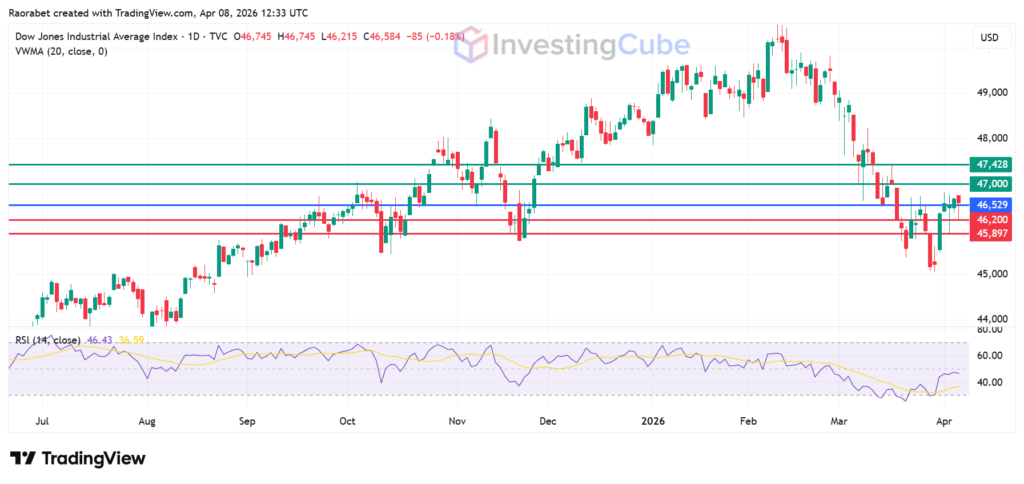
Dow Jones Index daily chart with key levels of support and resistance on April 8, 2026. Created on TradingView
The Dow’s decline between February and March stemmed from persistent inflationary pressure, concerns about a prolonged high-interest rate policy from the Federal Reserve, and escalating Middle East tensions that pushed energy prices higher.
The immediate reaction, with Dow futures up over 1,000 points and oil down 16%, is substantial. But the ceasefire is a two-week pause, not a peace treaty. Whether stranded tankers can actually transit the Strait of Hormuz in that window will determine whether the rally has genuine legs.
Sustained momentum hinges on stable oil prices and supportive economic indicators. At the same time, ongoing challenges such as structural borrowing costs and uncertainties around global growth could limit further upside in the near term.