- Recent earnings figures from "Magnificent Seven" companies have signaled slow reward from the heavy AI infrastructure investments
- A recent Deutsche Bank survey shows 57% of investors are concerned over a potential AI bubble burst
- US economic data and Fed interest rate decisions will have a great impact in influencing the S&P 500 index in the coming months
The S&P 500 enters the week of February 2, 2026, under increased observation because of AI bubble worries. January was shaky. The index closed near record highs but showed signs of slowing down. On January 30, it was trading around 6,950. The S&P has risen slightly this year but faces tests from upcoming economic data and corporate earnings.
The index has benefited from a three-year, AI-driven climb, but recent earnings reports from big tech firms like Microsoft and Alphabet have given investors reason to pause. So how could this turn out?
AI Bubble Risks Linger in 2026
For the past two years, investors gladly rewarded companies just for spending big on Nvidia chips and data centers. Now, the mood has changed. According to a recent Deutsche Bank survey, 57% of investors now see a drop in tech stock values as the biggest risk to market stability this year.
The pressure in the tech world is showing in the Capex vs. Returns gap. Microsoft’s recent earnings announcement led to a huge $381 billion drop in market value in just two sessions, even though they reported good profits. That’s because investors are getting impatient with rapidly growing capital expenditures that haven’t yet produced big new revenue.
While Meta managed to rally by raising its sales projections, the broader “Magnificent Seven” index is actually down about 1.5% over the last quarter, even as the S&P 500 remains slightly positive. This suggests the AI boom might be slowing down. The S&P 500 might test resistance near 7,000, but if people get more worried about AI, the VIX could jump to 30.
What to Expect This Week
Market watchers expect more ups and downs this week, with the February jobs report on Friday being a key event. The jobs report could change expectations for when the Federal Reserve might cut rates. Earnings from firms focused on AI could make things jumpy. Disappointing results could push the index down. Overall, things will likely stabilize, with bubble worries limiting growth and economic strength preventing a big drop.
Broader Implications for the S&P 500
Because AI is a big driver of S&P gains, any problems could put pressure on the index. Yahoo Finance has recently been asking if the bubble will burst in 2026, suggesting diversified backups like small caps. It seems likely that while AI use grows in areas like healthcare, the World Economic Forum warns of overinvestment risks.

J.P. Morgan highlights AI’s transformative potential but warns of bubble bursts impacting growth.Vanguard’s 2026 Outlook points to “creative destruction,” where the high cost of maintaining AI infrastructure is starting to eat into profit margins.
S&P 500 Forecast
The S&P 500 index is showing less upward pace on the daily chart. Immediate resistance is at 6,960, beyond which it could retest the milestone 7,000 points. To break above 7,000, we’d need strong earnings and positive outlooks from upcoming tech earnings calls.
The RSI is currently at 53, having declined from above 60 and showing a shift bullish to bearish-leaning. The main support level is 6,900. A drop below this could start a fall toward the 6,874 level.
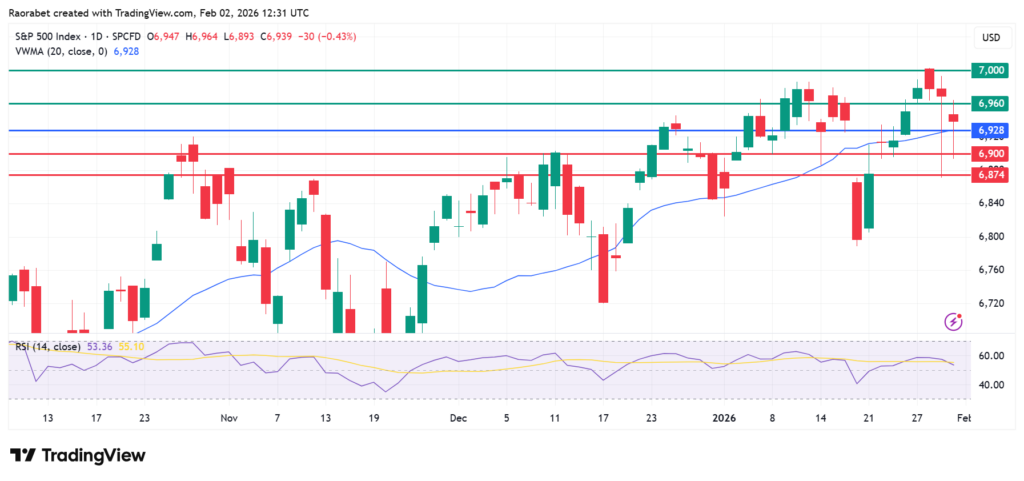
S&P 500 Index on the daily chart with main support and resistance levels for February 2, 2026. Chart created on TradingView
February NFP payrolls, AI earnings, and Fed comments could cause market swings, testing resistance near 7,000 because of bubble worries.
Yes, including circular investments, energy shortages, consumer disinterest, and slow returns on capital expenditures, similar to the dot-com overbuild.
Potentially, as high valuations and a correction in hype could pressure the tech-heavy index, though diversifying into small caps could provide a buffer.