



- The third 25 basis points cut in a row denotes caution by the Fed
- The US dollar is already under pressure, with the DXY at seven-week lows
- Equities are bumped up as borrowing costs drop and future valuations improve
The U.S. Federal Reserve’s recent decision to cut the federal funds target rate by 25 basis points, the third such cut in 2025. This move had a quick and predictable impact on global financial markets. Let’s break down what this means for the U.S., the world, stocks, and the dollar. What does the Fed rate cut mean for the economic landscape? Let’s examine the ripples for the US, the world, stocks, and the dollar.
Implications of Fed Rate Cut News for the U.S. Economy
In the immediate term, cutting rates is supposed to get the economy moving by pumping in more cash. It makes it cheaper for banks to borrow, and they should then lower their rates for things like mortgages and car loans. A small cut might not seem like much, but over time, those savings can add up and people might start spending more.
Mortgage rates could drop, with 30-year fixed rates around 6.5%, according to CNBC, potentially unlocking $1.93 billion in annual savings on credit card debt alone, according to WalletHub estimates cited by Reuters. For businesses, cheaper borrowing fuels hiring and investment, a direct counter to the unemployment rate’s creep toward 4.2%, as noted in the Fed’s updated projections.
Food News For the Global Economy
Generally, a U.S. Fed rate cut is seen as good for the global economy, , especially for emerging markets. When the U.S., the world’s largest economy, eases its monetary policy, capital tends to shift around.
By making dollar-based assets less appealing, it eases the burden of debt on emerging markets, which have $9 trillion in dollar bonds, according to the BBC. Countries like Brazil and India, which are already easing their own rates, might see a boost in exports as a weaker dollar creates a more level playing field. Reuters projects that global trade volumes could rise 1-2% in 2026 because of the Fed’s actions.
Furthermore, a rate cut reduces the cost of servicing U.S. dollar-denominated debt for foreign governments and corporations. Since much of the world’s trade and debt is conducted in USD, easier U.S. monetary policy can alleviate financial strain globally, providing breathing room for economies facing their own domestic challenges.

The Impact of Lower Interest Rates on Equities Markets
Stock markets, which tend to favor lower borrowing costs and cheaper money, responded immediately and positively to the news. Major indexes like the Dow Jones Industrial Average and the S&P 500 closed higher after the December 10 announcement. Lower interest rates usually lead to higher stock prices because they lower the rate used to calculate a company’s future cash flows, which raises the current value of those earnings.
Trajectory of the Dollar
Rate cuts usually weaken the dollar, and this time was no different. The dollar index (DXY) fell to a seven-week low against other currencies. In essence, a softer dollar underscores the cut’s global imprint, fostering trade but inviting inflationary imports.
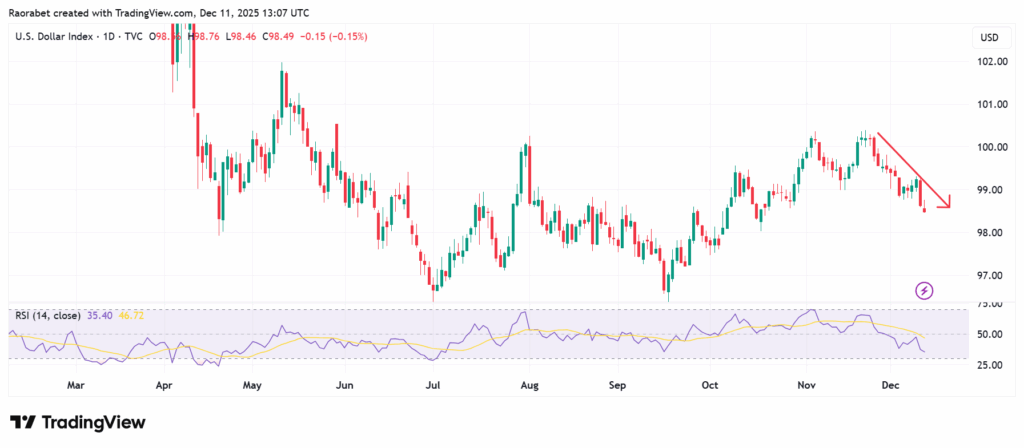
DXY Index Daily chart on December 11, 2025. Source: TradingView
A weaker dollar eases $9 trillion in debt burdens, per BBC, boosting exports and stabilizing other currencies against the US dollar. Also, Reuters projects 1-2% trade growth, aiding recovery in inflation-hit regions without domestic rate hikes.
The cut aims to stimulate the economy by reducing borrowing costs for banks, businesses, and consumers. The Fed is specifically seeking to cushion the weakening labor market and mitigate downside risks to employment.
Stocks rose because lower interest rates reduce the cost of corporate borrowing and boost the valuation of future earnings.