- This is an analysis of the reaction of gold, USD pairs and US indices to the FOMC decision of 18 March 2026.
The Federal Open Market Committee (FOMC) of the US Federal Reserve left interest rates unchanged at 3.50%–3.75% at its 18 March policy meeting.
This was not unexpected, given the rise in inflationary fears following the spike in oil prices from the Iran war. The bigger market takeaway was the Fed’s more cautious tone on inflation, and the language that pointed to reduced confidence in resuming rate cuts.
This has effectively shelved expectations of Fed rate easing in 2026, with Reuters reporting that the latest market projections see only one rate cut in 2026. Policymakers also raised inflation forecasts, as both headline and core PCE price indices are seen at 2.7% by the end of 2026. At least one policymaker expects a rate hike in 2027, according to a Reuters report.
The Fed has now effectively shifted from an easing mode to a wait-and-see mode, as it assesses the impact of the war and oil shock on inflation.
So what has been the impact on selected assets?
Gold
The impact of the FOMC decisions has been decidedly negative for gold prices. Higher-for-longer rates at current levels will cause investment flows away from the non-yielding metal to US bonds. Gold only benefits in a rate-easing environment, which lowers real yields and the US Dollar’s appeal. Higher treasury yields after the decision sent gold crashing below $5,000/oz.
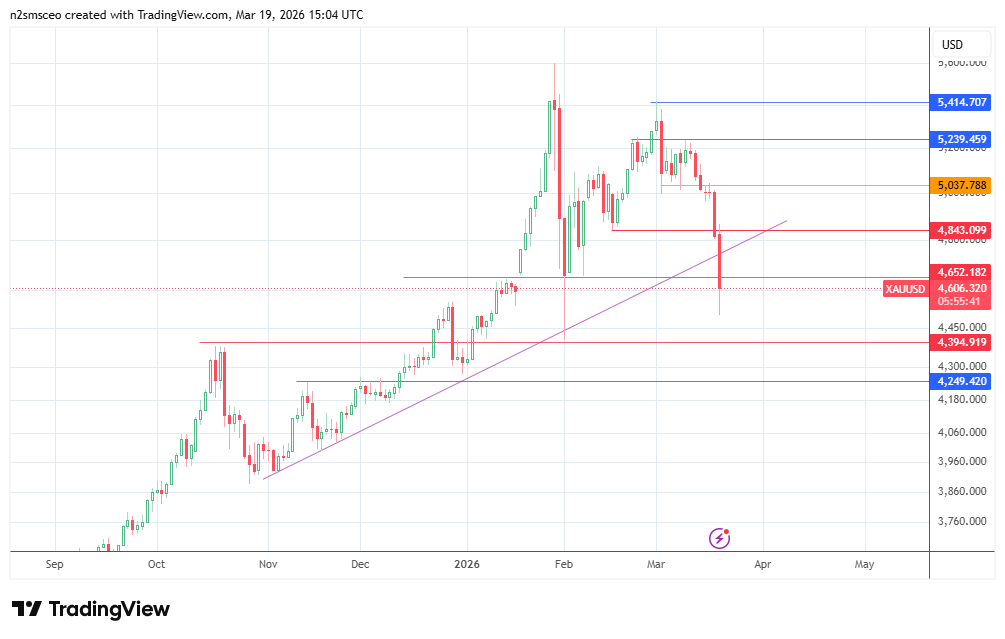
Gold is currently trading at $4611 at the time of writing, amid continued selling pressure. The sentiment has outweighed any potential safe-haven support from the geopolitical situation in the Middle East.
US indices
US indices did not benefit from the FOMC decision. Rate cuts make capital cheaper for companies to access on the stock market for their operations, and make it cheaper to borrow capital for risk-on stock purchases. For the Dow and S&P 500, the impact has come from a triple-pronged bearish catalyst: higher oil prices, rising Treasury yields, and a less dovish Fed.

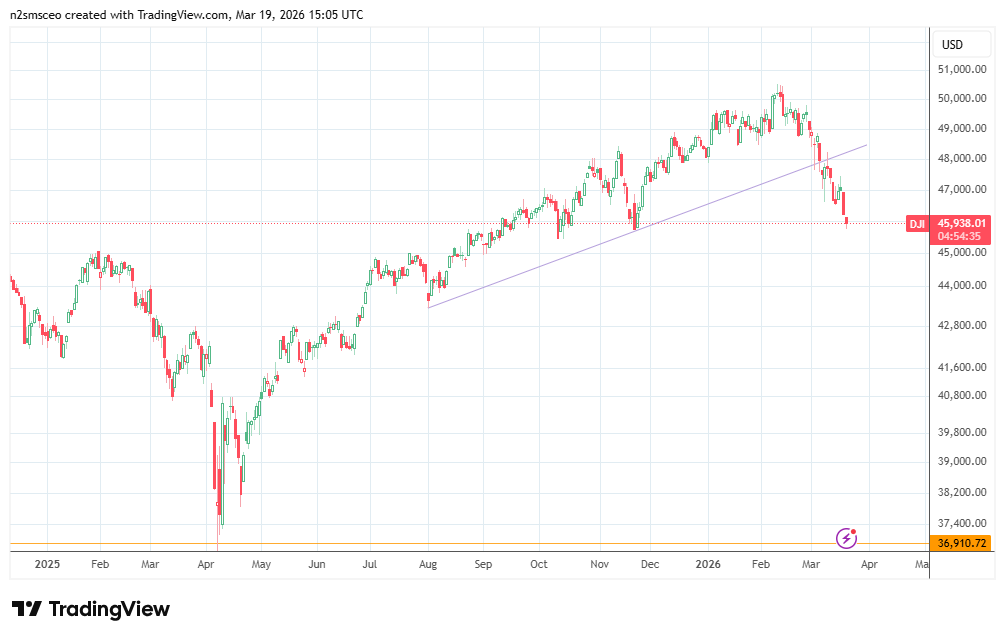
The S&P 500 dropped 1.4% to 6,624.70, while the Dow shed 768.11 points, or 1.6%, to 46,225.15 following the FOMC decision. The drop was described by Barron’s as one of the largest single-day drops following an FOMC decision in recent memory, as FOMC Chairman Powell’s comments unnerved the markets.
A more restrictive Fed will weigh on valuation multiples, even as higher oil prices lead to higher input costs that squeeze margins. The Dow was more affected due to its composition that features big industrial names.
USD Pairs
The FOMC decision was largely USD supportive. The firmer-rate outlook pushed up US real yields and the greenback, especially against currencies that are highly vulnerable to the oil shock (such as the Turkish Lira). The USD is also benefitting from background safe-haven demand, in an environment of uncertain macroeconomic performance. However, stabilization of oil prices and softer incoming US data could revive rate cut expectations and moderate the US Dollar’s rise post-FOMC.
Market takeaway
The 18 March FOMC decision can be described as a hawkish hold which has produced a firmer USD, softer gold, weaker US equities.
- Gold has remained under pressure since due to higher yields and a stronger dollar. It now trades below $4,600.
- Dow/S&P 500 shed weight as investors dumped stocks for bonds, even as oil prices drive the risk premia for inflation.
- USD pairs tilted in the dollar’s favour, as real yields rose and re-established appeal in the US Dollar and USD-assets.
Trading bias post-FOMC decision
The near-term bias for the covered assets is as follows:
- Gold: will remain vulnerable until additional geopolitical pressure sets in and causes new safe-haven-related demand to taper losses.
- Dow/S&P 500: the US indices will remain under pressure due to the triple impact of raised oil prices, lowered Fed cut expectations and the general risk-off environment.
USD pairs: USD strength will predominate, mostly in pairs featuring other currencies that are vulnerable to the oil shock regime (USD/TRY) but less so against pairs where central bank easing expectations are also being tapered (e.g. GBP/USD) or which are commodity-linked (USD/CAD, USD/NOK).