


- TCS shares fell nearly 3% on Friday, even as the company reported Q4 revenue of Rs 70,698 crore, beating analyst estimates.
- Net profit jumped 29% sequentially to Rs 13,718 crore, with deal wins at $12 billion and a final dividend of Rs 31 per share.
- Brokerages remain cautiously optimistic, flagging modest organic growth and potential AI-driven margin compression as near-term risks.
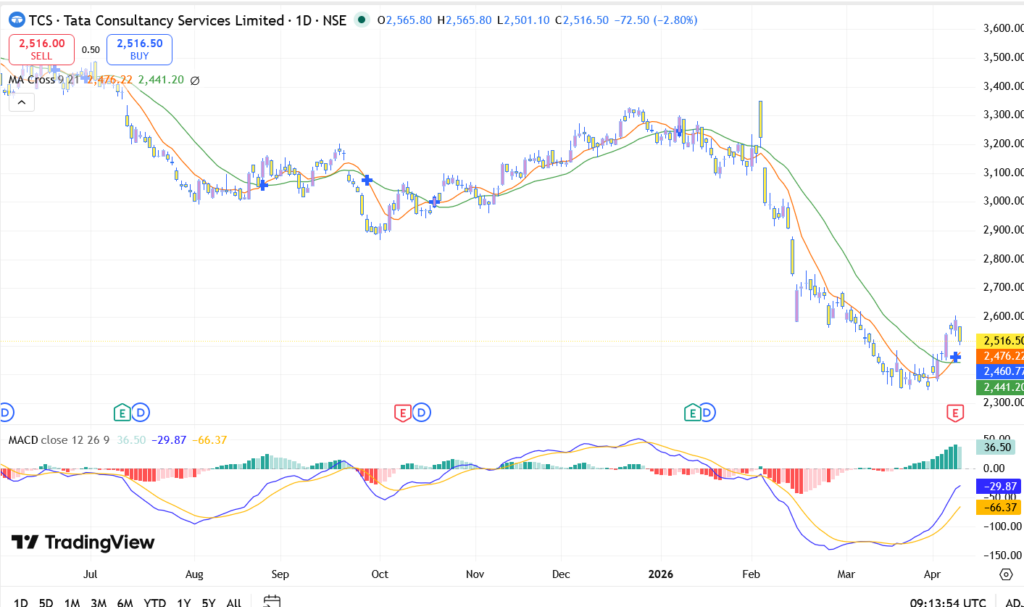
Tata Consultancy Services (TCS) is currently trading at Rs 2,516.00, reflecting a decline of approximately 2.94% on the day. The stock hit a low of Rs 2,514.70 in early trade, extending its pullback despite robust quarterly numbers.
The broader IT sector has been under pressure this week, with the fragile US-Iran ceasefire providing some relief to global markets but doing little to address lingering concerns over discretionary client spending in key markets like the US and Europe.
Why is TCS stock falling despite strong Q4 results?
- Modest organic growth: Analysts flagged that sequential organic growth remained under 1%, suggesting that much of the revenue lift came from existing large-scale contracts rather than new discretionary spending.
- Margin sustainability: Although operating margins remained stable at 25.3%, brokerages like Jefferies and Nomura expressed caution regarding potential pricing compression as AI-driven productivity gains are shared with clients.
- Global macro headwinds: Continued uncertainty in discretionary spending across key markets in the US and Europe remains a primary “monitorable” for the street.
- Sector-wide pressure: The broader IT sector is grappling with shifting outsourcing models, leading to a cautious valuation approach even for industry leaders like TCS.
How is AI impacting TCS revenue and profit margins?
Artificial intelligence continues to be a central theme for TCS. The company has ramped up AI capabilities, with annualised AI revenue already crossing $2.3 billion, a figure that underscores strong enterprise adoption.
But brokerages are watching carefully. The growing use of AI could lead to productivity gains that may be shared with clients, potentially compressing pricing and margins over time. This “AI margin squeeze” is a rising concern across the IT sector, not just for TCS.
On the positive side, TCS results also showed three large deals secured during the quarter, taking the total contract value to $12 billion. Europe and the UK region led growth with a 6.1% sequential expansion, while the Communication, Banking and Growth segment recorded a 2.8% increase in constant currency terms.

TCS Key technical levels to watch:
- Immediate support: Rs 2,476.22 This level aligns with the 9-period MA and has acted as a recent floor for the stock.
- Major Support: Rs 2,441.20 A break below the 21-period Moving Average would signal a shift back to a bearish medium-term trend.
- Resistance: Rs 2,600.00 The stock needs a sustained close above this psychological barrier to clear the post-earnings selling pressure.
- Upside target: Rs 3,350.00 Several brokerages have maintained this long-term price target, representing significant upside if AI tailwinds materialize as expected.
Conclusion: Resilient fundamentals amid investor caution
The Q4 TCS results reinforce the company’s operational resilience and its ability to win “mega-deals” even in a challenging environment. While investor caution regarding near-term margins has sparked a temporary sell-off, the record deal pipeline and burgeoning AI revenue suggest that the structural growth story remains intact.
For long-term holders, the steady dividend and dominant market position continue to offer a compelling case for stability in a volatile IT landscape.
TCS results showed a revenue beat and 29% profit growth, but investors focused on modest organic growth (under 1% sequentially) and potential AI-driven margin pressure.
TCS results reported revenue of Rs 70,698 crore (up 5.4% QoQ), net profit of Rs 13,718 crore (up 29% sequentially), and a final dividend of Rs 31 per share.
TCS has seen strong traction in AI, with annualized AI-led revenue already crossing $2.3 billion, making it a central pillar of their future strategy.