


- Rolls-Royce share price has been on the downtrend since late February, driven by concerns over civil aviation disruption
- The stock has risen by over 6% in today's intraday session on share buyback and positive developments in the Middle East de-escalation negotiations
- The company has a healthy order book but supply chain disruptions could still squeeze margins
Rolls-Royce is once again the talk of the town. After a somewhat sluggish period from mid-February through late March, the stock has suddenly reignited. Today, April 1, 2026, the shares gapped up significantly, surging more than 6% in intraday trading to break past the 1,300p barrier.
What Triggered the March Slide
To understand the rebound, you first need to understand what drove the selloff- the impact of the Iran war on civil aviation. Rolls-Royce is not a straightforward defence play. Its revenue model in Civil Aerospace is built around TotalCare long-term service agreements.
Here, the company charges airlines per flying hour rather than upfront for parts. This means that when airlines reduce capacity due to grounding routes, re-routing flights, absorbing $100+ oil, Rolls-Royce’s maintenance and aftermarket revenue falls in direct proportion.
What’s Behind Today’s Gap-Up
The spark for today’s surge is primarily diplomatic rather than financial. President Trump announced constructive talks with Iran aimed at resolving ongoing tensions, leading to a swift recovery among civil aviation and aerospace shares. Alongside Rolls-Royce, carriers like IAG and easyJet plus aerospace suppliers saw rallies in response.
The market, which has been pricing in a drawn-out conflict with continued flying-hour disruption, is now adjusting expectations toward a quicker resolution. This kind of positive diplomatic development directly influences airlines and engine manufacturers due to their operational leverage to flying activity.
Additionally, London Stock Exchange reports confirm Rolls-Royce has begun its substantial £2.5 billion share buyback program for 2026. This level of repurchasing creates notable price support. Coupled with the upcoming ex-dividend date on April 23, income-focused investors are returning to take advantage of the reinstated payouts.
Q2 Outlook, Risks and Opportunities
Looking ahead to the second quarter, the environment remains mixed. Although momentum is currently strong, risks linked to supply chain fragility may be underestimated. Despite achieving £600 million in cost reductions last year, reports highlight that lead times for key components like high-pressure turbine blades continue to be a constraint.

Such supply-chain delays and potential cost pressures could weigh on profitability. Broader market factors, including interest rate shifts and global economic growth concerns, also add volatility. Should these challenges persist, Rolls-Royce may face limits in engine servicing capacity during the latter half of the year, potentially slowing earnings growth beyond what the market currently anticipates.
On the defense side, stability is more likely if orders keep increasing and geopolitical tensions continue. The strong defense order book offers some predictability, with analysts at HSBC maintaining positive outlooks based on long-term growth in military aviation. However, the civil aerospace segment, which still generates a substantial share of revenue, contends with headwinds from fewer flying hours due to route cancellations and rising fuel expenses.
One potential boost could come from the pending government decision on funding for the UltraFan 30 engine development programme, a £3 billion initiative seeking up to £200 million in UK government backing. CEO Tufan Erginbilgiç frames this programme as supporting up to 40,000 UK jobs. A favorable outcome here, alongside ongoing diplomatic progress, would enhance the investment case at current price levels.
Rolls-Royce Share Price Forecast
Rolls-Royce share price has its RSI at 49 and rising, indicating control by buyers. The piivot point is at 1,211p, which is the volume weighted moving average. If the rally continues, the next major objective for bulls is the psychological 1,256p mark. A sustained break above that will target 1,287p. Immediate support has flipped to 1,181p. If it goes below that level, it risks testing 1,159p.
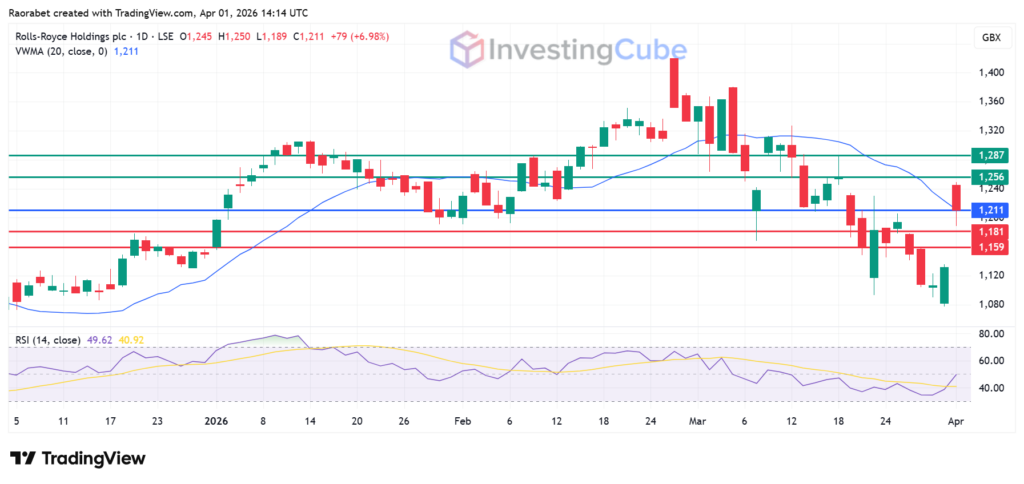
Rolls-Royce share price daily chart with the key support and resistance levels. Created on TradingView
The bounce is likely a mix. The Iran diplomatic signal is real, and the underlying buyback support is mechanical and durable. But since Brent is still above $100 and flying hours are under pressure, a long-term re-rating needs more than one good headline. It needs proof that things are getting better.
The buyback provides a strong support “floor,” but sustainability depends on the Civil Aerospace division meeting its flying hours target. Any supply chain delays in engine parts remain the primary risk to the trend.
The main risks include potential conflict resolution reducing defence urgency, supply-chain issues, and margin pressure from civil aviation.